Black Mold or Dirt? Photo Guide to Mold, Mildew, Soot and Dirt

Quick answer
Look at where the dark patch sits, not just its color. Mold and mildew grow where something stays wet, such as grout, sealant, or a wall after a leak, and they often smell musty. Soot and dust follow air: they collect at vents, on cold spots over studs, and at carpet edges, with no water source. If the spot is damp or musty, treat it as mold and fix the moisture.
Black mold or dirt? Look at where the dark patch sits, not just its color. Mold and mildew grow where something stays wet, such as bathroom grout, the sealant around a tub, or a wall after a leak, and they often smell musty. Soot and dust follow the air instead. They collect at vents, on cold spots over wall studs, and along carpet edges, with no water source nearby. If the spot is damp or smells musty, treat it as mold and fix the moisture.
Written descriptions of the difference are easy to find. What most people want is to hold up their own spot against real examples. So this guide puts real, credited photographs of all four look-alikes side by side: mold, mildew, soot, and plain household dust. Each photo is annotated with the visible clues, and each section ends with what to do next, drawn from the U.S. EPA, the CDC, the University of Missouri Extension and building scientist Joseph Lstiburek. Every source is named in the text with the month it was read.
Mold, mildew, soot or dust: the side-by-side table
Color is the weakest clue you have. The CDC says mold "can look like spots of many different colors" (CDC, About Mold, read October 2026), and soot and dust are gray to black too. Location, pattern and smell carry far more information. This table sets the four look-alikes next to each other. Every row is drawn from the sources named below it, and the photos further down show each one.
| Clue | Mold | Mildew | Soot | Dust and dirt |
|---|---|---|---|---|
| What it is | A fungus growing on a wet material | Growth produced by mold; usually thin and dark, sometimes white | Tiny combustion particles from candles, smoke, fireplaces and pilot lights | Household dust and particles carried in the air |
| Needs water? | Yes. EPA: no mold grows without water or moisture | Yes, plus a suitable temperature | No | No |
| Where it shows up | After leaks and floods; drywall, wood, ceilings, behind furniture | Shower curtains, sealant and grout, closets, basements, fabric, leather | Over wall studs and other cold spots, carpet edges, under doors, blinds, cabinet interiors | Vent and return grilles, floors, ledges |
| Pattern | Spots that cluster and spread; edges follow the wet area | Specks in wet seams and on damp surfaces | Even films, straight lines, outlines of framing | Gray buildup where air moves or where nobody cleans |
| Smell | Can smell musty (CDC) | Can smell musty, like any mold (CDC) | None of our sources describes a smell | None of our sources describes a smell |
| First move | Clean it up and fix the water problem (EPA) | Dry the area, clean the surface, remove what feeds it | Find and cut the particle source | Vacuum or remove and clean the grille (EPA) |
Sources: U.S. EPA, A Brief Guide to Mold, Moisture and Your Home (read November 2026); CDC, About Mold (read October 2026); University of Missouri Extension, GH5928 (read November 2026); Joseph Lstiburek, BSI-114: Up In Smoke, Building Science Corporation (read November 2026); U.S. EPA, Should You Have the Air Ducts in Your Home Cleaned? (read November 2026).
One honest limit before the photos. No official source gives a home test that settles the question. The EPA says it plainly in its duct-cleaning guide: "although a substance may look like mold, a positive determination of whether it is mold or not can be made only by an expert and may require laboratory analysis for final confirmation." So treat everything below as strong clues, not a diagnosis. The good news is that you rarely need a diagnosis to know what to do, as the last section explains.
What mold looks like: spots that follow water
The single most useful fact about mold comes from the EPA: "There are many types of mold, and none of them will grow without water or moisture." It adds that mold "may begin growing indoors when mold spores land on surfaces that are wet" (U.S. EPA, A Brief Guide to Mold, Moisture and Your Home, read November 2026). So the first question to ask about any dark patch is not "what color is it?" but "has this spot been wet?"
Signs that point toward mold:
- A water story. A leak above it, a flood, a sweating pipe, a damp basement, a bathroom without a working fan. The patch sits where the water was.
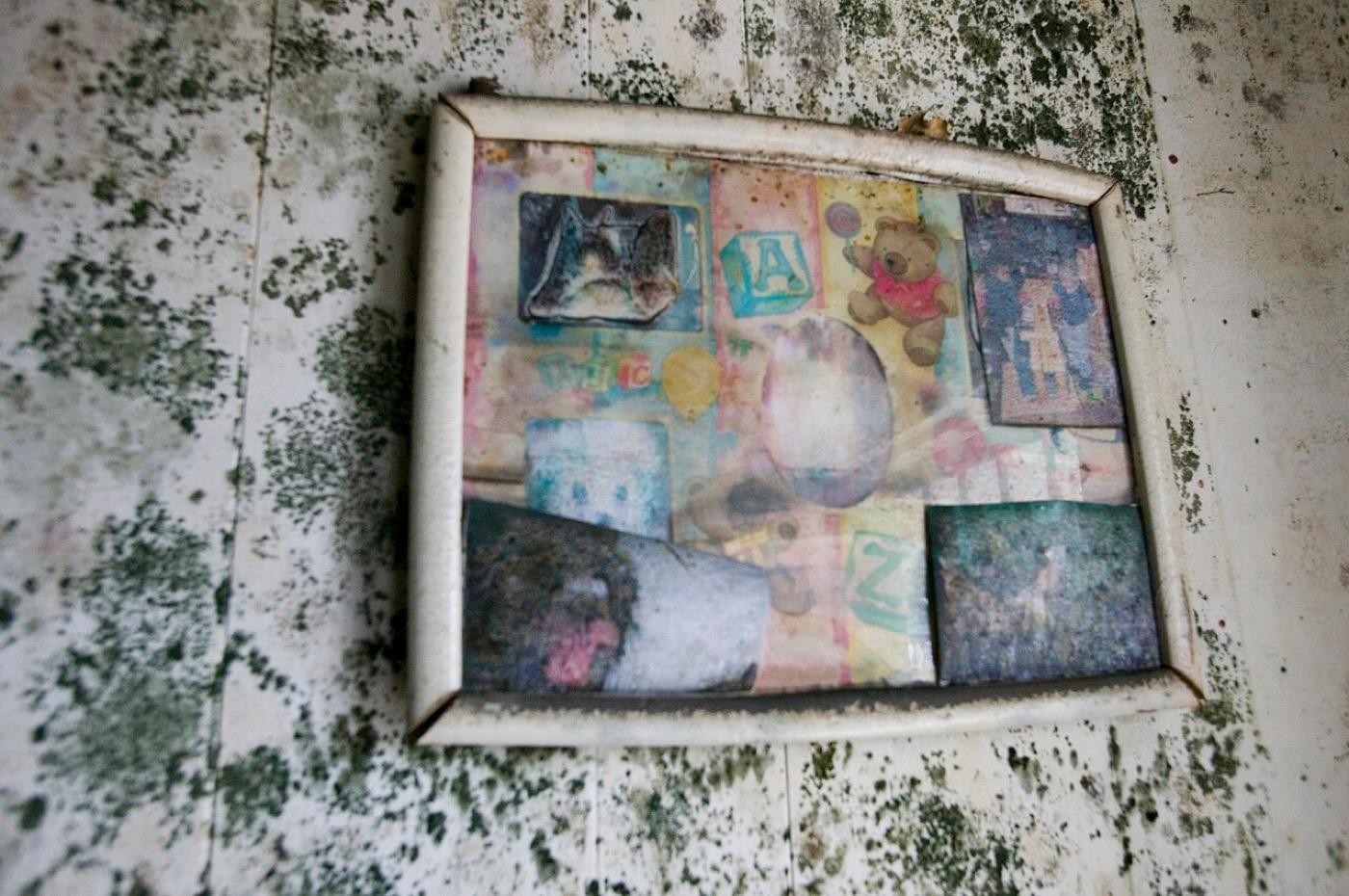
- Clusters that merge. In the first photo below, growth starts as separate specks, then joins into larger dark areas. It is heaviest behind the picture frame, where the wall dried last.
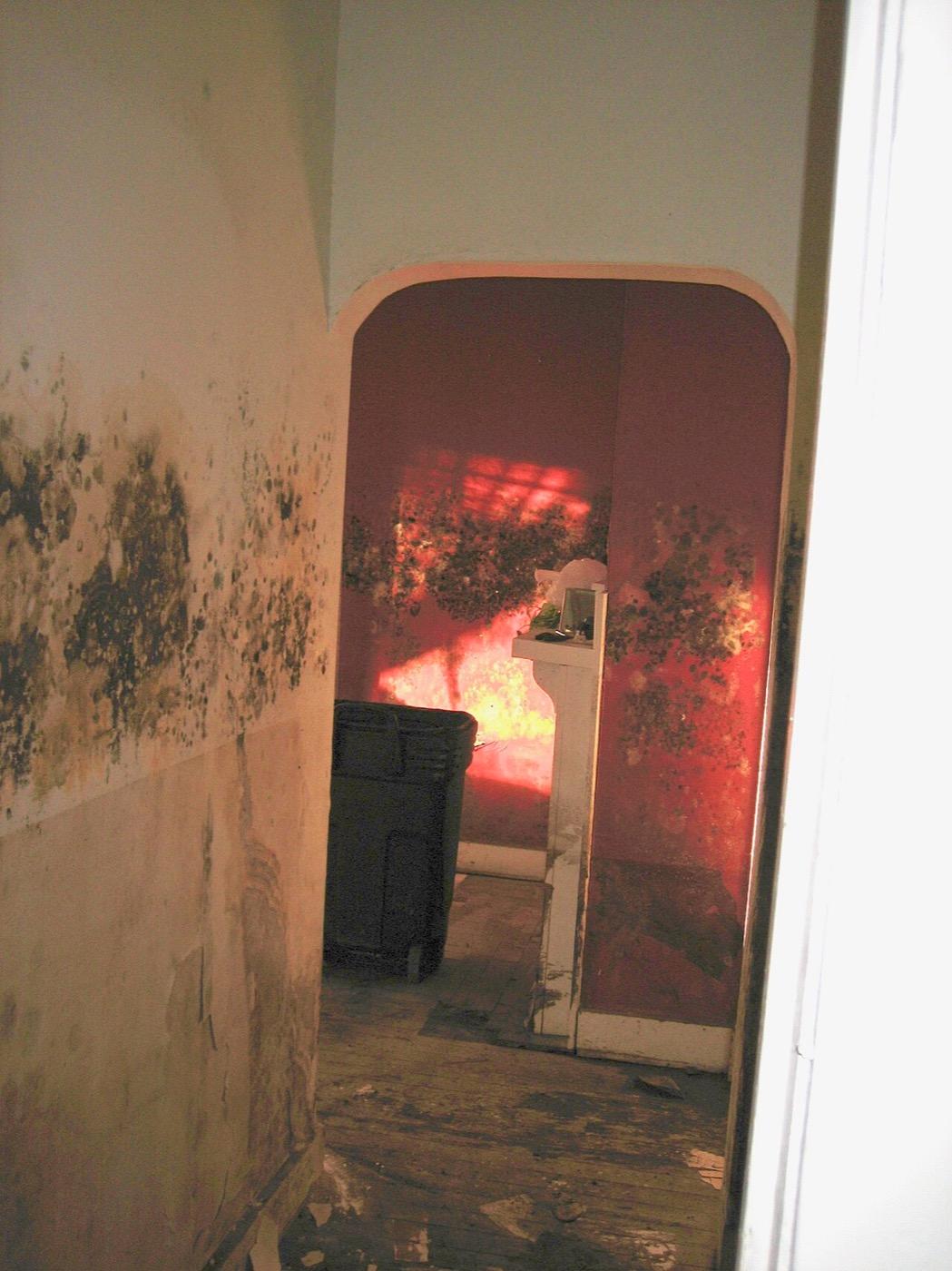
- An edge set by water. In the second photo, the growth stops at a sharp line on the hallway wall. That line marks how high the water reached. Soot and dust do not make that kind of edge.
- A musty smell. The CDC says mold "can look like spots of many different colors, and it can smell musty." The EPA adds that you may suspect hidden mold "if a building smells moldy, but you cannot see the source." More on odor in our black mold smell guide.
- Damage to the material. The EPA notes that molds "gradually destroy the things they grow on" and can fill the crevices of porous materials, which is why moldy drywall or ceiling tile often cannot be saved.
Notice what is missing from that list: color. The CDC's fact sheet on Stachybotrys chartarum describes that mold as "greenish-black," but many common indoor molds are dark too, and "black mold" is not a separate species you can spot by eye. For more photos of mold on different surfaces, see what black mold looks like and black splotches on walls.
Mildew: thin dark growth in wet seams
Mildew is not a different organism from mold. The University of Missouri Extension defines it as a growth produced by mold, usually thin and dark, sometimes white. It needs moisture and a suitable temperature (University of Missouri Extension, How to Prevent and Remove Mildew, GH5928, read November 2026). In everyday speech, "mildew" is the word people use for the flat, speckled growth on bathroom sealant, shower curtains and damp fabric.
The Extension guide lists the places it turns up most: cellars, crawl spaces, closets, basement rooms, shower curtains and new houses. It attacks cotton, linen, rayon, silk, wool, leather, wood and paper, while many synthetic fibers resist it. That list is a good test of your own spot. A dark speckle on a shower curtain or in a tub seam fits mildew. The same speckle in straight, evenly spaced lines on a dry ceiling does not, and the soot section below explains why.
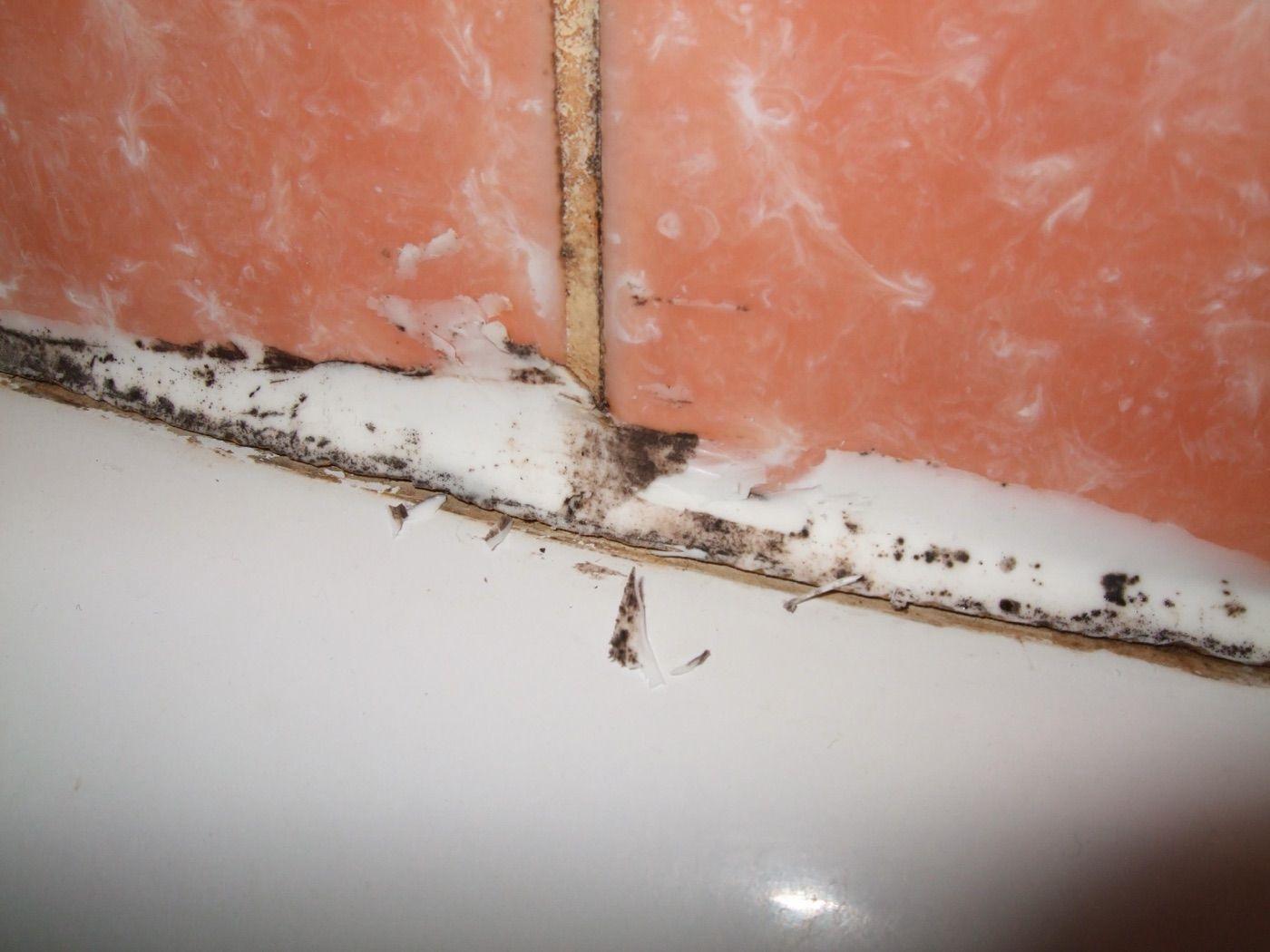
The photo below shows the typical case. The growth sits only in the silicone joint, the one line in the bathroom that stays wet after every shower. The tile just above it is clean.
This is where dirt and mildew overlap. The Extension guide notes that soil, greasy films and starch on a surface feed mildew. A grimy grout line in a damp bathroom can therefore be both dirty and moldy, and cleaning off the grime is part of the fix. Practical next steps:
- For hard surfaces, the EPA says: "Scrub mold off hard surfaces with detergent and water, and dry completely" (U.S. EPA, Mold Cleanup in Your Home, read November 2026).
- Stretch wet shower curtains out so they dry, and vent the clothes dryer outdoors, both from the Extension guide.
- Do not caulk over it. The EPA says: "Do not paint or caulk moldy surfaces." Remove stained sealant, let the joint dry, then reseal. Our caulk and grout guide has the steps.
For the full comparison, read black mold vs mildew and our mildew guide.
Soot: a dark film that follows air and cold spots
Soot is the look-alike most often blamed on mold, because it can turn up as gray-black lines and shadows in a perfectly dry room. Building scientist Joseph Lstiburek explains how it lands in BSI-114: Up In Smoke (Building Science Corporation, February 2020, read November 2026). Very small airborne particles "filter out" in carpets, "plate out" on charged surfaces, "plate out" on cold surfaces, and "plate out" on surfaces through impaction, when moving air carries them into a surface.
His list of sources includes tobacco smoke, candle soot, fireplace smoke, soot from standing pilot lights on gas fireplaces, and particles from hot electric heating elements. Of candles he writes, "Who would have thought that those candles could cause so much damage and generate so much soot?" The EPA's page on indoor particulate matter names many of the same sources: "cooking, combustion activities (including burning of candles, use of fireplaces, use of unvented space heaters or kerosene heaters, cigarette smoking) and some hobbies" (U.S. EPA, Indoor Particulate Matter, read November 2026).
The tell-tale sign is the pattern. Soot does not grow, so it does not cluster around a wet spot. It collects where the air and the surface temperature put it:
- Stud lines on walls and ceilings. "Since every stud is a 'thermal bridge' the outlines of the studs can be sometimes seen due to the accumulation of tiny particles at the cold spots" (BSI-114). Regular, evenly spaced stripes are a framing pattern, not a mold pattern.
- Carpet edges and under doors. Air flowing under baseboards and doors leaves particles behind, so "the carpet at these air pathway locations becomes discolored." Under a door this shows up as a dark line.
- Blinds, cabinet interiors and appliances. Lstiburek reports deposits "on window blinds, inside of kitchen cabinets and on appliance surfaces," from electrostatic attraction.
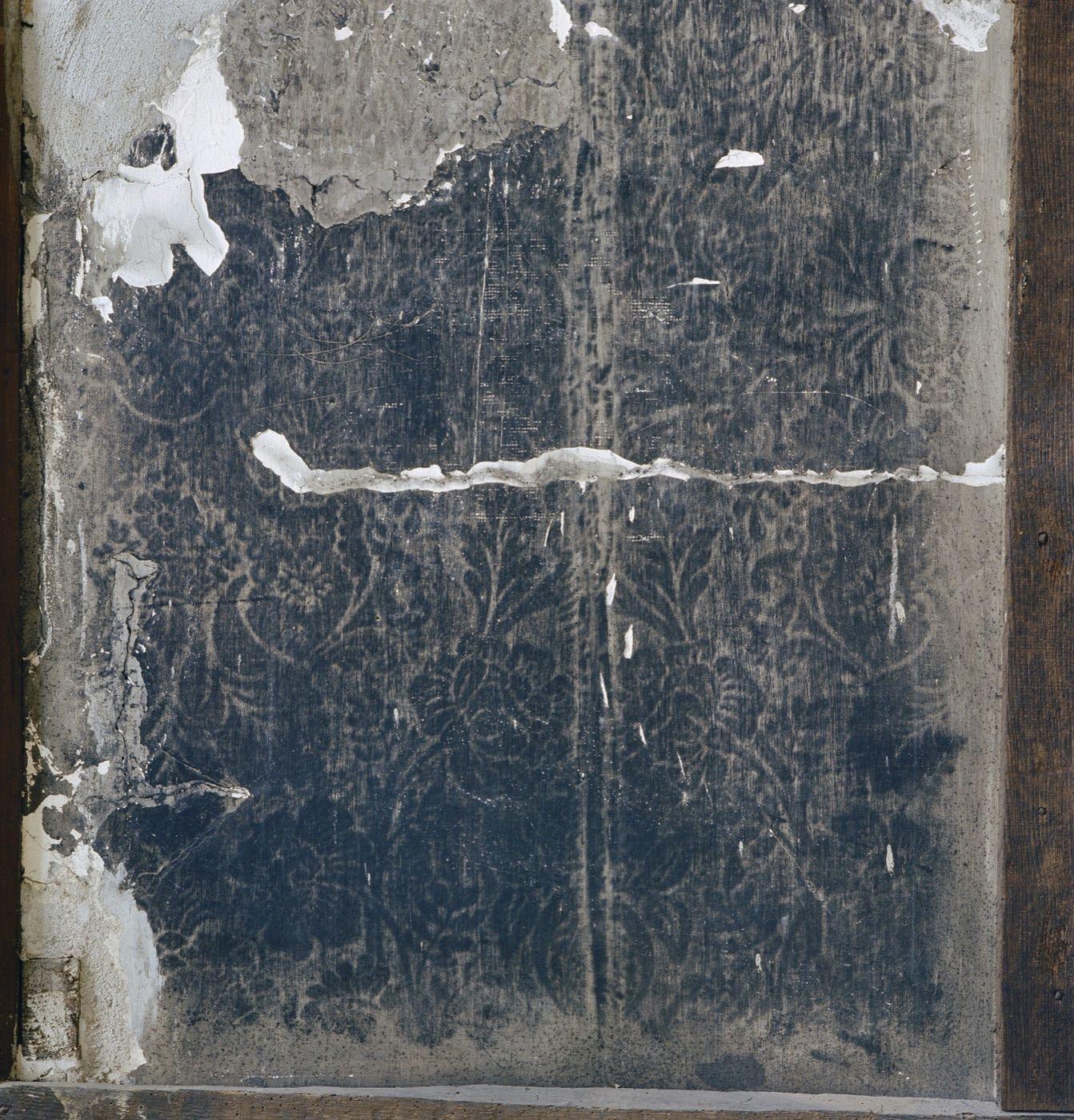
- An even film. The photo below, from a Dutch town hall, shows soot that settled around old wallpaper and left a print of its pattern. The film is uniform and printed, with no spots and no water line.
What to do: the fix for soot is cutting the source, since cleaning only resets the clock. The EPA's steps are to "Vent all fuel-fired combustion appliances to the outdoors (including stoves, heaters and furnaces)," "Install and use exhaust fans vented to the outside when cooking," and "Avoid the use of unvented stoves, fireplaces or space heaters indoors." If soot keeps appearing near a gas fireplace or furnace, have the appliance and its venting checked by a qualified technician. Lstiburek's paper calls soot from standing pilot lights on gas fireplaces a big source of particles.
Dust and dirt: gray buildup at vents, floors and ledges
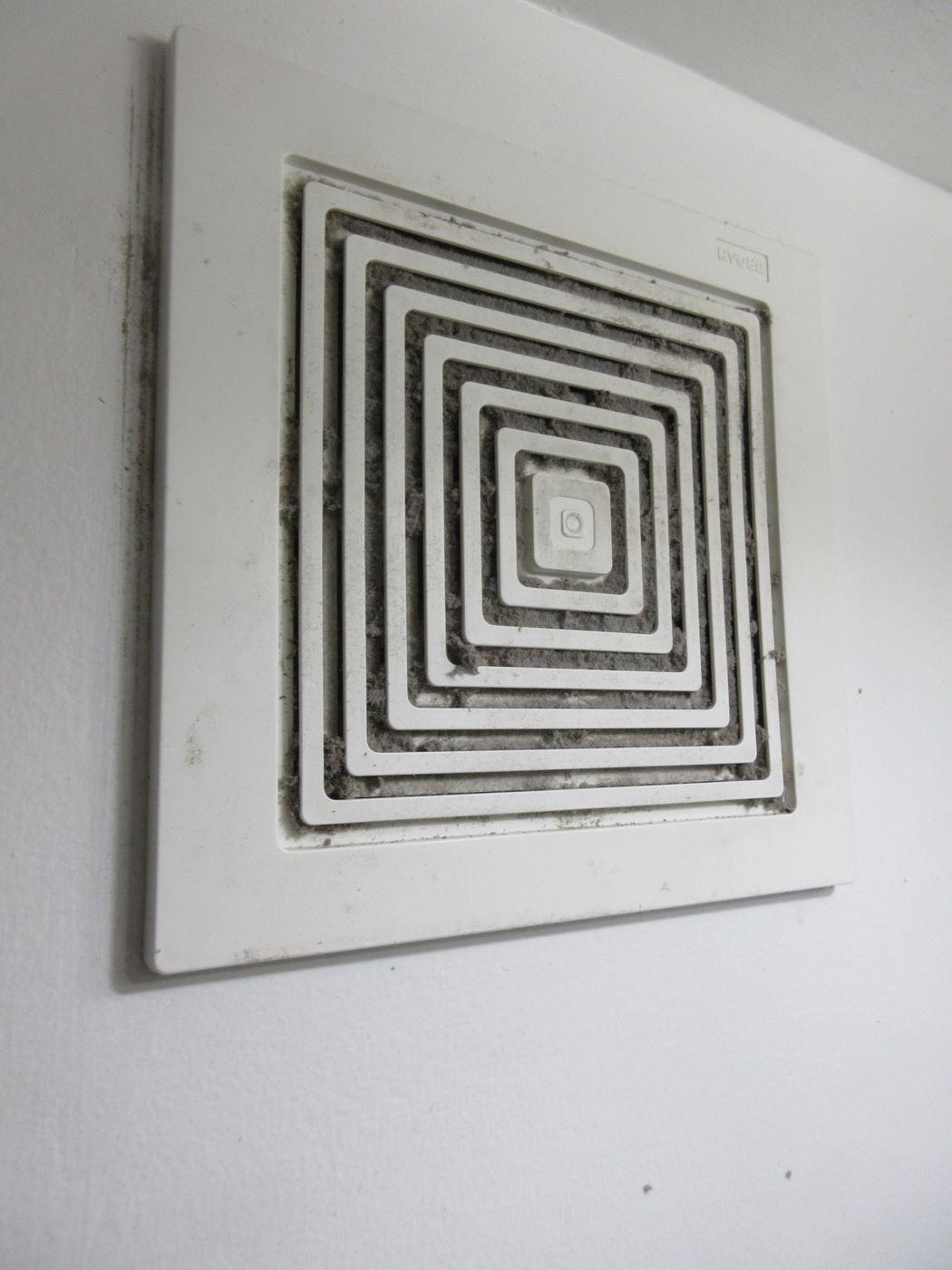
The most common "is this mold?" photo online is a vent grille with dark gray fuzz on its slats. In most homes, that is dust. The EPA says: "It is normal for the return registers to get dusty as dust-laden air is pulled through the grate." It goes on: "This does not indicate that your air ducts are contaminated with heavy deposits of dust or debris; the registers can be easily vacuumed or removed and cleaned" (U.S. EPA, Should You Have the Air Ducts in Your Home Cleaned?, read November 2026).
The EPA is also calm about what sits inside the ducts. It says "a light amount of household dust in your air ducts is normal" and that "there is no evidence that a light amount of household dust or other particulate matter in air ducts poses any risk to health." It also explains that "much of the dirt that may accumulate inside air ducts adheres to duct surfaces and does not necessarily enter the living space."
Clues that point to dust or dirt:
- It sits where air moves or where nobody cleans. Grilles, the tops of door frames, ceiling fan blades, under furniture.
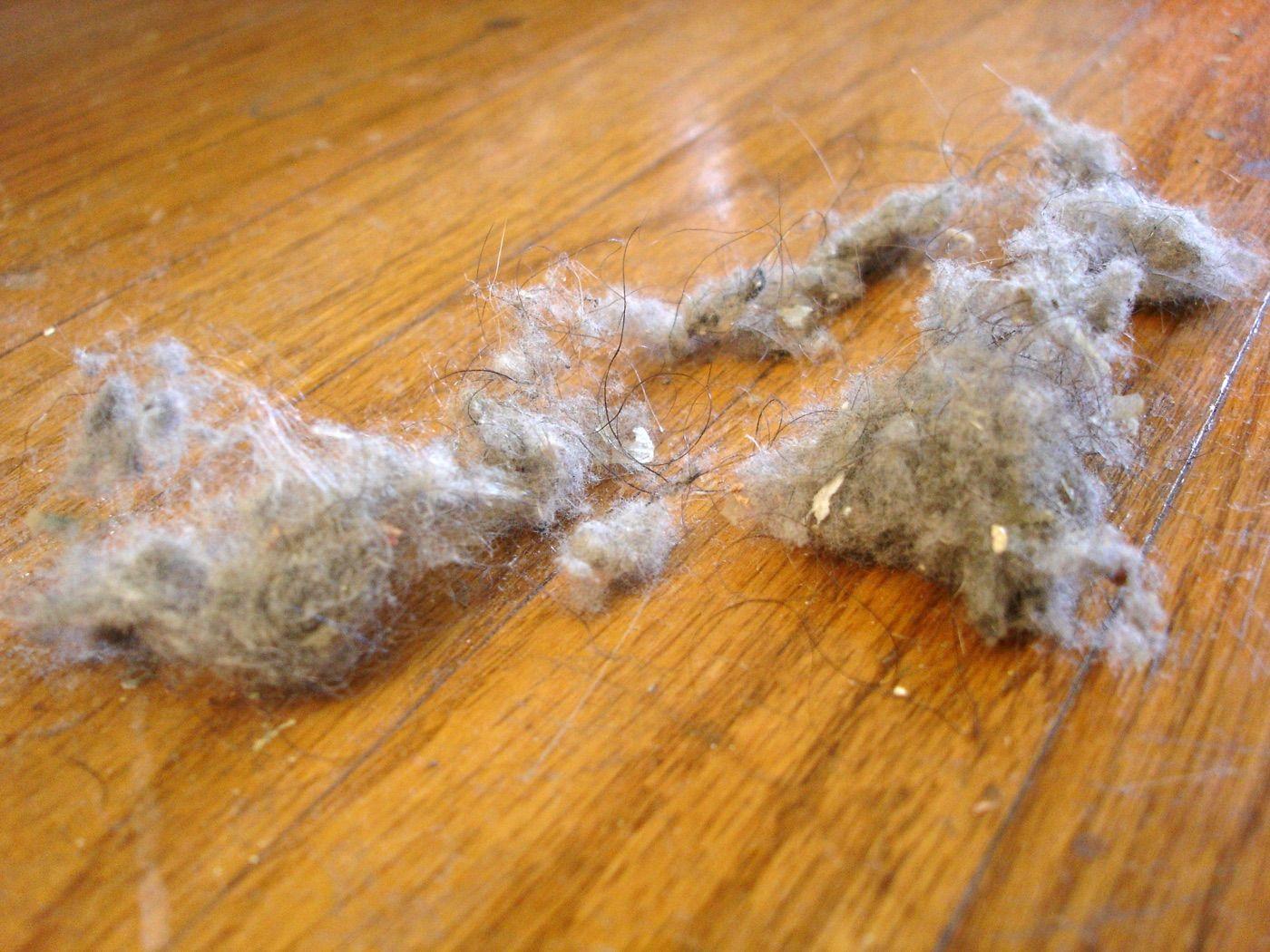
- It is gray and linty, and it lies loose. Compare the vent and the dust bunnies below with the mold photos above. Dust lies on the surface as fluff and hair. Mold grows as specks that cluster on and into a damp material.
- There is no water story. No leak, no condensation, no musty smell.
When should a dusty vent worry you? The EPA lists the cases where duct cleaning is worth considering. One is "substantial visible mold growth inside hard surface (e.g., sheet metal) ducts or on other components of your heating and cooling system." Another is ducts that are "clogged with excessive amounts of dust and debris and/or particles are actually released into the home from your supply registers." If the grille has fuzz that comes back quickly in a damp spot, or the vent smells musty, read black mold in air vents before you clean. The EPA's Brief Guide says: "Do not run the HVAC system if you know or suspect that it is contaminated with mold."
Dirt and mold can also go together. Dust that settles on a damp surface gives mildew something to feed on, which is the University of Missouri Extension's point about soil and greasy films. A dirty patch that keeps getting wet should be cleaned and dried, not just wiped.
What a home check can and can't tell you
A home check can tell you which explanation fits your spot best, but it cannot prove the spot is mold. The EPA is plain about this: "although a substance may look like mold, a positive determination of whether it is mold or not can be made only by an expert and may require laboratory analysis for final confirmation" (U.S. EPA, Should You Have the Air Ducts in Your Home Cleaned?, read November 2026). None of the sources on this page describes a home test that settles the question, so this page does not offer one.
What you can usefully check yourself, in a few minutes and without touching the spot:
- Is it next to water? Look above and around it for a leak, a sweating pipe, condensation on a window, or a seam that stays wet after showers. The EPA says no mold grows without water or moisture, so a bone-dry spot with no water history is less likely to be mold.
- Does it smell musty? The CDC says mold "can smell musty", and the EPA says you may suspect hidden mold if a building smells moldy but you cannot see the source.
- Does the pattern follow water or air? Growth that stops at a water line or clusters around a wet spot points to mold. Straight lines over studs, dark bands along carpet edges or under doors, and buildup on vent grilles follow airflow and cold spots, which is where Lstiburek's BSI-114 and the EPA say particles collect.
- Is there a particle source nearby? Candles, a fireplace, a gas pilot light, unvented heaters or cooking without an exhaust fan are the sources the EPA and BSI-114 name for soot and indoor particles.
What a home check can't tell you: whether the spot is definitely mold, which species it is, or whether more growth is hidden inside a wall. The CDC says you do not need to know the type of mold to act, so the response does not wait on certainty. If the spot is damp or the room smells musty, treat it as mold and fix the moisture; if it is dry and sits where air carries particles, deal with the particle source. If you need a firm answer, for a sale or a landlord dispute, that is a job for a professional inspection, covered in the mold inspection guide.
Still not sure? What to do next
You do not have to win the argument about what the spot is before you act. The sources agree on a short decision path.
- Ask the moisture question. Is the spot on something that has been wet, or does the room smell musty? If yes, treat it as mold. The CDC says: "If you see or smell mold, you should remove it," and "You do not need to know the type of mold" (CDC, About Mold, read October 2026). The CDC's Stachybotrys fact sheet adds that "All molds should be treated the same with respect to potential health risks and removal."
- Skip the test kit for a visible spot. The EPA says, "In most cases, if visible mold growth is present, sampling is unnecessary," and the CDC does not recommend mold testing. A lab can name a mold, but that name does not change the cleanup. If you still want testing, our mold inspection guide explains what a professional inspection covers.
- Check the size. The EPA's threshold for doing it yourself is an area "less than about 10 square feet (less than roughly a 3 ft. by 3 ft. patch)." Our guide to removing black mold yourself walks through that decision and the protective gear the EPA lists: an N-95 respirator, gloves and goggles.
- Fix the water, or it comes back. "If you clean up the mold, but don't fix the water problem, then, most likely, the mold problem will come back" (EPA Brief Guide). Wet materials dried within 24 to 48 hours usually will not grow mold.
- If there is no moisture story, treat it as soot or dust. Clean it, then deal with the source: candles, smoke, an unvented heater or a dirty filter. The EPA also advises changing HVAC filters "according to manufacturer's directions."
- If it comes back in the same place after cleaning, something there is staying wet or a particle source is still running. A recurring patch over a hidden leak is the case where a professional inspection earns its cost.
If it is mold and you want a price range before calling anyone, the free cost estimator is on the Black Mold Removal Hub home page. Or browse every look-alike in our black mold identification hub.
Free tools: decide what to do about your mold
Frequently asked questions
Is there a home test that tells mold from dirt?
If the spot is black, is it the dangerous kind of mold?
Why are there dark lines on my wall over the studs, or along the carpet edge?
Can dust or dirt turn into mold?
Sources
- U.S. EPA — A Brief Guide to Mold, Moisture and Your Home (read November 2026)
- U.S. EPA — Mold Cleanup in Your Home (read November 2026)
- U.S. EPA — Should You Have the Air Ducts in Your Home Cleaned? (read November 2026)
- U.S. EPA — Indoor Particulate Matter (read November 2026)
- CDC — About Mold (read October 2026)
- CDC — Facts About Stachybotrys chartarum (read October 2026)
- University of Missouri Extension — How to Prevent and Remove Mildew (GH5928) (read November 2026)
- Joseph Lstiburek — BSI-114: Up In Smoke, Building Science Corporation (read November 2026)