Best Mold Test Kits for Homeowners: What Actually Tells You Something

Best mold test kits are the thing people reach for when they smell something musty but can't see the source — and I get the instinct, because I did the same in my basement. The honest truth, which most product pages won't tell you, is that a cheap settle-plate kit mostly confirms what you already know: there is mold in your house. (There is mold in every house.) The kits worth your money are the ones that send a sample to a real lab and give you species and counts, or that help you compare a suspect room against a clean room.
So this guide does something a little different from the usual roundup. Before I recommend a single kit, I want to talk you out of buying one you don't need — because for most people who can already see or smell mold, the right move is to skip testing entirely and spend the money on cleaning the source. For the people who genuinely should test (hidden sources, disputes, health investigations), I'll show you which kits actually produce usable information and how to use them so the result means something.
From Sukie's experience
In my damp finished basement I ran a settle-plate kit before tearing into the baseboards, and the petri dish grew a fuzzy carpet of colonies in 48 hours — useful as a gut check, but it told me nothing about what species or how bad, which is exactly when I wished I'd bought a lab-analyzed kit from the start.
What a mold test kit can and can't tell you
Let me set expectations before you spend a dime. A settle-plate kit (an open petri dish you leave out for an hour, then incubate) can confirm that mold spores are landing in a given room — but spores are everywhere, so a positive result on its own is close to meaningless. What's useful is comparison: run one plate in the suspect room and one in a known-clean room, then look at the difference in colony growth. What no DIY plate tells you is the species, the airborne concentration, or whether you have a hidden problem inside a wall. For that you need lab analysis, and the EPA actually notes in its mold guidance that sampling is usually unnecessary because if you can see or smell mold, you already know you need to clean it up.
The three types of kits, ranked by how much they actually help
Lab-analyzed kits (ImmunoLytics, comprehensive air/HVAC kits) are the most useful because a trained lab identifies and counts what's in your sample. Settle plates with optional lab (Mold Armor, Pro-Lab, Seeml) are fine for a cheap gut check and become genuinely useful only when you pay for the analysis and compare rooms. Rapid swab tests (Healthful Home 5-Minute) are the fastest and the least informative — handy for a quick presence check on a specific spot, not for diagnosing a house.
A word on what 'lab analysis' actually buys you, because the price jump confuses people. When a lab examines your sample, a trained analyst looks at it under a microscope (and sometimes cultures it), then reports the genera present — Aspergillus, Penicillium, Stachybotrys, Cladosporium and so on — and a relative abundance. That's the difference between 'something grew' and 'this room has elevated Aspergillus compared to your outdoor control.' The latter is information you can act on or hand to a professional; the former is just confirmation that air exists. If you're going to test at all, paying for the lab step is usually what makes the exercise worth doing.
Not sure if it's a DIY job or a pro job?
Get a ballpark price first, then decide.
Estimate my removal cost →When testing is worth it — and when to skip it
Skip the kit if you can already see or smell mold. You don't need a lab to confirm a black patch in your shower; you need to clean it and fix the moisture. Testing earns its keep in three situations: (1) you smell something musty but can't find the source and want to compare rooms; (2) you're in a dispute — a landlord, a buyer/seller, or an insurance claim — and want documentation; or (3) someone in the home has asthma or allergies and a doctor wants to know what species they're reacting to. In a real dispute, though, professional inspection with calibrated equipment carries far more weight than a $12 home kit.
How to use a settle-plate kit correctly
Most people misuse these. Place the open dish at breathing height, away from drafts and vents, and leave it exposed for exactly the time the instructions specify (usually about an hour) — leaving it out 'a while' ruins comparability. Seal it, label it with the room and date, and keep it warm and dark. Always run a control plate in a room you believe is clean at the same time. Read both at the same interval. If the suspect room grows dramatically more than the control, that's a meaningful signal worth following up — ideally with lab analysis or a pro.
Reading your results without scaring yourself
Test results have a way of triggering panic, so a little perspective helps. Finding mold spores in your home is normal — they exist everywhere indoors and out, and a positive result by itself is not an emergency. What matters is context: elevated indoor levels compared to an outdoor control, a dominant 'water-damage' genus like Stachybotrys or heavy Aspergillus/Penicillium, or counts far higher in one room than the rest of the house. Those are the signals worth acting on. A lab report listing common outdoor molds at modest levels usually just confirms you live on Earth. Resist the marketing impulse to treat any detection of so-called 'toxic black mold' as a crisis; the CDC's position is that you respond to visible or smelled mold by removing it and fixing moisture regardless of species, and a scary-sounding name on a report doesn't change that response. If a result genuinely worries you or someone in the home has health concerns, take the report to a physician or a certified inspector rather than to a search engine at midnight.
Why I usually recommend pairing a kit with a real inspection
Here's the trade-off I wish I'd understood in my basement. A cheap kit told me there was mold; it could not tell me it was hiding behind the baseboards, which is where the actual problem lived. A home kit is a screening tool, not a diagnosis. If results are alarming, if you're dealing with a possible hidden source, or if money's on the line, a professional mold inspection — which typically runs a few hundred dollars — gives you moisture mapping, species ID and a written scope that a DIY plate simply can't match. Think of the kit as the smoke detector and the inspection as the fire department.
The piece a settle plate fundamentally can't do is find where the moisture is coming from, and that's the part that decides whether your remediation lasts. A pro walks the space with a moisture meter and often an infrared camera, finds the cold, damp spot behind the finish, and tells you the wall cavity is wet — which is the actual diagnosis. A petri dish on the floor will happily grow colonies for weeks while the real problem stays hidden in the framing. So my honest framing is: use a kit to satisfy curiosity or to decide whether to escalate, but don't expect it to replace the person with the meter when there's a hidden source.
Air sampling vs. surface vs. settle plate — which method to choose
The kits split into a few sampling methods, and the method shapes what you learn. A settle plate (gravity sampling) catches whatever drifts down onto an exposed dish — cheap, simple, and best used as a comparison between a suspect room and a control room. A surface sample (a swab or tape lift on a visible spot) tells you what's growing on that exact surface, useful for confirming a suspicious patch but not for assessing the air you breathe. An air sample, which the more comprehensive lab kits and all professionals use, pulls a measured volume of air through a collection medium so the lab can report spore counts per cubic meter and compare indoor to outdoor — this is the most quantitative DIY option and the closest to what a pro does. If your concern is air quality and health, lean toward an air-sampling kit with lab analysis; if you just want to confirm a visible spot, a surface swab is cheaper and more direct.
How I evaluated these kits
I weighted four things. First, does the kit produce information you can actually act on, or just a yes/no that you already knew? That single criterion is why lab-analyzed options rank highest. Second, total real cost — a $12 plate with a $40-per-sample lab fee is a $50-plus kit, and pretending otherwise sets people up for sticker shock. Third, ease of doing it right; kits that come with a control plate or clear comparison instructions get more from users than a lone dish with vague directions. Fourth, honesty of the marketing, because several popular kits oversell what a settle plate can tell you. I didn't include any product that leans on 'toxic black mold' fear to push a sale, since the CDC is clear you treat all indoor mold the same way regardless of species.
Should I test for black mold specifically?
Most home kits don't distinguish black mold from other molds without lab analysis, and the CDC notes that you should treat all indoor mold the same way regardless of color. The response — remove it safely and fix the moisture — is the same whether or not it's the species people call toxic black mold.
What should I do after a positive mold test?
Find and fix the moisture source, then clean small areas yourself with proper protection (N95, gloves, eye protection). For areas larger than about 10 square feet, hidden growth, HVAC involvement, or anyone with health concerns, hire a certified remediation professional rather than relying on the kit alone.
Are settle-plate (petri dish) kits worth it?
Only when you use them as a comparison and pay for lab analysis. A single plate left out in one room just confirms spores are present, which is true everywhere. Run one plate in the suspect room and one in a known-clean control room at the same time, then have the lab analyze both — the difference is what's meaningful, not the bare fact that something grew.
Our picks
Picks below are Amazon affiliate links — we may earn a commission, at no cost to you.
- Best budget DIY screening
Mold Armor DIY Mold Test Kit
An inexpensive settle-plate kit that grows visible colonies in a couple of days and includes an optional paid lab mail-in. Great for a quick yes/no, but the basic version only confirms presence, not species or severity.
$9.98Shop Now - Best for lab-analyzed results
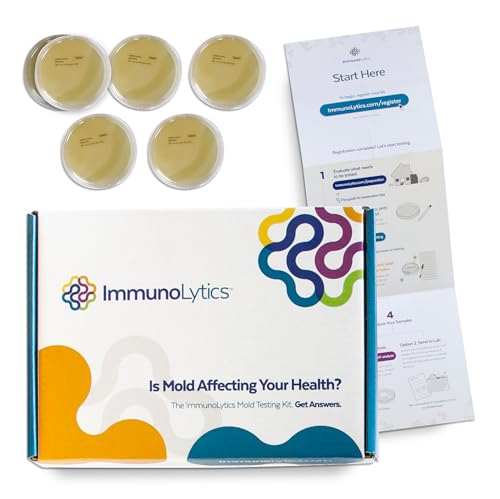
ImmunoLytics 6-Plate Mold Test Kit
US-made plates for six areas, with optional paid lab analysis and a phone consult with an indoor environmental professional.
$39.00Shop Now - Best for room-to-room comparison
Kayenqo Mold Test Kit (12 tests)
Twelve plates in two packs — test six areas twice (before and after cleanup) or twelve spots once. Shows presence, not danger.
$26.09Shop Now - Best comprehensive home kit
Detekt Mold Test Kit (4 mold + 4 bacteria)
US-made kit for air, surfaces and HVAC with a species guide and a free photo consultation if results are unclear.
$36.99Shop Now - Best budget multi-room kit
ENESNES Mold Test Kit (8 tests)
Eight plates with swabs and a guide, read in about 48 hours — enough for each room on one floor plus the HVAC return.



Product prices and availability are accurate as of October 22, 2026 and are subject to change.
Get a realistic price before you call anyone
Use our free Black Mold Removal Cost Estimator to get a tailored price range for your room, size, and severity — built from current national and regional pricing data. Then you'll know whether a contractor quote is fair before you commit.
Open the Cost Estimator →