Black Mold on Bathroom Ceiling: What Causes It and How to Remove It

Black mold on bathroom ceiling surfaces shows up as those speckled gray-black spots spreading across the paint, usually right above or near the shower. It looks alarming, and overhead mold raises a fair question: is this just steam, or is water leaking from above?
The answer determines everything about how you fix it. Steam-driven ceiling mold is a ventilation problem you can usually solve yourself. A leak from the roof, an upstairs bathroom, or a pipe in the ceiling is a different animal, and scrubbing the spots will never keep them away. Below I walk through how to tell the two apart, how to clean an overhead surface safely (it's trickier than a wall), and what actually keeps the ceiling clear long-term.
From Sukie's experience
In one of my bathrooms the ceiling kept speckling no matter how often I wiped it. I assumed it was just shower steam until I noticed the spots clustered in one corner rather than spread evenly — that turned out to be a tiny roof flashing leak, not steam at all. Once the flashing was fixed, the ceiling stayed clean. Pattern told me what the cleaning never could.
Steam or leak? Read the pattern first
Before you climb a ladder with a sponge, look closely at how the mold is distributed, because the pattern is diagnostic.
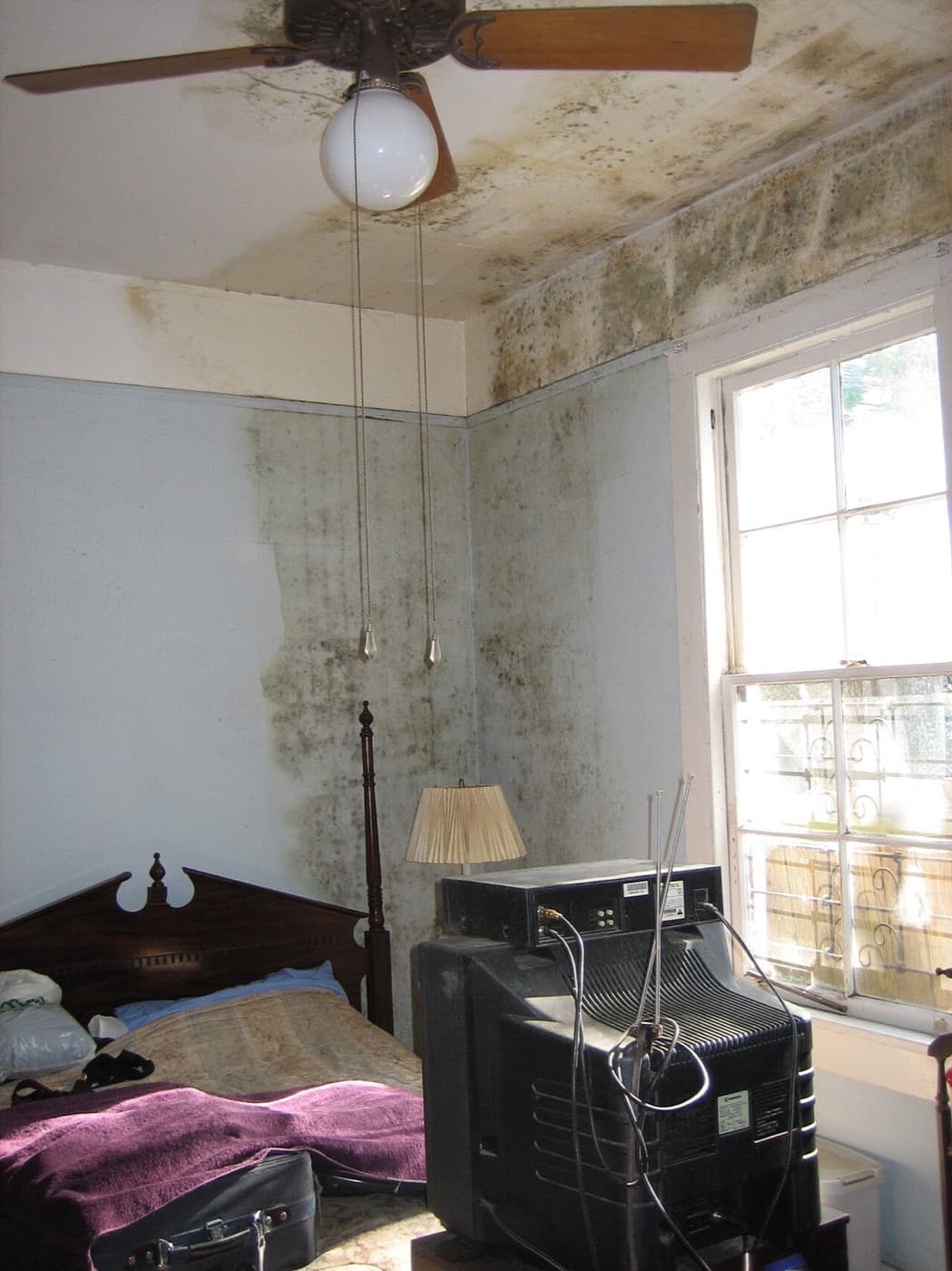
Even, fine speckling spread across the ceiling, heaviest above the shower usually means condensation: hot shower steam rises, hits the cool ceiling, condenses, and lingers because the room doesn't vent fast enough. This is the most common cause and the most fixable.
A defined patch, a stain with a ring or watermark, or peeling and sagging in one spot points to a leak from above — a roof, a second-floor bathroom, or a pipe running through the ceiling. If you see brown water staining mixed with the mold, or the drywall is soft and sagging, treat it as a leak until proven otherwise. The EPA stresses that you must fix the water problem before cleaning, or the mold simply returns — and a ceiling leak won't fix itself.
What's actually growing up there
The dark speckling on a bathroom ceiling is usually a community of common indoor molds and mildew feeding on the thin film of soap residue, dust, and skin cells that settles even on a ceiling, kept alive by repeated steam. People immediately worry it's 'toxic black mold,' but on a painted ceiling fed by shower steam, what you're most often seeing is ordinary surface growth that looks dramatic because it spreads in fine dots across a light surface. Color is a poor identifier — many harmless molds are dark, and the species people fear can appear gray or greenish — so don't let the look alone send you into a panic.
What genuinely matters is the amount, the surface (painted surface vs. saturated drywall), and the moisture feeding it. The EPA notes that if you can see mold, you generally don't need to pay for testing — the response is the same regardless of species: remove it, fix the moisture, and keep the surface dry. Save your money for a better exhaust fan rather than a sampling kit for a small ceiling patch.
Not sure if it's a DIY job or a pro job?
Get a ballpark price first, then decide.
Estimate my removal cost →Cleaning an overhead surface safely
Ceiling mold is harder and riskier to clean than a wall because gravity works against you: cleaner and loosened spores drip down, often straight toward your face. Take extra precautions.
- Protect yourself thoroughly. N95 respirator, sealed eye protection (goggles, not glasses — drips fall down), gloves, and a hat or hood. Wear old clothes you can wash immediately after.
- Ventilate. Fan on, door and window open.
- Set up a stable platform. A proper step stool or ladder on dry, non-slip footing — never reach awkwardly from the tub edge.
- Lay down drop cloths to catch drips.
- Apply cleaner sparingly so it doesn't run. A spray bottle and a sponge let you control how wet you go. For painted ceilings, a mild detergent solution or a dedicated mold cleaner works; on intact paint a diluted bleach solution can lift the staining. Never mix bleach with other cleaners.
- Wipe, rinse lightly, and dry the area with the fan running.
If the drywall is soft, crumbling, or sagging, do not just clean it — the surface is compromised and the affected section likely needs to be cut out and replaced once the leak above is fixed.
When the ceiling itself has to come out
Paint with a thin layer of surface mold can be cleaned. But if water has saturated the drywall — soft to the touch, sagging, stained through, or showing mold on the back side — cleaning the front won't help. Mold is feeding inside the board where you can't reach it. At that point the affected ceiling drywall needs to be removed, the leak repaired, the cavity dried, and new board installed. Use the EPA's roughly 10-square-foot rule of thumb: a small patch is manageable for a confident DIYer, but a large saturated area, anything involving the roof structure, or any sign of mold on framing above is a job for a remediation professional. For technique on overhead removal generally, see how to remove black mold from ceiling.
Why ventilation is the real cure
For the common steam-driven case, the permanent fix isn't a better cleaner — it's getting moisture out of the room before it reaches the ceiling. The exhaust fan is the hero here, and most ceiling-mold bathrooms have a fan that's too weak, runs too briefly, or vents into the attic instead of outdoors. Make sure your fan is sized for the room, actually vents to the outside, and runs during the shower plus 20 to 30 minutes after — a timer switch automates this. Cracking a window helps. So does leaving the shower curtain or door open afterward so the room dries. When I sized up the fan in one bathroom and added a timer, the ceiling stopped speckling entirely. The broader humidity strategy is covered in how to prevent black mold.
Is the attic above part of the problem?
One thing many people miss with bathroom ceiling mold is what's happening on the other side of that ceiling. A surprising number of bathroom exhaust fans vent straight into the attic rather than out through the roof or a wall — which means every shower dumps a cloud of warm, wet air into the attic, where it condenses on the cold underside of the roof deck and can grow mold up there too, while doing nothing to actually dry the bathroom. If your ceiling keeps speckling and your fan seems to run fine, climb up and check where the duct actually goes. It should terminate at a proper roof or wall cap outside, with an insulated duct and no disconnected sections dumping moisture into the attic.
Fixing a fan that vents into the attic does double duty: it stops feeding ceiling mold below and prevents a hidden, more expensive mold problem above. While you're up there, look for any signs of a roof leak — staining on the underside of the deck or wet insulation directly above the moldy ceiling spot is a strong clue that water, not just steam, is the cause.
Repainting the ceiling the right way
Once the mold is gone, the surface is dry, and the moisture source is fixed, you can refresh the ceiling — but order matters. Painting over residual mold or damp drywall just traps the problem and it bleeds back through. Let the area dry fully, spot-prime any stained spots with a stain-blocking primer so the discoloration doesn't ghost through, then finish with a mold-resistant bathroom paint formulated for high-humidity rooms. Skipping the primer is the classic mistake — old water stains love to reappear through a single coat of fresh paint. If you're prepping a previously moldy surface, the walkthrough on cleaning mold off walls before painting applies to ceilings too.
Get a realistic price before you call anyone
Use our free Black Mold Removal Cost Estimator to get a tailored price range for your room, size, and severity — built from current national and regional pricing data. Then you'll know whether a contractor quote is fair before you commit.
Open the Cost Estimator →