Best Dehumidifier for Mold: Sizing, Features, and Honest Picks

Best dehumidifier for mold prevention isn't about brand loyalty — it's about pulling enough moisture out of the air, fast enough, in the space you actually have. Mold needs moisture to grow, and the CDC and EPA both point to keeping indoor humidity below 50% as the single most effective way to keep it from taking hold. A dehumidifier is the appliance that gets you there in damp basements, crawl spaces and stuffy bathrooms.
I run one in my basement year-round now, and it has done more to keep mold from returning than any spray ever did. Below I'll walk through how to size a unit correctly, which features genuinely matter, and the specific models worth a look — with honest notes about where each one fits.
From Sukie's experience
After I cleaned mold out from behind my basement baseboards, a hygrometer showed the room sitting at 68% humidity even with no visible water — putting a 50-pint dehumidifier set to 45% on a continuous drain hose is the thing that finally kept it from coming back the following spring.
Why a dehumidifier is your best long-term mold defense
You can scrub, spray and replace drywall all day, but if the air stays damp the mold comes back. Mold spores are always present; what they need to grow is moisture. The EPA and CDC both recommend keeping indoor relative humidity below 50% — ideally between 30% and 50% — to make your home inhospitable to mold. A dehumidifier is the most direct way to hold that number in spaces that stay damp, like basements, crawl spaces and bathrooms. In my experience it's the difference between cleaning mold once and cleaning it every spring.
It helps to understand why humid air is the enemy. Warm air holds more moisture than cool air, so in summer a basement that feels cool actually pulls humid air down into it, where it cools, hits saturation, and leaves dampness on cold surfaces like concrete walls and the back of baseboards — exactly where I found mine growing. You often can't see standing water; the wall just stays at a relative humidity high enough for mold to thrive. A dehumidifier breaks that cycle by continuously pulling water out of the air before it can condense, which is why it works on the invisible dampness that a towel and a fan never touch.
How to size a dehumidifier (the part most people get wrong)
Capacity is rated in pints of water removed per 24 hours. Undersize it and the unit runs constantly without ever catching up; oversize it and you waste money and energy. Match capacity to both square footage and how damp the space is.
| Space size | Slightly damp (50-60%) | Very damp / wet |
|---|---|---|
| Up to 1,500 sq ft | 20-30 pint | 30-40 pint |
| 1,500-3,000 sq ft | 30-50 pint | 50 pint |
| 3,000-5,000 sq ft | 50 pint | 50-70 pint |
| Crawl space (enclosed) | Dedicated low-profile crawl unit | |
When in doubt, size up one tier — a slightly larger unit cycles less and lasts longer.
Not sure if it's a DIY job or a pro job?
Get a ballpark price first, then decide.
Estimate my removal cost →Features that actually matter
Skip the gimmicks and focus on these: a built-in humidistat so the unit holds a target humidity instead of running nonstop; a continuous-drain hose port so you're not emptying a bucket twice a day (essential in a basement); auto-restart after a power blip; a washable filter; and an auto-defrost if you'll run it in a cool basement, since coils can ice up below about 65°F. For crawl spaces, a built-in pump that pushes water uphill to a drain is worth the premium.
Matching the unit to the room
Different spaces have different needs. A bathroom or closet rarely needs more than a small 20-pint unit or even a Peltier mini. A finished basement almost always wants a 50-pint unit with a continuous drain. A very damp or large basement benefits from a high-humidity 50- or 70-pint model. A crawl space is its own category — humid, hard to access, and best served by a dedicated low-profile unit with a pump rather than a consumer model perched on the dirt.
Temperature is the variable people forget. Standard compressor dehumidifiers lose efficiency as the air gets cold, and below roughly 65°F their coils can frost over and the unit spends its time defrosting instead of dehumidifying. If you're running one in an unheated basement in shoulder season, or a crawl space, choose a model rated for low-temperature operation with auto-defrost — or, for crawl spaces specifically, a purpose-built unit designed for exactly those conditions. Buying a bargain consumer dehumidifier and putting it somewhere cold is a classic way to feel like the appliance 'doesn't work,' when really it's just out of its depth.
How I picked these dehumidifiers
I weighted: real-world reliability and longevity (compressor units quit when overworked, so capacity headroom matters), the presence of a true humidistat and continuous drain, fit to a specific room type, and honest expectations about the tiny Peltier units, which are maintenance tools, not remediation machines. I included a crawl-space-specific unit because consumer dehumidifiers genuinely struggle there, and pretending otherwise would do you a disservice.
I also weighed the things that don't show up on a spec sheet: how loud the unit is on the setting you'll actually use, whether the controls are simple enough that you'll set them correctly, and whether the drain port and hose routing are practical for a real basement rather than a showroom. A dehumidifier with a great pint rating but a confusing humidistat or a drain you can't easily route to a floor drain is a unit that ends up running on the bucket and shutting off — which is to say, not doing its job. The picks here all pair solid extraction with controls and drainage you can live with day to day.
Running it for mold control: settings and placement
Set the humidistat to 45% in problem areas — comfortably under the 50% mold threshold without overworking the unit. Place it centrally with clearance around the air intake and exhaust, run a continuous drain hose to a floor drain or sump so it never shuts off on a full bucket, and keep doors and windows closed so you're not dehumidifying the outdoors. Check the humidity with a cheap hygrometer for the first week and adjust. Clean the filter monthly.
The EPA's mold cleanup guidance uses roughly ten square feet as the point where a job stops being a reasonable DIY project, and that threshold is worth keeping in mind here.
Where a dehumidifier isn't enough
A dehumidifier manages humidity; it does not fix liquid water. If you have a leaking foundation, a plumbing leak, a sump that overflows, or standing water, fix that first — no appliance can outrun an active water source. Likewise, if mold already covers more than about 10 square feet, involves sewage or flooding, or is in your HVAC, clean and remediate that properly (often with a certified pro) and use the dehumidifier to keep it from returning. The machine is prevention and maintenance, not a remediation shortcut.
Energy use and running cost (what to actually expect)
People worry a dehumidifier will spike their power bill, and a poorly chosen one in a wet basement can certainly run a lot. But a correctly sized unit with a humidistat doesn't run constantly — it cycles on to pull the room back under your target and then idles. A modern 50-pint unit draws on the order of a few hundred watts while actively dehumidifying, comparable to a small window air conditioner, and far less averaged over a day because it isn't running full-time. Look for an ENERGY STAR rating if efficiency matters to you, and remember the cheapest way to lower the bill is to fix obvious moisture sources (a leaking dryer vent, an uncovered sump, foundation drainage) so the unit has less work to do. A dehumidifier that's fighting an active water leak will run forever; one that's just holding a sealed, dry-ish basement at 45% sips power by comparison.
Maintenance that keeps a dehumidifier working
These are simple machines, but they reward a little upkeep. Rinse or vacuum the air filter roughly monthly — a clogged filter chokes airflow and tanks performance. Periodically wipe out the bucket and the drip tray, because standing condensate can grow its own slime and even mold, which is a darkly funny way to undermine the whole point. If you use a continuous drain hose, check that it runs steadily downhill to the drain with no kinks or low spots where water can sit. At the end of a cold season, if you'll store the unit, run it dry first and keep it upright. Done consistently, this is fifteen minutes a few times a year, and it's the difference between a unit that lasts a couple of seasons and one that runs reliably for the better part of a decade — mine is well into its years and still holding the basement at target.
Common dehumidifier mistakes
The mistakes I see most: buying too small for a wet basement and wondering why humidity never drops; relying on the bucket instead of running a drain hose, so the unit sits off half the time; running it in a cold space without auto-defrost and icing the coils; and ignoring the moisture source entirely, expecting the appliance to fix a leak. Avoid those and a good unit will quietly keep your problem areas dry for years.
Two subtler ones round out the list. First, placing the unit in a corner jammed against walls so it can't draw and exhaust air freely — give it clearance on the intake and outlet. Second, never verifying the result: people set a number on the dial and trust it, but cheap built-in humidistats can be off by several points. A $10 standalone hygrometer across the room tells you the truth. When I first set mine to 50%, the actual room sat closer to 57%; nudging the dial to 45% got the real reading where I needed it, and that small correction is what finally kept the mold from returning.
Our picks
Picks below are Amazon affiliate links — we may earn a commission, at no cost to you.
- Best overall for basements
hOmeLabs 50-Pint Dehumidifier (7,000 sq ft rating)
50 pints/day at standard conditions with Wi-Fi control and a continuous-drain option. Reliable for large basements; use the hose in very damp months.
$269.99Shop Now - Best all-round value
Midea 50-Pint Dehumidifier (4,500 sq ft)
Energy Star, 35–85% humidity setting, quiet low mode and app control. The sensible default for a finished basement.
$219.99Shop Now - Best for single rooms
Frigidaire 22-Pint Dehumidifier
Compact unit with custom humidity control and a washable filter for a damp bedroom or bathroom.
$179.00Shop Now - Best for crawl spaces
AlorAir Sentinel HD55 Crawl Space Dehumidifier
Commercial-style unit built for crawl spaces (53 pints/day at AHAM conditions, auto defrost). Expensive, but made to run in cold, damp spaces where home units struggle.
$446.46Shop Now - Best for closets and small spaces
Eva-Dry E-333 Wireless Mini Dehumidifier
Renewable silica-gel unit — no cord while it works; plug it in to dry it out every few weeks. For closets and cabinets, not rooms.
$14.97Shop Now - Best high-capacity option
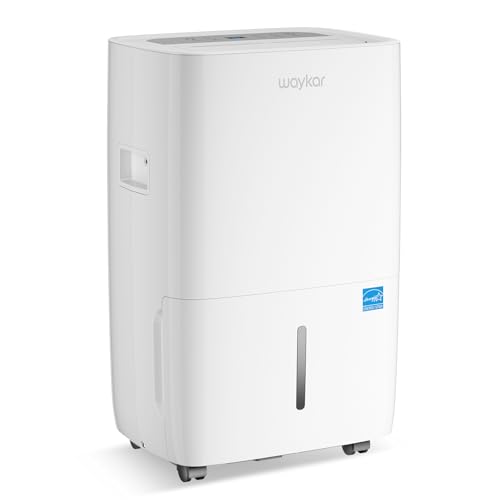
Waykar 80-Pint Dehumidifier
Energy Star, can be set as low as 30% RH, with swing airflow for even drying in very damp spaces.
$249.99Shop Now


Product prices and availability are accurate as of October 22, 2026 and are subject to change.
Get a realistic price before you call anyone
Use our free Black Mold Removal Cost Estimator to get a tailored price range for your room, size, and severity — built from current national and regional pricing data. Then you'll know whether a contractor quote is fair before you commit.
Open the Cost Estimator →