The Best Black Mold Removal Spray for Every Surface (Tested & Compared)

Best black mold removal spray shopping gets confusing fast, because half the bottles on the shelf only bleach the stain while doing nothing about the moisture or the roots underneath. After remediating mold in two of my own houses, I've learned that the right spray depends entirely on the surface and the job: a fast stain-lifter for tile and grout is a very different product from a no-rinse preventive you mist on framing lumber.
Below I break down the sprays I actually reach for, what each one is genuinely good at, where it falls short, and how to use it without making the problem worse. None of this replaces fixing the leak first — but once the surface is dry, the right bottle saves a lot of scrubbing.
From Sukie's experience
When the slow leak behind my tub surround finally came to light, the drywall stains lifted in seconds with an RMR-style stain remover — but the spray did nothing for the spore-soaked gypsum behind it, which I ended up cutting out and replacing anyway.
Stain removers vs. mold killers vs. preventives — know what you're buying
The single biggest mistake I see is treating every spray as interchangeable. There are really three jobs:
- Stain removers (RMR-86, Mold Armor, Tilex) use bleach or peroxide to make the black discoloration vanish. They're fantastic for the cosmetic problem on tile, grout and painted surfaces, but a clean-looking surface is not the same as a moisture problem solved.
- Mold killers / disinfectants (RMR-141, EC3) are formulated to kill the organism and are often EPA-registered for that claim. These matter when you want to disinfect after cleanup.
- Preventives (Concrobium Mold Control) leave a residual barrier that resists regrowth. I use these on framing and basement surfaces after they're dry.
For a lot of jobs you'll use two: a stain remover to clean, then a preventive to keep it from coming back. In my bathroom, for example, I used a bleach stain remover to whiten the grout lines and caulk that had gone black, then ran a thin coat of Concrobium along the seam after everything dried, so the next round of humidity didn't immediately reseed the same spot. Reaching for only one of the three is why so many people feel like their spray 'stopped working' — it didn't stop working, it just was never the right tool for the part of the job they still had left.
Porous vs. nonporous: why the surface decides the bottle
The U.S. EPA is blunt about this in its mold cleanup guidance: porous materials like drywall, ceiling tiles and carpet that are moldy usually can't be cleaned and should be removed and replaced. No spray reaches mold growing inside gypsum or soaked into wood fibers. So before you spend money on a bottle, ask whether the surface is hard and washable (tile, glass, finished metal, sealed wood, fiberglass tub) or porous and absorbent (unsealed drywall, ceiling tile, particleboard).
On hard surfaces, any of the stain removers above will do the job. On porous surfaces, a spray can knock down light surface growth, but if it's more than a stain, plan to cut and replace. That's the part the bottle's marketing won't tell you.
Not sure if it's a DIY job or a pro job?
Get a ballpark price first, then decide.
Estimate my removal cost →Bleach-based vs. no-bleach formulas
Bleach sprays whiten stains brilliantly on nonporous surfaces, but they're harsh on lungs and on porous materials the water content can actually feed regrowth. No-bleach options (Concrobium, EC3, CLR Mold & Mildew Clear) trade a little stain-lifting speed for lower odor and gentler use around kids, pets and sensitive lungs. I keep both on hand: bleach-type for the shower, no-bleach for framing and anything in an enclosed basement.
There's a practical reason the bleach-on-porous-surfaces issue matters so much. Household bleach is mostly water, and the active chlorine stays on the surface while the water soaks in. On drywall or bare wood, that means you've potentially added moisture to the exact material that's already feeding mold, and the surface looks clean for a while before it returns. That's not a knock on bleach — it's a knock on using it in the wrong place. Keep bleach formulas for tile, glass, fiberglass tubs, sealed surfaces and grout, and switch to a penetrating, no-bleach killer the moment the material is porous. Also, never mix a bleach spray with anything containing ammonia (some glass cleaners do), because the combination releases toxic chloramine gas.
How I picked these sprays
I prioritized products I've used or that remediation pros consistently rely on, then weighed: (1) honest fit to a specific job rather than do-everything claims, (2) wide availability so you can actually buy them, (3) realistic user feedback, and (4) whether the label is straight about being surface-only. I deliberately did not rank a single 'winner' for all uses, because the best black mold removal spray for your grout is the wrong pick for your basement studs.
Quick comparison table
| Product | Type | Best surface | Bleach? |
|---|---|---|---|
| RMR-86 | Stain remover | Grout, fiberglass, painted wood | Yes |
| Concrobium Mold Control | Killer + preventive | Framing, porous surfaces | No |
| RMR-141 | Disinfectant | Hard surfaces post-cleanup | No (quat) |
| Mold Armor | Stain remover | Bathroom, siding | Yes |
| Tilex | Stain remover | Shower, caulk, grout | Yes |
| EC3 | Botanical maintenance | Sensitive users, fogging | No |
Use this as a starting point, not gospel — your actual choice comes down to surface and how sensitive you are to fumes.
How to use mold spray safely
Fix the moisture source first; spraying a surface that's still getting wet just resets the clock. Then protect yourself: an N95 respirator, gloves and eye protection are the minimum even for small jobs. Ventilate the room, never mix bleach with ammonia or other cleaners, and follow the label dwell time so the product actually works. For anything larger than roughly 10 square feet, contamination from sewage or flooding, mold inside HVAC, or if anyone in the home has asthma or a compromised immune system, bring in a certified remediation contractor instead of relying on a spray bottle.
A few habits make spraying both safer and more effective. Pre-mist rather than blast — a heavy jet aerosolizes spores and sends them airborne, while a gentle mist wets the surface without launching a cloud. Wipe in one direction with a disposable cloth and bag it as you go, rather than smearing growth around with a sponge you keep reusing. Work top to bottom so drips fall onto surfaces you haven't cleaned yet. And give the area real airflow to the outdoors if you can — a box fan in a window pointed out does more than you'd think to clear both fumes and disturbed spores. When you're done, change out of your work clothes and wash them separately.
Mistakes to avoid with mold spray
Three traps I fell into so you don't have to: First, painting over moldy or stained drywall after a quick spray — the mold bleeds through and you waste the paint job; clean properly and confirm it's dry first. Second, assuming a disappeared stain means a solved problem; the bleach removed color, not the underlying water issue. Third, soaking porous materials with water-heavy sprays, which can leave them damper than before. When in doubt, dry, test, and only then decide whether a spray or a saw is the right tool.
A couple more worth flagging. Don't trust a 'mold-resistant' marketing claim to do the work of moisture control — no spray outlasts an active leak, and a residual film only helps in a space you've actually dried out. And don't store sprays carelessly: bleach formulas degrade over time and lose potency, so an old bottle that's been sitting in a hot garage for two years may underperform. Buy what you'll use, check that the surface is genuinely dry before you treat it, and re-evaluate after a week — if growth returns quickly, the spray was never the problem; the moisture is, and that's the thing to chase down.
Before you go: the questions I get asked most
Can I use the same spray indoors and outdoors?
Some are versatile, but outdoor surfaces like siding, decks and boat vinyl often do better with stronger marine-grade products such as Star Brite. Indoors, favor lower-odor formulas and good ventilation, especially in basements and bathrooms.
Reader questions, answered
Is no-bleach mold spray as effective as bleach?
For killing mold and preventing regrowth on porous surfaces, no-bleach products like Concrobium often outperform bleach, which can't penetrate. For instantly whitening stains on hard surfaces, bleach is faster. They're good at different things.
One last set of answers
When should I stop using sprays and call a professional?
Call a certified remediation pro when the affected area exceeds roughly 10 square feet, when there's sewage or flood water involved, when mold is in your HVAC system, or when anyone in the home has asthma or a weakened immune system. A spray bottle isn't the right tool for those situations.
DIY home remedies vs. commercial sprays
Plenty of people ask whether they even need a commercial product when vinegar, hydrogen peroxide and baking soda are sitting in the cupboard. The honest answer: those home remedies genuinely work on light surface mold on nonporous surfaces. Plain white vinegar, sprayed on and left for an hour before scrubbing, kills many common molds and is cheap and low-odor; 3% hydrogen peroxide is another solid, gentler option. Where the commercial sprays earn their price is convenience, speed on heavy stains (a dedicated stain remover whitens grout far faster than vinegar), and the residual prevention you get from a product like Concrobium. So my practical take is to reach for vinegar or peroxide on small, light jobs to save money, and step up to a purpose-made spray when you've got stubborn staining, a larger area, or you want that anti-regrowth film. Either way the rules are identical — dry the surface, protect yourself, and never mix products. One caution on vinegar and peroxide: like the commercial sprays, they sit on the surface and won't reach mold rooted inside porous material, so the same cut-and-replace judgment applies. And resist the urge to combine a home remedy with a commercial product to make it 'stronger' — mixing chemistries is how people accidentally create irritating or dangerous fumes. Pick one approach per surface and let it do its job.
Our picks
Picks below are Amazon affiliate links — we may earn a commission, at no cost to you.
- Best for fast stain removal on hard surfaces
RMR-86 Instant Mold Stain Remover
Bleach-based stain lifter that erases black surface stains on grout, fiberglass and painted wood almost instantly. It whitens the discoloration but is not a long-term preventive, so dry the area and fix the moisture source too.
- Best overall / best for prevention
Concrobium Mold Control
A no-bleach, no-VOC spray that crushes the mold as it dries and leaves a thin film that resists regrowth. Slower to remove stains than bleach products, but my pick for treating and preventing on porous materials.
- Best scrub-free stain remover
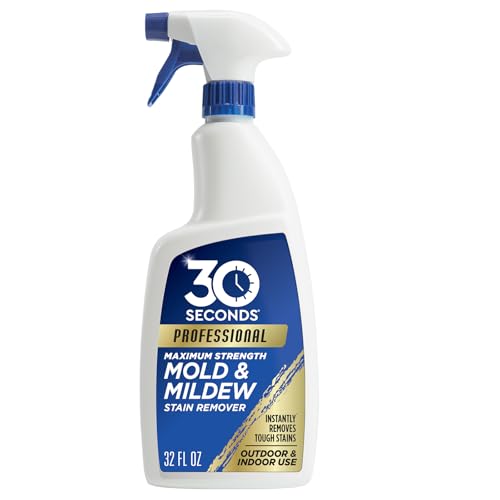
30 SECONDS Pro Mold & Mildew Stain Remover
Spray-on stain lifter for tile, siding, decks and grout that lightens black staining without scrubbing. Cosmetic — remove the growth and fix the moisture too.
$16.49Shop Now - Best for showers and grout
Tilex Mold & Mildew Remover
A bathroom staple with bleach that handles caulk, grout and shower stains. Effective on nonporous surfaces but it's surface-only and rough on lungs in tight spaces.
$20.57Shop Now - Best low-odor option
CLR Mold & Mildew Clear
A bleach-free foaming spray that clings to vertical surfaces, useful on caulk and tile. Lower odor than bleach formulas, though tough stains may need a second pass.
$11.04Shop Now - Best for caulk and grout lines
ACTIVE Mold Stain Remover Gel
A gel that clings to caulk beads, grout and washer door seals so it can sit on the stain instead of running off. Apply, wait, rinse.
$19.95Shop Now - Best for outdoor and marine surfaces
Star Brite Mold Stain & Mildew Stain Remover
A marine-grade stain remover that's strong on vinyl, fabric and outdoor surfaces. Powerful but corrosive — wear protection and rinse metal hardware promptly.
$16.99Shop Now




Product prices and availability are accurate as of October 22, 2026 and are subject to change.
Get a realistic price before you call anyone
Use our free Black Mold Removal Cost Estimator to get a tailored price range for your room, size, and severity — built from current national and regional pricing data. Then you'll know whether a contractor quote is fair before you commit.
Open the Cost Estimator →