How to Get Rid of Black Mold: A Step-by-Step Homeowner Guide

How to get rid of black mold comes down to one principle most quick fixes ignore: you have to stop the water before you ever pick up a spray bottle. Mold is a symptom of moisture, and if you scrub away the stain without solving the leak, condensation, or humidity feeding it, the colony is back within weeks. I learned this the hard way in my own bathroom, where I wiped down the same corner three times before realizing the wall behind the tub was soaking wet.
This guide walks through the full process in the order that actually works: find and fix the moisture, protect yourself, contain the area, clean what can be cleaned, throw out what can't, dry everything thoroughly, and decide honestly when a patch of mold is too big for a weekend project. Wherever it matters, I've leaned on guidance from the EPA and CDC so you're not just taking my word for it.
From Sukie's experience
In my 1990s bathroom a slow leak behind the tub surround had rotted a section of wall for months before I noticed the first speckles of black mold in the corner — by the time I opened the wall, the back of the drywall was completely black, which is exactly why I now tell everyone to check for hidden moisture first.
Step 1: Find and fix the moisture source first
Before any cleaning, hunt down where the water is coming from. Mold needs moisture, a food source (drywall paper, wood, dust), and time. You can't control the food or the spores floating in every home's air — but you absolutely can control the water. The EPA's mold cleanup guidance puts moisture control as the single most important step, and from experience that's correct.
Common sources I'd check, in order of how often they're the culprit:
- Plumbing leaks — under sinks, behind toilets, inside walls near tubs and showers. A flashlight and your hand on the surrounding material tell you a lot; damp or soft drywall is a giveaway.
- Condensation — cold surfaces like single-pane windows, exterior-wall closets, and uninsulated pipes that sweat.
- High humidity — bathrooms without working exhaust fans, basements, and laundry areas. Aim to keep indoor humidity below 50%.
- Roof and exterior leaks — stains on ceilings or the top of walls that worsen after rain.
Fix the source completely before moving on. If you skip this step, everything that follows is temporary.
Step 2: Decide if this is a DIY job or a pro job
Be honest about scope before you start. The EPA's general rule of thumb is that a mold patch larger than about 10 square feet (roughly a 3-foot by 3-foot area) is worth bringing in a professional. I'd also call a pro if:
- The mold came from sewage or a flood with contaminated water.
- It's inside your HVAC system or air ducts (cleaning it yourself can spread spores through the whole house).
- Anyone in the home has asthma, severe allergies, or a weakened immune system.
- You suspect the problem is much bigger behind a wall than what shows on the surface.
A small patch on a hard surface — a bathroom corner, a window sill, a section of tile — is reasonable to handle yourself with the right precautions. Anything that makes you hesitate is a sign to get a quote rather than risk it.
Not sure if it's a DIY job or a pro job?
Get a ballpark price first, then decide.
Estimate my removal cost →Step 3: Gear up with the right protection
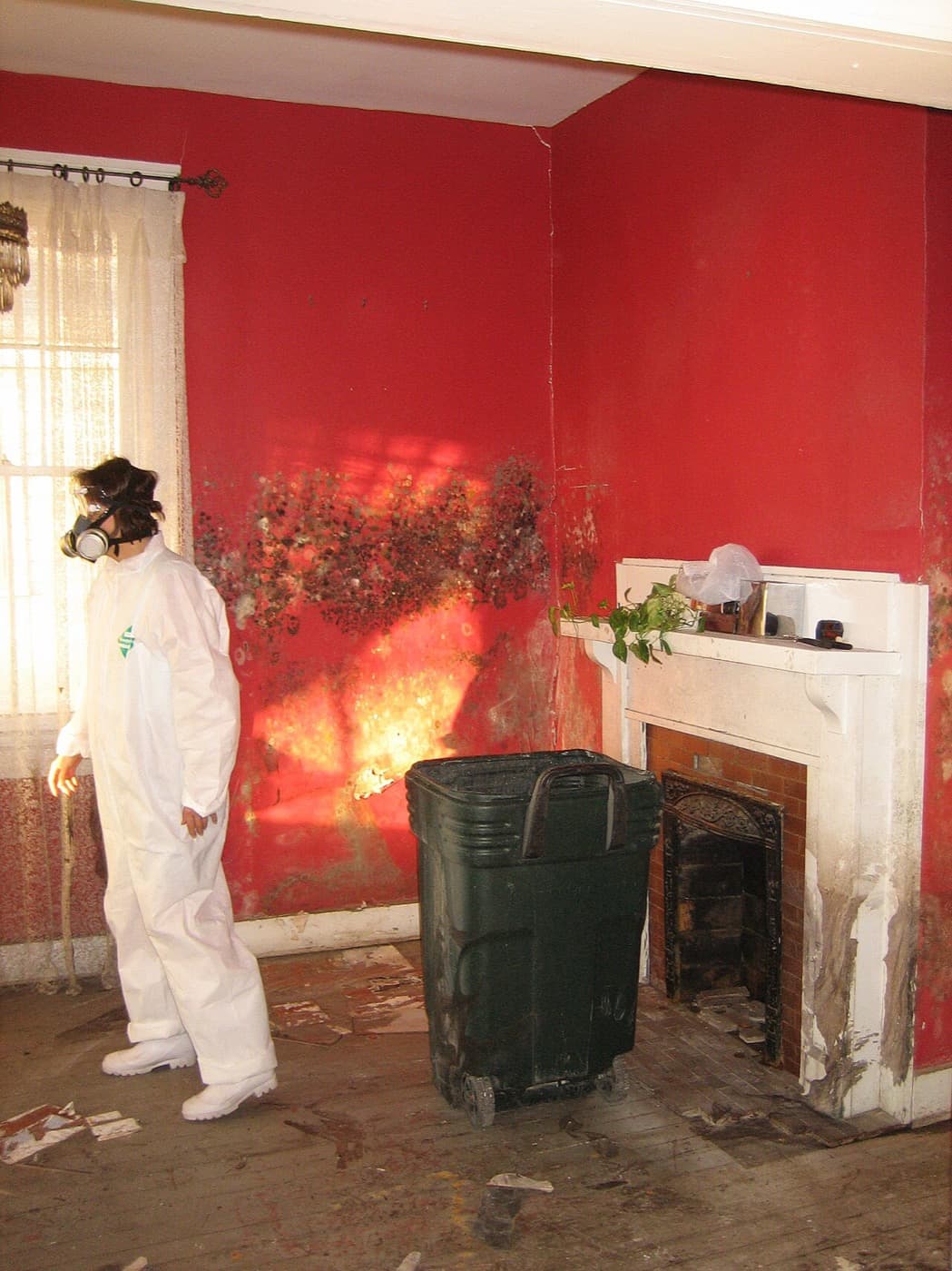
Disturbing mold releases spores into the air, so don't clean without protection — even for small jobs. At minimum, wear:
- An N95 respirator (or better, an N99/P100). A loose paper dust mask doesn't count.
- Non-porous gloves that go up the forearm — nitrile or rubber.
- Eye protection without vents, so spores and cleaning splashes can't get in.
Wear old clothes you can wash in hot water or throw away afterward. If you have asthma or any respiratory condition, this is the point to step back and let someone else do the work — the CDC notes people with such conditions are more likely to react to mold exposure.
Step 4: Contain the area before you disturb anything
The goal of cleaning is to remove mold, not redistribute it around your house. A little containment goes a long way:
- Close doors and turn off central HVAC so spores aren't pulled into the ductwork.
- For anything beyond a tiny spot, tape plastic sheeting over doorways and vents in the room.
- Open a window for fresh air, but don't set up a fan blowing across the moldy surface — that just launches spores everywhere.
- Lay down plastic to catch debris if you'll be removing material.
When I opened the wall in my bathroom, the difference between the contained side and the rest of the house was night and day — the plastic kept the mess in one room.
Step 5: Clean mold off hard, non-porous surfaces
Tile, glass, metal, sealed countertops, glazed surfaces, and finished wood with an intact coating can usually be cleaned and saved. Here's the method I use:
- Lightly mist the surface with water or your cleaning solution first — damp mold releases far fewer spores than dry mold when scrubbed.
- Scrub with a stiff brush and detergent and water. Plain soap and water plus elbow grease removes most surface mold, which is the EPA's baseline recommendation.
- For tougher spots, use a dedicated mold cleaner or white vinegar (vinegar penetrates better than bleach on slightly porous material).
- Wipe up the residue, then dry the surface completely.
You don't need to kill every spore — dead mold can still cause reactions — the point is to physically remove it. Bleach has its uses on hard surfaces, but skip it for porous materials; I cover that trade-off in detail on the bleach and what-kills-black-mold pages linked below.
Will a dehumidifier alone get rid of black mold? No — a dehumidifier stops mold from spreading by controlling humidity, but it won't remove existing growth. You still have to physically clean or remove the mold. A dehumidifier is a key part of preventing it from coming back, not a removal tool on its own.
Step 6: Remove porous materials that can't be saved
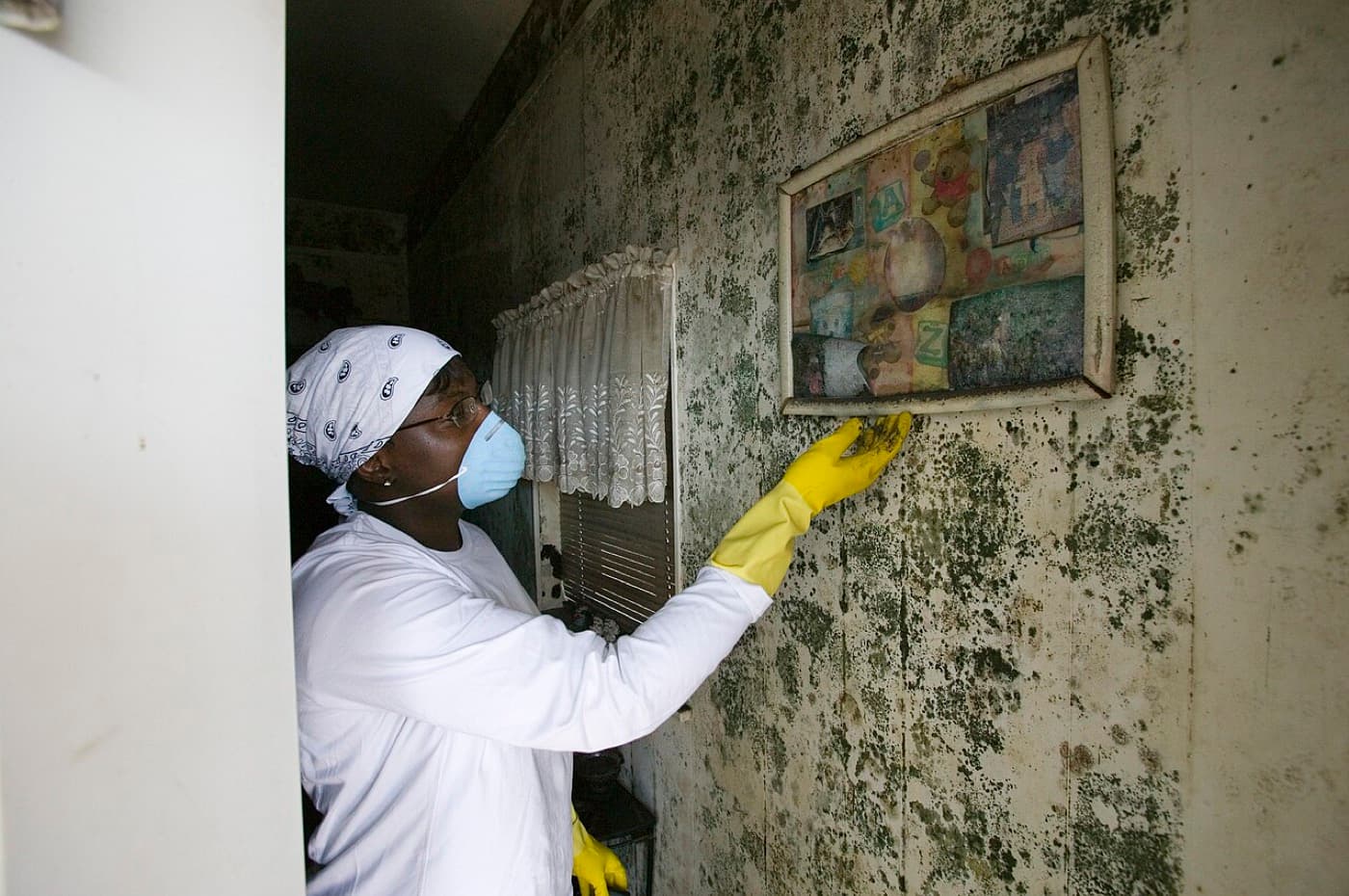
This is the step DIYers most often resist, and the one that matters most. Porous materials soak mold roots (hyphae) deep into their structure where surface cleaning can't reach. If these are heavily molded, cut them out and replace them:
- Drywall — once the paper backing is colonized, it's done. Cut out the affected section plus a margin of clean material.
- Carpet and padding — soaked, moldy carpet rarely comes back; the padding especially holds moisture and spores.
- Ceiling tiles, insulation, and unsealed particle board.
Bag moldy debris in heavy plastic, seal it, and carry it straight outside rather than through the house. In my basement, the baseboards and a strip of drywall behind them had to go — no amount of scrubbing was going to rescue paper-faced drywall that had been damp for a season.
Common mistakes that make black mold come back
After two cleanups and a lot of reading, these are the errors I see sink people's efforts most often:
- Treating the stain, not the moisture. The number one mistake. If you clean without fixing the water, you've bought yourself a few weeks, not a solution.
- Reaching for bleach on porous surfaces. It whitens the stain on drywall, wood, and grout while the mold survives underneath — making it look solved when it isn't.
- Scrubbing dry mold. Dry mold puffs spores into the air. Always mist first so you're disturbing damp material.
- Skipping protection 'because it's just a small spot.' Even small jobs aerosolize spores; an N95, gloves, and goggles are non-negotiable.
- Saving porous materials that are too far gone. Soaked, colonized drywall and carpet padding need to come out, full stop.
- Painting over it. The mold keeps growing under the paint and bleeds back through.
- Drying with a fan aimed at the mold mid-cleaning. That spreads spores; run airflow only after the moldy material is gone.
Avoid these seven and you've sidestepped almost every reason DIY mold jobs fail.
Step 7: Dry everything and verify it stays dry
Putting it into practice
The final step is the one that prevents a repeat visit. Once the area is clean and the bad material is gone, get it bone dry within 24–48 hours:
- Run a dehumidifier in the room — basements especially benefit from keeping one running long-term.
- Use fans for airflow after the moldy material is gone (not during cleaning).
- Monitor humidity with a cheap hygrometer and keep it under 50%.
A rough timeline for a small DIY job: a few hours of active cleaning and removal, then 1–2 days of drying before you patch and repaint. Don't rush new drywall or paint onto a surface that isn't fully dry — you'll seal moisture in and grow mold under the paint. Repaint only after the area has stayed dry, and consider a mold-resistant primer for extra insurance.
To make the drying stick, keep the conditions that caused the mold from returning: run the bathroom exhaust fan during and after showers, keep a dehumidifier going in a damp basement, and check humidity periodically with a hygrometer. I treat the first few weeks after a cleanup as a probation period — if the spot stays clean through a humid stretch, the moisture fix worked; if mold creeps back, that's my cue to look harder for water I missed rather than just scrubbing again. Getting rid of black mold for good is less about the cleaning day and more about the boring, ongoing job of keeping the area dry.
Get a realistic price before you call anyone
Use our free Black Mold Removal Cost Estimator to get a tailored price range for your room, size, and severity — built from current national and regional pricing data. Then you'll know whether a contractor quote is fair before you commit.
Open the Cost Estimator →