Black Mold in Shower: Why It Keeps Coming Back and How to Stop It

Black mold in shower stalls is the single most relentless mold problem in most homes, because the shower is the one place that gets soaked every single day. Water pools in grout lines, seeps into caulk seams, clings to corners the squeegee misses, and feeds on the soap scum and body oils coating every surface. You scrub it away, it looks great for a week, and then the black creeps back along the same caulk line. The reason it keeps returning is that surface scrubbing rarely reaches where the mold actually lives, and the daily flood of water never lets the area dry out. This guide is about breaking that cycle: matching the right cleaner to the right surface, knowing when to stop scrubbing and start replacing, and building a thirty-second daily habit that does more than any deep clean.
From Sukie's experience
I fought a black line in my shower caulk for two years — scrub, gone, back, scrub again. Bleach gel would whiten it for a few days and then it crept back darker. The day I finally cut the old silicone out completely, cleaned and dried the channel, and re-caulked with mold-resistant silicone, the problem disappeared and never came back. The mold had been living inside the caulk the whole time, where no cleaner could reach.
Why showers grow mold faster than anywhere else
Mold needs moisture, a food source, and time on a surface. The shower delivers all three on repeat. Daily hot water keeps every surface wet; soap scum, shampoo film, and skin cells provide endless food; and unless the stall dries fully between uses, the surface never stops being a viable home for spores. The EPA frames mold control as fundamentally moisture control — and the shower is the wettest moisture source in the house, used every day. That's why the same prevention tricks that work elsewhere need to be more disciplined in the shower.
Match the cleaner to the surface
The biggest mistake people make is using one cleaner everywhere. Different shower surfaces respond to different treatments, and using the wrong one wastes effort. Here's how they compare:
| Surface | What works | Notes |
|---|---|---|
| Glazed tile & glass (non-porous) | Mold spray, or diluted bleach (~1 cup/gallon) | Wipes clean easily; bleach lifts staining well here |
| Grout (porous) | Scrub with mold cleaner or baking-soda paste; consider re-sealing | Stains soak in; bleach is unreliable deep down |
| Silicone caulk | If mold is in the caulk, replace it | Scrubbing rarely works; mold lives inside the seam |
| Acrylic/fiberglass surround | Mild mold cleaner, soft cloth | Avoid abrasive pads that scratch and create new mold footholds |
| Stone tile (marble, travertine) | pH-neutral stone cleaner only | Never use bleach or acid — it etches the stone |
One safety rule overrides all of this: never mix bleach with ammonia, vinegar, or other cleaners — the fumes are dangerous. Use one product at a time, rinse, and ventilate.
Not sure if it's a DIY job or a pro job?
Get a ballpark price first, then decide.
Estimate my removal cost →Gear up before scrubbing
Even routine shower cleaning kicks spores and cleaner mist into a small, enclosed space. Wear an N95 respirator, gloves, and eye protection, and run the exhaust fan with the door open the entire time. If you have asthma or any respiratory condition, the shower's tight, fume-prone space is exactly where you should not be doing aggressive mold removal — have someone else do it. The CDC notes people with allergies, asthma, or weakened immune systems can react more strongly to mold, and a sealed shower stall concentrates exposure.
Cleaning grout the right way
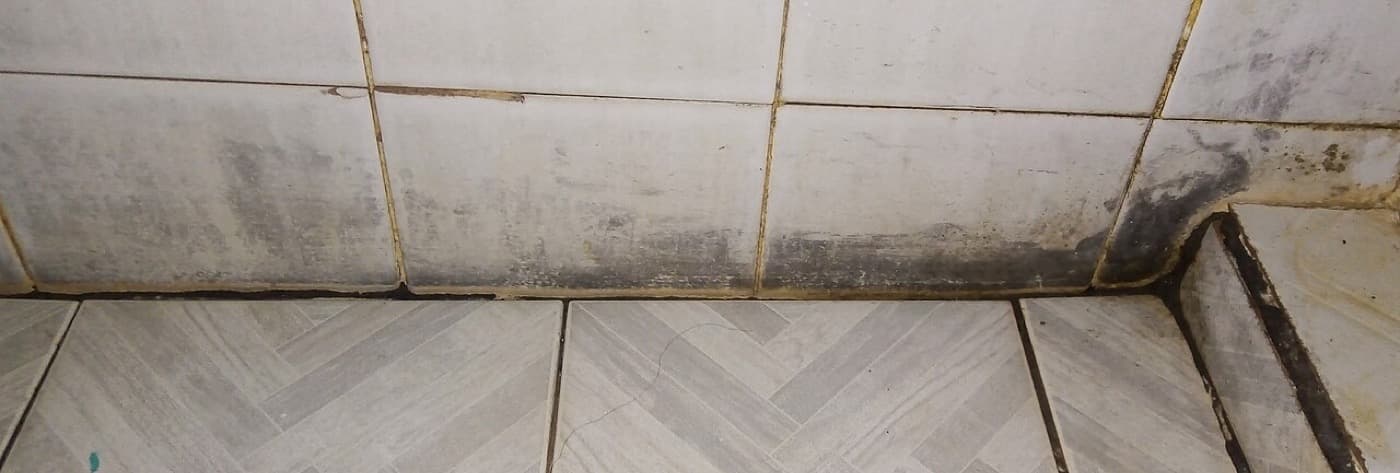
Grout is porous, so mold roots into it and surface wiping won't get it all. To actually clean grout: ventilate and gear up; make a thick paste of baking soda and water (or use a dedicated grout/mold cleaner) and work it into the lines with a stiff grout brush or an old toothbrush; let it sit several minutes; scrub firmly along each line; rinse and dry. For stubborn staining on non-stone tile, a diluted bleach solution applied to the grout can lighten it. Once grout is clean and fully dry, applying a grout sealer makes it far less absorbent so mold can't dig in as easily next time. The detailed method is in how to remove mold from shower caulk and grout.
When the caulk has to be replaced
This is the fix almost everyone skips, and it's the one that finally ended my two-year battle. If a black line keeps returning along the silicone seam where the wall meets the tub, floor, or where panels join, the mold is growing inside the caulk. No cleaner reaches there. The only real solution is replacement: cut out the old caulk with a utility knife or caulk-removal tool, scrape the channel clean, kill and clean any residual mold, let it dry completely (a damp channel will trap moisture under new caulk and restart the problem), then apply a fresh bead of mold-resistant silicone caulk and let it cure fully before getting it wet. It's a one-hour job that solves what years of scrubbing can't.
Is the mold going deeper than the surface?
Sometimes shower mold is a symptom of a bigger problem behind the wall. Watch for these warning signs: a musty smell that lingers even when the shower looks clean; loose, hollow-sounding, or cracked tiles; a soft spot in the wall or floor; or staining appearing on the wall outside the shower or on the ceiling below an upstairs shower. Those suggest the shower pan, the surround, or a pipe is leaking water into the wall cavity, feeding hidden mold on drywall and studs. That's exactly the situation I eventually found behind a tub surround in my old house — what looked like a clean bathroom hid a rotted, mold-coated wall. Per the EPA's roughly 10-square-foot guideline, hidden or large-area mold like this is best handled by a certified remediation professional, not a sponge.
The daily habit that beats any deep clean
Removal is a one-time event; prevention is a daily one, and the daily side is where shower mold is actually won. A thirty-second routine after each shower starves mold of the standing water it needs:
- Squeegee the glass, tile, and surround — this removes most of the water mold would otherwise feed on.
- Run the exhaust fan during the shower and 20 to 30 minutes after; a timer switch automates it.
- Leave the door or curtain open so the stall dries instead of staying sealed and humid.
- Spread out a wet bath mat or hang it to dry rather than leaving it bunched on the floor.
- Wipe down corners and the caulk seams with a towel once a day — those are the spots that stay wettest.
This habit did more for my shower than any product ever did. For the whole-house version of this thinking, see how to prevent black mold.
Re-grouting and resurfacing as a reset
If your grout is crumbling, deeply stained, or the surround is old and porous, sometimes the most durable fix is a reset rather than endless cleaning. Re-grouting with quality grout and sealing it, or having an old fiberglass surround professionally resurfaced, gives you a smooth, intact, well-sealed surface where mold has nowhere to root. Combined with good ventilation and the daily squeegee habit, a fresh, sealed surface stays clean far longer than a patched, pitted old one you're constantly fighting. It costs more upfront than a bottle of cleaner, but if you've been re-scrubbing the same shower for years, the math often favors the reset.
Get a realistic price before you call anyone
Use our free Black Mold Removal Cost Estimator to get a tailored price range for your room, size, and severity — built from current national and regional pricing data. Then you'll know whether a contractor quote is fair before you commit.
Open the Cost Estimator →