How to Remove Black Mold From Walls Without Spreading It

How to remove black mold from walls depends almost entirely on what the wall is made of and how deep the mold has gone. A painted drywall surface with a light surface haze is a very different job from a wall where the back of the drywall has turned black — and treating them the same way is how people end up doing the work twice. The honest first move isn't cleaning at all; it's figuring out whether the moisture behind the wall is fixed and whether the wall itself can be saved.
Below I'll walk through the three wall types you're most likely facing — painted/sealed walls, bare or saturated drywall, and tiled walls — plus the protection and containment that keep you from breathing in or scattering spores. I've remediated mold on both a tiled bathroom wall and a drywall basement wall, and the lesson both times was the same: surface staining can hide structural damage underneath.
From Sukie's experience
When I peeled back a section of basement drywall that only showed a faint gray smudge on the painted side, the hidden back was solid black and crumbling — that's the moment I stopped trusting how a moldy wall looks from the front.
Before you clean: stop the water and check what's behind the wall
Mold on a wall is almost always telling you water is getting in — from a plumbing leak, a roof or window leak, or condensation on a cold exterior wall. Find and fix that source first. The EPA stresses that without controlling moisture, mold will simply return.
Then assess depth. Press on the wall: if drywall feels soft, spongy, or crumbles, the damage is structural and surface cleaning won't fix it. A small, firm, surface-only spot on a painted wall can be cleaned. Widespread softness, a musty smell that lingers, or mold that keeps reappearing in the same place all point to a problem behind the wall that needs the drywall opened or removed.
A few diagnostic tricks help here. Tap along the wall with your knuckles — moisture-damaged drywall sounds and feels different (duller, softer) than sound material. Look at the pattern of the staining: mold that radiates out from a single point, or runs in a vertical line, often traces a hidden leak behind it. And trust your nose. A persistent musty, earthy smell in a room with no visible mold almost always means there's growth out of sight, commonly behind or inside a wall. If you find that the moisture is from condensation rather than a leak — say, on a cold north-facing exterior wall in a room you don't heat well — the fix is different: better insulation, ventilation, and humidity control rather than plumbing repair. Matching the fix to the actual moisture source is the whole game.
Protect yourself and contain the room
Even a modest wall cleaning sends spores airborne. Put on an N95 respirator (or better), arm-length nitrile or rubber gloves, and unvented goggles before you touch anything. Wear clothes you can wash hot or discard.
For containment: turn off your HVAC so spores don't travel through ducts, close the door, and tape plastic over any vents in the room. Open a window for ventilation, but don't aim a fan at the moldy wall — you'll blow spores across the whole space. If you'll be cutting drywall, lay plastic sheeting on the floor to catch debris. If anyone in the home has asthma or a compromised immune system, the CDC advises keeping them away from the work entirely.
Not sure if it's a DIY job or a pro job?
Get a ballpark price first, then decide.
Estimate my removal cost →Painted or sealed walls: clean the surface
If the wall is painted and the paint is intact, the mold is likely sitting on the surface rather than rooted deep, and you can usually clean it:
- Lightly mist the area with water or your cleaning solution so dry spores don't puff into the air when you scrub.
- Wipe with a sponge or cloth and a solution of detergent and warm water. For stubborn spots, white vinegar (sprayed on, left an hour, then scrubbed) penetrates better than bleach on slightly porous paint.
- Rinse, wipe again with a clean damp cloth, and dry the wall thoroughly.
- Once fully dry, prime with a stain-blocking mold-resistant primer before repainting if staining remains.
Don't soak the wall — excess water is the last thing a mold-prone surface needs. The aim is to remove the growth, not drench the drywall behind the paint.
Bare or saturated drywall: when to cut it out
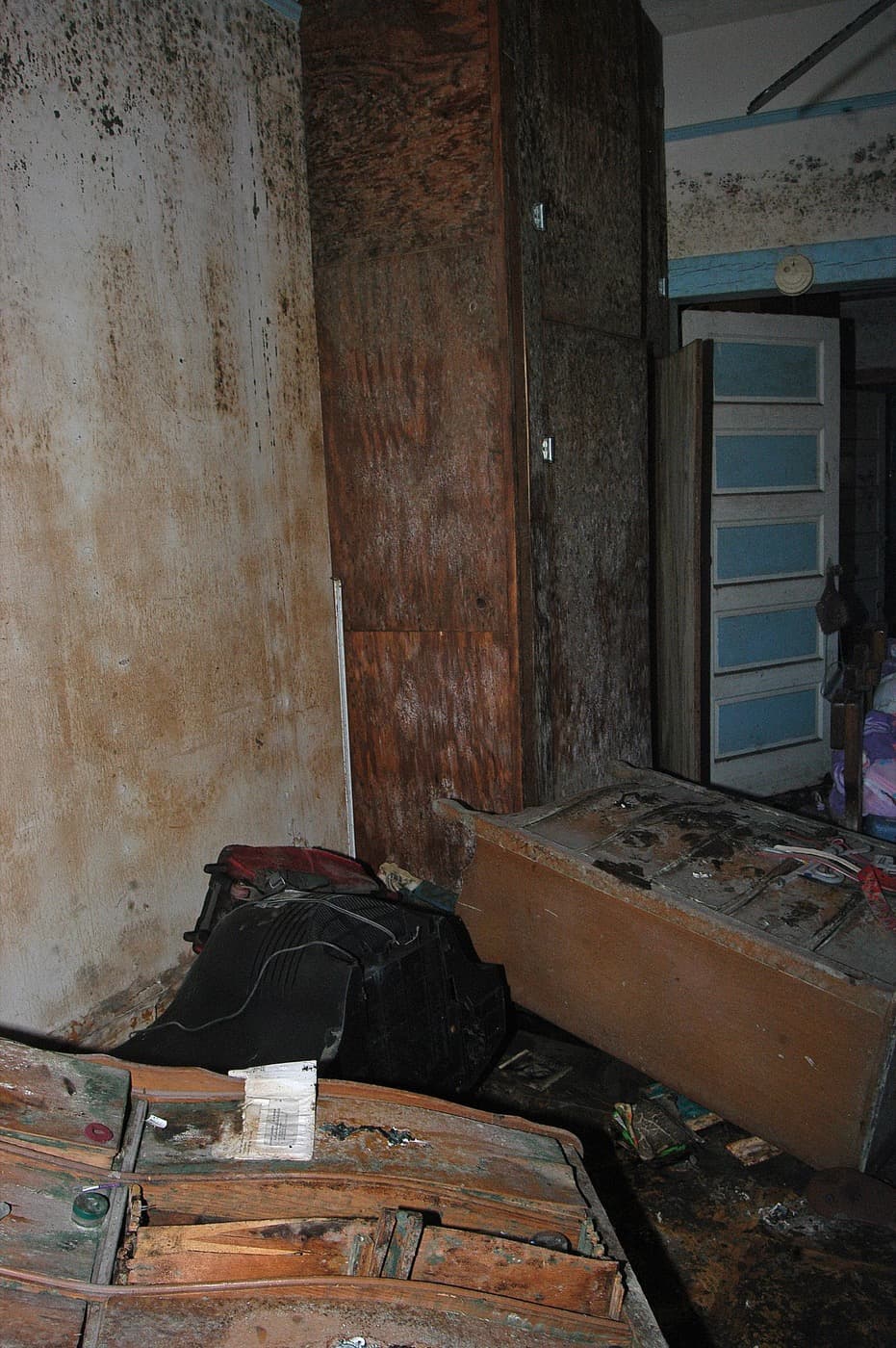
Unpainted drywall and drywall whose paper backing has been colonized cannot be reliably cleaned — the mold roots into the paper and gypsum where you can't reach. This is the situation where removal beats cleaning every time. To cut out a moldy section:
- Mark a clean-edged rectangle around the damage, extending a few inches into clearly unaffected material.
- Mist the surface to suppress spores, then score and cut the section out with a utility or drywall saw.
- Inspect the framing and insulation behind it — moldy insulation gets bagged and tossed; wood framing can often be cleaned and dried if it's structurally sound.
- Seal the debris in heavy plastic bags and carry them straight outside.
- Let the cavity dry completely (a dehumidifier helps) before installing new drywall.
This is also where you should be honest about scope. If the affected drywall is larger than roughly 10 square feet, the EPA recommends a professional — and so do I, because once you open one moldy wall you sometimes find a lot more than you expected.
Tiled and other non-porous walls
Tile, glass, and other hard, non-porous wall surfaces are the easiest to save because mold can't root into them — it only colonizes the grout and caulk. Scrub the tile with detergent and water or a mold cleaner. For discolored grout lines, a paste of baking soda and water or a vinegar soak followed by scrubbing works well; bleach-based products can clean and lighten stains on hard surfaces but won't fix porous grout that's mold-stained all the way through. Badly moldy caulk is cheap to remove and replace, and that's usually the cleaner fix than trying to scrub it back to white. To re-caulk: dig out the old bead completely with a caulk-removal tool or utility knife, clean and dry the joint, then run a fresh bead of mold-resistant silicone caulk. In my bathroom the grout responded to a vinegar soak, but the caulk along the tub was permanently stained, and replacing it took ten minutes and a few dollars — far less effort than the hours I'd wasted trying to scrub it clean.
Tools and supplies you'll want on hand
Gathering everything before you start saves you from running to the store mid-job with moldy gloves on. For a typical wall cleaning, I keep ready:
- Protection: N95 (or better) respirator, arm-length nitrile gloves, unvented goggles, old clothes.
- Containment: plastic sheeting, painter's tape, plastic drop cloth, heavy-duty trash bags.
- Cleaning: spray bottle of white vinegar, a second bottle of water for misting, dish detergent, a stiff scrub brush, sponges, and clean rags.
- For drywall removal: a utility knife or drywall saw, a flashlight to inspect the cavity, and a pry bar for trim.
- Drying and finishing: a dehumidifier, a fan (for after removal), a hygrometer, mold-resistant primer, and patch materials if you cut anything out.
Having the dehumidifier and hygrometer on hand matters more than people expect — the cleaning is the quick part, but verifying the wall is genuinely dry before you close it up is what prevents a repeat. If you find yourself reaching for a respirator you don't have or improvising containment with a bedsheet, that's a sign to pause and gear up properly rather than push through.
Dry it out and keep it from coming back
Whatever the wall type, the job isn't done until the area is dry and staying dry. Get it dry within 24–48 hours using a dehumidifier and, once the moldy material is gone, fans for airflow. Keep room humidity under 50% with a hygrometer to verify. In a basement, I run a dehumidifier continuously; in a bathroom, the fix was a proper exhaust fan that actually vents outside. Repaint only after the wall is fully dry, and a mold-resistant primer adds a layer of insurance against a repeat in the same spot.
One more habit worth building: after you've fixed and repainted, keep an eye on that wall for a few weeks. Mold returning in the same place is the clearest possible sign that the moisture source wasn't fully resolved. In my basement, I checked the repaired corner every time I went down for laundry, and because it stayed clean through a humid stretch, I knew the dehumidifier and the new baseboard caulking had actually done the job. If it had come back, I'd have known to open the wall again and look harder for water — better to learn that in week three than after I'd hung pictures over it. Walls are forgiving if you respect the order of operations: dry first, remove what can't be saved, clean what can, dry again, then finish.
Get a realistic price before you call anyone
Use our free Black Mold Removal Cost Estimator to get a tailored price range for your room, size, and severity — built from current national and regional pricing data. Then you'll know whether a contractor quote is fair before you commit.
Open the Cost Estimator →