Is Black Mold Dangerous? What the Science Actually Says

Is black mold dangerous? The honest answer is: it can be a real health irritant for some people, but the worst-case stories you have read online are mostly exaggerated. There is no scientifically proven link between ordinary household "black mold" and the severe poisoning headlines that scared everyone in the early 2000s. What is well established is that any indoor mold, of any color, can trigger allergy and respiratory symptoms and signals a moisture problem you need to fix.
I am not a doctor, and this page is not medical advice. But after living with black mold in two of my own homes and reading the actual public-health guidance instead of the scare blogs, I want to give you a calmer, more accurate picture so you can make a sensible decision about your own family.
From Sukie's experience
When we found the slick black patch behind our tub surround, my first instinct was panic, and I spent a night convinced we had poisoned ourselves. The thing that actually settled me down was reading the CDC page and realizing the responsible move was simply fix the leak, wear a respirator, and clean it, not flee the house.
Where the "toxic black mold" panic came from
Most fear around black mold traces back to Stachybotrys chartarum, a dark greenish-black mold that grows on chronically wet, cellulose-rich material like soaked drywall and ceiling tile. In the 1990s it was linked in some reports to severe infant illness, and the media ran with the phrase "toxic black mold." Later reviews found the original link could not be confirmed.
Here is the key thing the headlines skipped: "black mold" is not a single species. Dozens of common indoor molds look dark, and you genuinely cannot tell Stachybotrys from harmless dark mold by eye. According to the CDC's mold page, the practical guidance is the same regardless of type or color: if you can see or smell mold, remove it and fix the moisture, because sampling rarely changes what you should do.
What black mold can actually do to your health
The realistic, documented effects of indoor mold exposure are allergy-type and respiratory, not dramatic poisoning. Common reactions include a stuffy or runny nose, sneezing, red or itchy eyes, throat irritation, coughing, and wheezing. People with a mold allergy or asthma can react more strongly, and ongoing exposure can make asthma harder to control.
The EPA notes that molds also produce allergens and irritants, and in some cases potentially toxic substances called mycotoxins. The important nuance is that simply detecting mold or mycotoxins in a building does not by itself prove anyone has been made ill. The dose, the duration, and the individual all matter. For most healthy adults, a small visible patch caught early is a cleanup chore, not a medical emergency.
Not sure if it's a DIY job or a pro job?
Get a ballpark price first, then decide.
Estimate my removal cost →Who is most at risk
Risk is not evenly spread. The groups public-health agencies single out as more vulnerable to mold-related symptoms are:
- People with asthma or other chronic lung conditions like COPD
- People with mold allergies or general allergy sensitivity
- People who are immune-compromised (chemotherapy, organ transplant, advanced HIV) — they can develop serious fungal lung infections
- Infants and young children
- Older adults
If you or someone in your household is in one of these groups, take the situation more seriously: do not let them be in the room during cleanup, and lean toward hiring a certified professional rather than DIYing a large area. For everyone, if you have persistent unexplained respiratory symptoms, see a doctor — they can test for a mold allergy and rule out other causes.
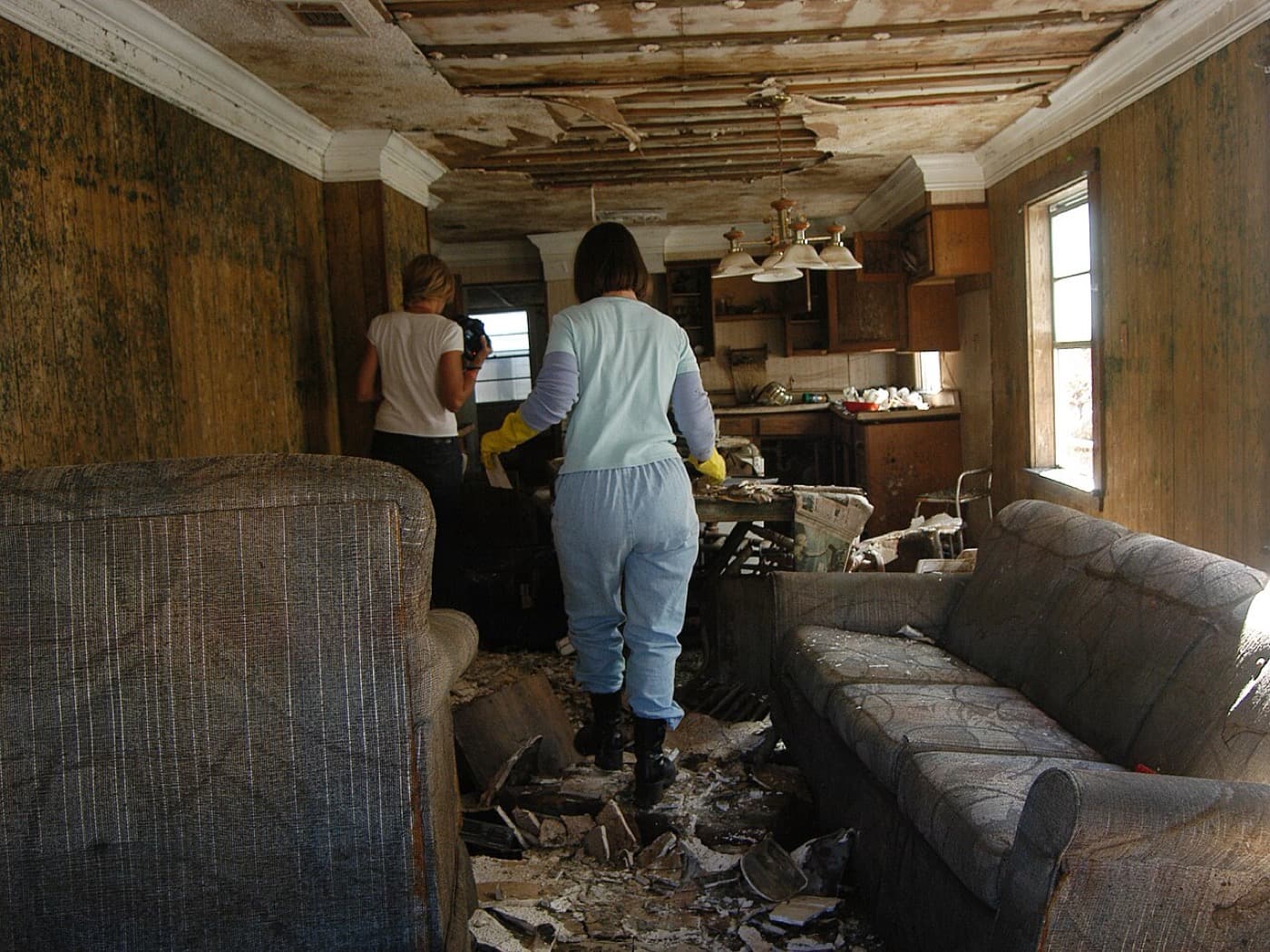
When black mold is genuinely worth worrying about
A few situations move black mold from "annoying chore" toward "call someone":
- Large area. EPA guidance suggests homeowners can usually handle patches under roughly 10 square feet. Beyond that, get professional help.
- Contaminated water. Mold from sewage backups or flood water is a different hazard entirely — do not DIY that.
- Inside the HVAC system. Mold in ducts can spread spores through the whole house and needs a pro.
- Vulnerable occupants. See the at-risk list above.
- It keeps coming back. Recurring mold means a hidden moisture source you have not solved.
Outside those flags, the danger is mostly about exposure during a sloppy cleanup, which is very controllable with the right precautions.
How to clean it safely (and reduce the actual risk)
The single most protective thing you can do is fix the water source first — a leak, condensation, or humidity problem. Mold cannot survive without moisture, and cleaning it without fixing the leak just guarantees a return visit. After that:
- Wear an N95 respirator (or better), nitrile gloves, and eye protection that seals around the eyes.
- Ventilate the area and, if possible, isolate it so spores do not drift into living spaces.
- Scrub hard, non-porous surfaces with detergent and water; the goal is physical removal, not just killing it.
- Throw out porous materials that are heavily affected — soaked drywall, carpet, ceiling tiles. They usually cannot be saved.
- Dry everything completely within 24–48 hours.
The EPA's mold cleanup guide is a solid, free reference for the full procedure. Keeping spores out of your lungs during the work is what actually keeps the job safe.
Should I leave my house if I find black mold? Generally no, not for a small, localized patch. Evacuation is only worth considering for extensive contamination combined with vulnerable occupants, or after events like flooding. For most homeowners the right move is to fix the moisture and clean the area, not move out.
Mycotoxins: what they are and what they aren't
The scariest word in the black-mold conversation is "mycotoxin." These are toxic compounds that certain molds, including some strains of Stachybotrys, can produce under the right conditions. Their existence is real, and that is the kernel of truth the alarmist articles build on. But two facts get left out. First, a mold does not always produce mycotoxins — production depends on the strain, the material it grows on, temperature, and moisture, so the presence of the mold does not guarantee the presence of toxins. Second, and more important, the main route by which mycotoxins are known to harm people is ingestion of contaminated food, not breathing air in a moldy room.
The science on inhaling mycotoxins from indoor mold at typical household levels causing serious systemic illness is, to be blunt, not settled and not strong. That is why agencies like the EPA frame the practical risk of indoor mold around allergens and irritants rather than around toxic poisoning. None of this means "do nothing" — it means the proportionate response is removal and moisture control, not panic. Treat mycotoxins as a reason to clean up promptly and protect your lungs during the work, not as a reason to believe your home has been chemically weaponized.
Black mold vs. other household molds: does the species matter?
Homeowners often want to know whether the dark mold they found is "the bad kind." From a what-do-I-do standpoint, it rarely matters. Common indoor molds — Cladosporium, Penicillium, Aspergillus, Alternaria, Stachybotrys and others — all share the same basic story: they grow where there is moisture, they release allergenic spores, and they should be removed. Some are more allergenic than others, and Aspergillus is the species most associated with serious lung infections in immune-compromised people, but you cannot tell any of them apart by eye, and the cleanup procedure does not change based on the answer.
This is exactly why both major U.S. health agencies de-emphasize species testing for ordinary homeowners. Spending money to learn the Latin name of the mold on your wall does not get the wall any cleaner or any drier. The far better investment is finding and fixing the water source so it cannot grow back. If you genuinely need the identification — for a legal dispute, a real-estate transaction, or a doctor investigating a specific patient — that is when professional sampling earns its keep.
Property risks, not just health risks
It is easy to fixate on health and forget that black mold is also a sign your house is being quietly damaged. Wherever a mold colony is thriving, water has been sitting long enough to feed it, and that same water rots wood framing, crumbles drywall, corrodes fasteners, and can compromise insulation. Left alone, a small mold patch behind a wall can become a structural repair that costs far more than the cleanup would have. Mold can also lower indoor air quality enough to be a problem at resale: many home inspectors flag visible mold, and buyers get nervous.
So even if you are a healthy adult who shrugs at the allergy risk, there is a hardheaded financial case for dealing with mold early. The longer the moisture runs, the bigger the eventual bill. Catching it when it is a 1-square-foot patch you can clean in an afternoon is a very different outcome than discovering rotted studs behind the shower two years later.
Putting the danger in perspective
The bottom line on how worried to be
So, is black mold dangerous? Treat it as a respiratory irritant and a sign of a moisture problem, not as a poison that will harm a healthy person from across the room. The dangerous version of the story — the one where any dark spot means you must evacuate — is not supported by the science. The genuinely sensible version is: do not panic, do not ignore it, fix the water, clean it correctly with protection, and watch the more vulnerable members of your household.
If you remember only one thing, make it this: the response to mold is driven by how big the area is and who lives in the home, not by how scary the color looks. A small patch caught early, in a household of healthy adults, is a routine repair. A large or recurring colony, contaminated water, HVAC involvement, or vulnerable occupants is when you slow down and bring in help. And if symptoms persist after the mold is gone, or if you were unusually sick while it was present, that is a conversation for your doctor, not for the internet.
Get a realistic price before you call anyone
Use our free Black Mold Removal Cost Estimator to get a tailored price range for your room, size, and severity — built from current national and regional pricing data. Then you'll know whether a contractor quote is fair before you commit.
Open the Cost Estimator →