How to Remove Black Mold From Drywall

How to remove black mold from drywall depends almost entirely on one question: is the drywall still solid, or is it soft and crumbling? Drywall is gypsum sandwiched between paper, and that paper is basically food for mold. Once mold has eaten into the paper and the gypsum core behind it, scrubbing the surface just smears spores around while the colony keeps feeding underneath. That is the hard truth most quick tutorials skip.
In this guide I walk through both situations honestly. If the mold is a shallow surface stain on otherwise dry, firm drywall, you can often clean it and keep the panel. If the board is wet, spongy, stained through, or bigger than a couple of square feet, the right move is to cut it out and replace it. I learned this the slow way after trying to "clean" a soaked bathroom wall, so I will tell you exactly how to judge which camp you are in before you start.
I'll also cover the parts people skip and regret: fixing the moisture that caused it (otherwise it just returns), the protective gear that keeps spores out of your lungs, how to bag and dispose of moldy material without spreading it through the house, and when the smart move is to stop and call a certified remediation pro. Take the diagnosis seriously and the rest is straightforward.
From Sukie's experience
When a slow leak behind my tub surround finally showed up as a black blotch on the drywall, I scrubbed it three weekends in a row and it kept coming back darker — when I finally pushed on the wall and my thumb sank into mushy gypsum, I realized the whole lower section had to come out, not get cleaned.
First decide: can this drywall be saved, or does it need to come out?
Before you buy a single spray bottle, press firmly on the moldy area and the drywall around it. This one test decides your whole approach.
| What you find | What it means | Plan |
|---|---|---|
| Surface stain, drywall firm and dry, area under ~1 sq ft | Likely surface growth on the paper face only | Clean and keep the panel |
| Board feels soft, spongy, or your finger dents it | Mold and moisture are inside the gypsum core | Cut out and replace |
| Staining bleeds through from the back, or mold returns after cleaning | The colony is rooted in the paper/core | Cut out and replace |
| Area larger than ~10 sq ft, or near insulation/wiring you can't inspect | Likely hidden growth behind the wall | Call a certified remediation pro |
The EPA uses roughly 10 square feet (a patch about 3 ft by 3 ft) as the threshold where do-it-yourself cleanup starts to need professional judgment. Below that, on hard surfaces, a careful homeowner can usually handle it. On porous drywall the honest standard is stricter: if it is wet through, paper-faced drywall is meant to be removed, not resurrected.
Fix the water first — or you are just scheduling a sequel
Mold is a symptom. Something is keeping that drywall damp: a plumbing leak, a roof leak, condensation, a humidifier running too high, or poor bathroom ventilation. If you clean the mold but leave the moisture, it will be back within weeks. I have watched it happen on my own wall.
Track down and stop the source before remediation. Run an exhaust fan or a dehumidifier to get the area genuinely dry — a moisture meter reading on the framing that matches a dry wall elsewhere in the house is the target. Only start cleaning or cutting once the leak is fixed and surfaces have dried out. The CDC and EPA both put moisture control first for exactly this reason.
Not sure if it's a DIY job or a pro job?
Get a ballpark price first, then decide.
Estimate my removal cost →Gear up: PPE and containment before you disturb anything
Cutting or scrubbing moldy drywall throws spores into the air, so set up before you start, not after.
- Respirator: at minimum an N95; an N99 or a half-face respirator with P100 cartridges is better for cutting.
- Eyes and hands: non-vented goggles and long rubber or nitrile gloves.
- Skin and clothes: long sleeves you can wash hot or toss; a disposable coverall is ideal for a cut-out.
- Containment: close doors, seal vents and the doorway with plastic and painter's tape, and turn off the HVAC so you don't blow spores through the house.
- Air: open an exterior window and, if you have one, run a fan in the window blowing OUT.
People with asthma, mold allergies, or weakened immune systems should not do this work themselves — get someone else to handle it or hire a pro.
Cleaning surface mold off salvageable drywall
If your press-test said the board is firm and dry and the patch is small, here is the routine that has worked for me on minor spots:
- Vacuum first (optional but smart): a HEPA vacuum lifts loose spores so you scrub less of them around.
- Make a mild cleaning solution: a teaspoon of dish soap in a quart of warm water, or a ready-made mold cleaner. Skip harsh mixing.
- Dampen, don't soak: wet a cloth or sponge and gently work the stain. Soaking paper-faced drywall is what gets you into trouble. Wipe, don't flood.
- Wipe with a clean damp cloth to pick up residue and spores.
- Dry it completely with a fan. The surface must be bone dry before you prime or paint.
Important caveat: drywall is porous, so even a clean-looking surface can hold roots in the paper. The EPA notes that porous materials with heavy or stubborn growth may need to be discarded. If the stain doesn't lift, or comes back, stop cleaning and plan to cut it out.
The CDC's guidance on mold makes the same point: identifying the exact species rarely changes what you should do about it.
How much does it cost to have moldy drywall removed professionally? It varies with the size and whether mold reached the wall cavity, but mold remediation commonly runs from a few hundred dollars for a small contained patch up into the low thousands when drywall, insulation, and framing are involved. I keep current, itemized figures on my cost-to-remove-mold-from-drywall page so you can gauge whether a DIY fix or a pro makes more sense for your situation.
About bleach: why it usually disappoints on drywall
People reach for bleach reflexively, but on porous drywall it is a weak choice. Chlorine bleach is mostly water plus sodium hypochlorite. The water soaks into the gypsum (feeding the problem), while the hypochlorite stays on the surface and doesn't penetrate to the mold roots. You bleach the stain pale, but the colony underneath survives.
The EPA does not recommend routine bleach use for mold cleanup on most home surfaces and stresses that the real fix is removing the mold and the moisture. For drywall specifically, a detergent-and-water scrub on a salvageable panel, or full removal of a damaged one, beats bleaching every time. There's also a safety reason to be wary: bleach fumes are harsh in an enclosed room, and bleach must never be mixed with ammonia or other cleaners because it produces toxic gas. If you want a stain gone from a sound panel, plain detergent and a soft scrub, followed by a stain-blocking primer once dry, handles the discoloration without flooding the gypsum. If you want the full breakdown, see my pages on what kills black mold and whether bleach actually works.
Questions from the inbox
What's the difference between mold on the surface and mold behind the drywall?
Surface mold sits on the painted face and often wipes off if the board is dry. Mold behind the drywall feeds on the back paper and the wall cavity, and you'll often see it bleed through, smell a musty odor, or find soft spots. Behind-the-wall growth almost always means cutting the panel out to address it properly.
Should I use a moldicide or just soap and water on drywall?
For light surface growth on firm drywall, plain detergent and water plus thorough drying is what the EPA describes as adequate for hard surfaces. A dedicated mold cleaner can help with stubborn staining, but no product substitutes for removing badly damaged drywall and fixing the underlying moisture.
Three follow-ups, answered briefly
How long should I let the wall dry before patching?
Until it's genuinely dry, which is typically several days with a fan and a dehumidifier, not a few hours. If you can, confirm with a moisture meter (framing reading the same as a dry wall elsewhere in the house). Patching over a damp cavity traps moisture and restarts the whole problem.
Will painting over the moldy drywall hide the problem?
Painting over live mold fails — it bleeds through and the mold keeps growing under the film. You have to clean or remove the mold and dry the surface first. If you're prepping walls to repaint, see my dedicated guide on cleaning mold off walls before painting.
Two more things worth knowing
How should I dispose of moldy drywall I cut out?
Bag it right at the wall in thick contractor trash bags before carrying it anywhere, so crumbling pieces don't shed spores through the house. Seal the bags, wipe their outside, and remove them through the nearest exterior door. Check your local rules — most areas accept bagged moldy drywall as regular construction debris, but quantities from a large job may need to go to a transfer station.
Cutting out and replacing moldy drywall (the right call when it's soaked)
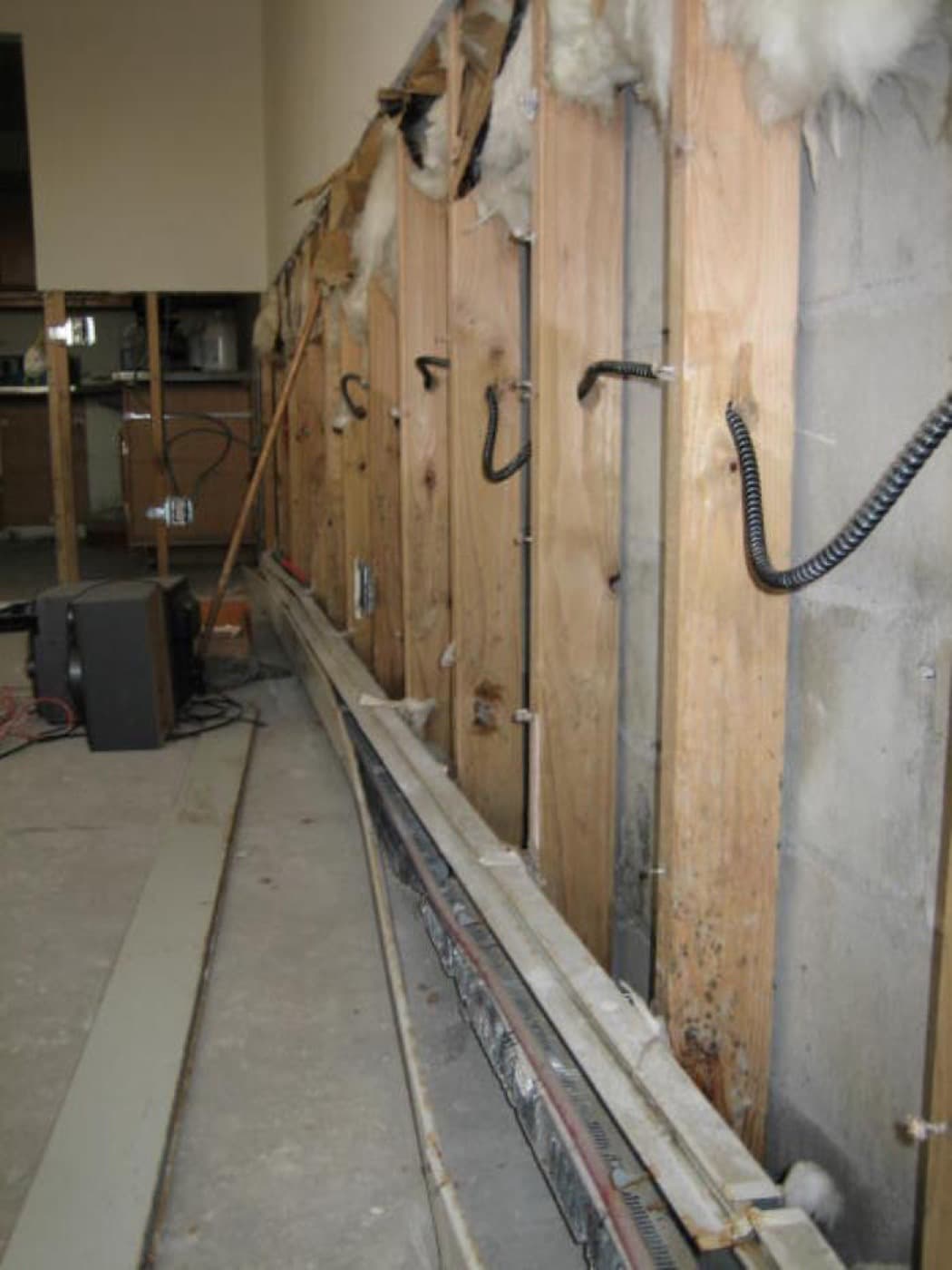
When the press-test says the board is soft or the mold has bled through, removal is the only durable fix. Here is how I did it on my bathroom wall:
- Mark a clean rectangle at least 12 inches beyond the visible mold in every direction, snapped to the studs so the new patch has something to fasten to.
- Mist the cut lines lightly with water to keep dust down, then score and cut with a drywall saw — slow and controlled, not aggressive.
- Pull the section and slide it straight into a thick contractor trash bag. Don't carry crumbling moldy drywall through the house; bag it at the wall.
- Inspect behind it. Check the studs, the back of adjacent drywall, and any insulation. Wet or moldy fiberglass insulation gets bagged and tossed — it can't be cleaned. Mold on framing can usually be scrubbed and dried (see my wood and stud pages).
- HEPA vacuum the cavity and wipe down the studs.
- Dry everything fully — days with a fan and dehumidifier, not hours.
- Patch with new drywall (use moisture-resistant board in baths/basements), tape, mud, prime, and paint once the cavity is confirmed dry.
Working through it
When to stop and call a professional
I am all for sensible DIY, but some situations are not weekend projects. Bring in a certified remediation contractor when: the moldy area is larger than about 10 square feet; mold is suspected inside wall cavities, HVAC, or across multiple rooms; the water came from sewage or flooding; or anyone in the home has asthma, allergies, or a compromised immune system. A pro brings negative-air containment, HEPA filtration, and the judgment to find hidden growth. If you want to know what that costs, I keep current figures on my drywall and overall removal cost pages.
Get a realistic price before you call anyone
Use our free Black Mold Removal Cost Estimator to get a tailored price range for your room, size, and severity — built from current national and regional pricing data. Then you'll know whether a contractor quote is fair before you commit.
Open the Cost Estimator →