Black Mold Remediation vs. Removal vs. Mitigation — What You're Actually Paying For

Black mold remediation is the phrase contractors use, and it is not just a fancier word for removal. Removal is one step. Remediation is the whole arc — diagnose the moisture, contain the space, take out the growth and the material it has ruined, clean and dry what remains, and then verify that it worked.
People also say "mitigation," which is different again: it means stopping the damage from getting worse, usually the emergency drying that happens in the first two days after a leak or flood.
I have paid for one of these and done the other two myself in two houses. This page sorts the three terms out, tells you when the full professional version is genuinely required rather than upsold, and gives you the 2026 numbers to judge a quote against — with every figure traced to the U.S. EPA, the IICRC S520 standard, or a dated cost survey.
From Sukie's experience
When our basement was quoted in the spring of 2024, one company's estimate said "mold remediation — $4,800" and nothing else. The second company's estimate was for a similar amount but listed containment, a HEPA air scrubber for three days, removal of 22 square feet of drywall and the baseboard, an antimicrobial wipe-down, and a post-remediation inspection. Same price, completely different products. I hired the second one, and the itemised scope is the reason I could later check that every line had actually been done.
Three words, three different jobs
The confusion is not your fault; the industry uses these terms loosely and some companies use whichever one sounds most expensive. Here is the clean version.
| Term | What it actually covers | Who usually does it | When it applies |
|---|---|---|---|
| Mitigation | Stopping the damage from spreading: extracting standing water, running dryers and dehumidifiers, pulling wet carpet, cutting a flood line. Time-critical. | Water-damage restoration crews; you, with fans and a wet vac, for small events | The first 24–48 hours after a leak, burst pipe or flood — the EPA's window for drying before mold takes hold |
| Removal | Physically taking mold growth off (or out of) surfaces: HEPA-vacuuming, detergent cleaning, cutting out ruined drywall. | You, for growth under about 10 sq ft; a contractor above that | Any time there is visible growth |
| Remediation | The complete process: moisture diagnosis, containment, removal, cleaning, drying, disposal, and verification that the space is back to normal. | A mold remediation contractor working to the ANSI/IICRC S520 standard | Growth over ~10 sq ft, contaminated water, HVAC involvement, hidden growth, or a vulnerable occupant |
So if you search for "black mold remediation" because you have a 2-square-foot patch behind the toilet, you probably need a careful cleanup, not a contractor. If you search for it because the smell is everywhere and the drywall is soft on two walls, you are in the right place.
What the EPA and the S520 standard say remediation must include
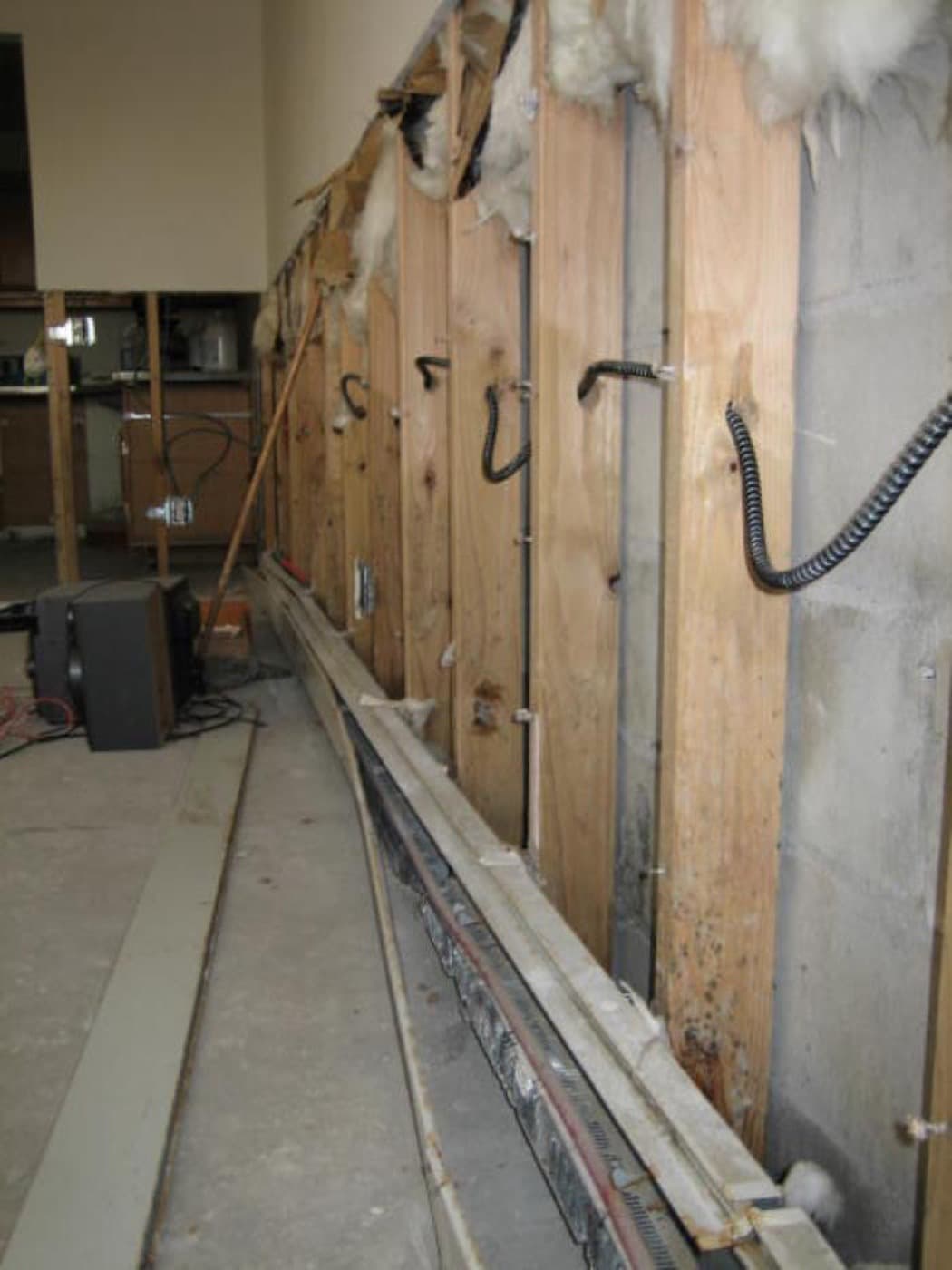
There is no federal licence for mold work, but there are two documents that define what a competent job looks like, and the EPA's home-cleanup page tells you to hold your contractor to them: "ask the contractor to follow the recommendations in EPA guide Mold Remediation in Schools and Commercial Buildings, the guidelines of the American Conference of Governmental Industrial Hygienists (ACGIH); Institute of Inspection, Cleaning and Restoration Certification (IICRC); or other guidelines from professional or government organizations."
The EPA's own guide sets out the scale of the response by the size of the growth:
Under 10 square feet: minimum protective equipment (an N-95 respirator, gloves and goggles) and no containment required. From 10 to 100 square feet: limited or full protection and containment, decided by professional judgment. Over 100 square feet: full protective equipment and full containment.
"Limited containment" in that guide means a single layer of 6-mil fire-retardant polyethylene sheeting with vents and doors sealed, held under negative pressure by a HEPA-filtered fan exhausting outside. "Full containment" means double layers of polyethylene, a decontamination chamber or airlock, and negative pressure throughout. When a contractor's quote lists "containment" and "negative air," that is what the line item is buying.
The other document is the ANSI/IICRC S520 Standard for Professional Mold Remediation, now in its fourth edition (2024). It "describes the procedures to be followed and the precautions to be taken when performing mold remediation in residential, commercial, and institutional buildings," and its chapters cover remediator qualifications, safety and health, inspection and preliminary determination, structural, HVAC and contents remediation, documentation, and post-remediation verification. You do not need to read it; you need to ask whether the company works to it, and whether its technicians hold an IICRC mold certification such as the Mold Remediation Specialist.
Not sure if it's a DIY job or a pro job?
Get a ballpark price first, then decide.
Estimate my removal cost →When you genuinely need black mold remediation — and when you're being upsold
Every trigger below comes from the EPA's own guidance or from the way the work physically has to be done. If none of them applies, a contractor recommending full remediation for your situation owes you an explanation.
- The growth is over about 10 square feet. The EPA's threshold for handling it yourself; above it, the guide points to a contractor with mold experience.
- The water was contaminated. "If the water and/or mold damage was caused by sewage or other contaminated water, then call in a professional who has experience cleaning and fixing buildings damaged by contaminated water."
- The HVAC system is involved. The EPA says not to run it if you suspect contamination, and cleaning ducts and air handlers is not a homeowner job.
- You cannot find the moisture source. Remediation begins with diagnosis. If the leak is inside a wall or under a slab, the diagnostic step alone justifies a professional.
- The growth is hidden. Behind wallpaper, inside wall cavities, under flooring, in the ceiling. You will not know the size until it is opened, and opening it without containment spreads it.
- Someone in the house is vulnerable. The CDC notes that people with asthma or mold allergies "may have severe reactions" and that immune-compromised people "may get infections in their lungs from mold." That changes the calculus at any size.
Signs you are being upsold: a recommendation to remediate a small, accessible patch on a hard surface; a quote with no square footage on it; a push for air testing before anyone has looked for the water; or a company that offers to both "assess" and "remediate" in one visit. On that last point, two of the states that license this work — New York and Texas — prohibit the same party from doing both on the same project precisely because it invites the assessor to find work for the remediator. Even where it is legal, it is a conflict of interest, and you can decline it.
What a proper remediation looks like from your side of the plastic
You will not be inside the containment, so these are the things you can see and ask about. I walk through the technician's day in detail in the professional mold remediation process; this is the checklist version.
- A written scope before work starts — square footage, the materials to be removed, containment type, equipment, and how completion will be judged.
- The moisture source identified in writing, with a plan for who fixes it. A remediator who does not mention the leak is planning to come back next year.
- Plastic sheeting and a running air scrubber visible on day one. If you can smell the work in the rest of the house, containment has failed.
- Bagged debris leaving sealed, not carried through in an open bin.
- Drying to measured numbers, not to "looks dry." Ask for the moisture readings.
- A completion standard you agreed in advance. The EPA's is straightforward: no visible mold, no moldy odor, the moisture problem fixed, and occupants not reporting symptoms. Many contractors add a third-party post-remediation verification — the S520 standard has a chapter on it — and in New York a post-remediation assessment is a minimum work standard under the state's mold program.
What black mold remediation costs in 2026
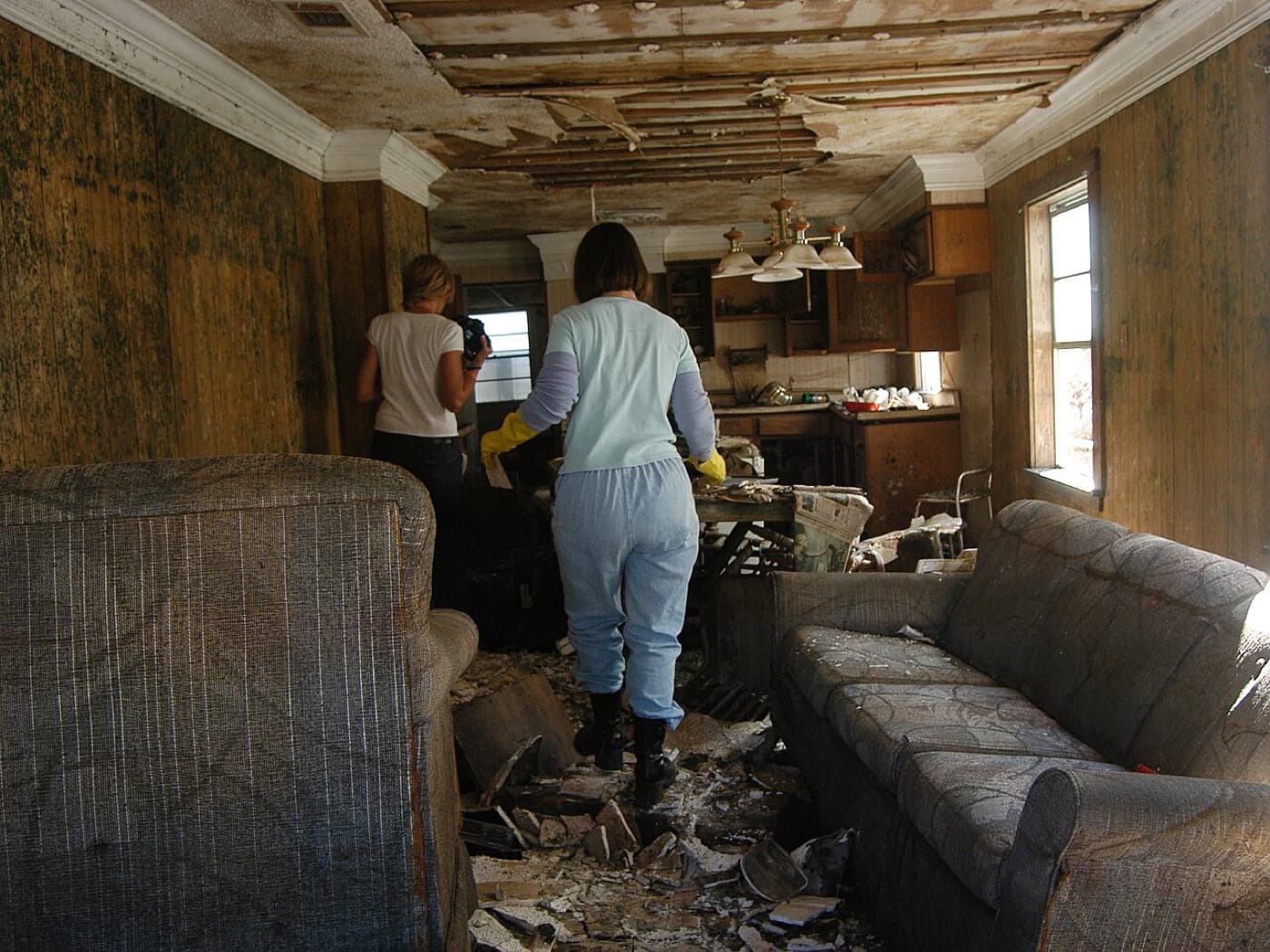
Two independent surveys, both updated this year, agree on the shape of the numbers even where the exact figures differ. HomeGuide (February 2026) puts remediation at $15 to $30 per square foot, or $1,500 to $6,000 on average, and breaks it down by area: $500 to $1,500 for 10 to 100 square feet, $1,500 to $6,000 for 100 to 300, $6,000 to $15,000 for 300 to 1,000, and $15,000 to $30,000 for a whole house. It lists black mold (Stachybotrys) specifically at $2,000 to $10,000, and mold inspection at $300 to $650. This Old House (March 2026) reports a typical range of $1,200 to $3,750, an average of $2,300, and $10 to $25 per square foot.
By location, HomeGuide's ranges are: bathroom $500–$2,000; crawl space $1,500–$4,000; partial attic or basement $1,500–$6,000, rising to $6,000–$15,000 for the whole space; HVAC and ducts $2,000–$10,000. This Old House runs lower on the small rooms — bathroom $500–$1,000, basement $500–$3,000 — and similar on HVAC at $3,000–$10,000.
What moves a quote inside those ranges is mostly the containment tier and the amount of demolition. A 40-square-foot job on one bathroom wall with limited containment sits near the bottom; the same square footage spread across a finished basement with carpet, insulation and a ceiling to open sits near the top. Insurance sometimes covers the part caused by a sudden, covered event — I go through the fine print in does insurance cover black mold removal. The cost calculator will give you a room-specific estimate to hold a quote against, and the cost hub covers every room and scenario.
Licensing, certificates, and the piece of paper that matters
Because there is no federal mold licence, what you can demand depends on your state. Two examples with confirmed rules: New York's Labor Law Article 32 makes it "unlawful for any contractor to engage in mold assessment on a project, or to advertise or hold themselves out as a mold assessment contractor unless such contractor has a valid mold assessment license," with a matching licence for remediation. Texas licenses both trades through the Department of Licensing and Regulation, exempts "small areas of mold growth (less than 25 contiguous square feet)" that an owner can clean themselves, and issues a Certificate of Mold Damage Remediation on completion — a document with real teeth, because Texas insurers "may not make an adverse underwriting decision regarding a residential property insurance policy based on previous mold damage" when the certificate is provided. If you are in either state, ask for the licence number; if you are elsewhere, check your state's licensing board before you assume there is no rule.
Wherever you live, the piece of paper to keep is the completion report: the scope, the moisture readings, the photographs, and any verification results. It is what you hand to a buyer, a landlord, an insurer or a doctor later. Store it with the house documents. The remediation is the work; the report is the proof.
If you have decided you need the full version, start with who to call for black mold removal — it explains which professional to phone first, because it is not always the remediator. And if you are still deciding, the parent guide for this whole section is how to remove black mold on Black Mold Removal Hub.
Get a realistic price before you call anyone
Use our free Black Mold Removal Cost Estimator to get a tailored price range for your room, size, and severity — built from current national and regional pricing data. Then you'll know whether a contractor quote is fair before you commit.
Open the Cost Estimator →Frequently asked questions
Is black mold remediation different from mold removal?
Does black mold remediation require a licence?
How much does black mold remediation cost?
Can the same company assess and remediate my mold?
Do I need air testing before remediation?
What does mitigation mean on a water-damage invoice?
Sources
- U.S. EPA — Mold Cleanup in Your Home (read September 2026)
- U.S. EPA — Mold Remediation in Schools and Commercial Buildings, Chapters 3 and 5 (read September 2026)
- IICRC — ANSI/IICRC S520 Standard for Professional Mold Remediation, 4th ed. (2024)
- CDC — Mold: About (read September 2026)
- New York State Department of Labor — Mold Program (Labor Law Article 32)
- Texas Department of Licensing and Regulation — Mold Assessors and Remediators FAQ
- HomeGuide — Mold Removal Cost (February 2026)
- This Old House — Mold Remediation Cost (March 2026)