Black Mold on Wood Studs: Treat It or Replace It?

Black mold on wood studs is one of those discoveries that makes your stomach drop — you open a wall or a basement framing bay and the lumber is streaked black. Here is the reassuring part most people do not realize: framing studs are solid, dense wood, and unlike paper-faced drywall, they can very often be cleaned, treated, and saved. Mold tends to grow on the surface of structural lumber rather than rooting all the way through it, so the real question is usually not 'is the mold there' but 'is the wood still strong.'
This page is about making that judgment call correctly: how to tell harmless surface staining from wood that has actually started to rot, how to treat studs you can keep, and how to know when a stud is too far gone and has to be replaced. I went through this in my finished basement, where mold had crept up the framing behind the baseboards after years of dampness.
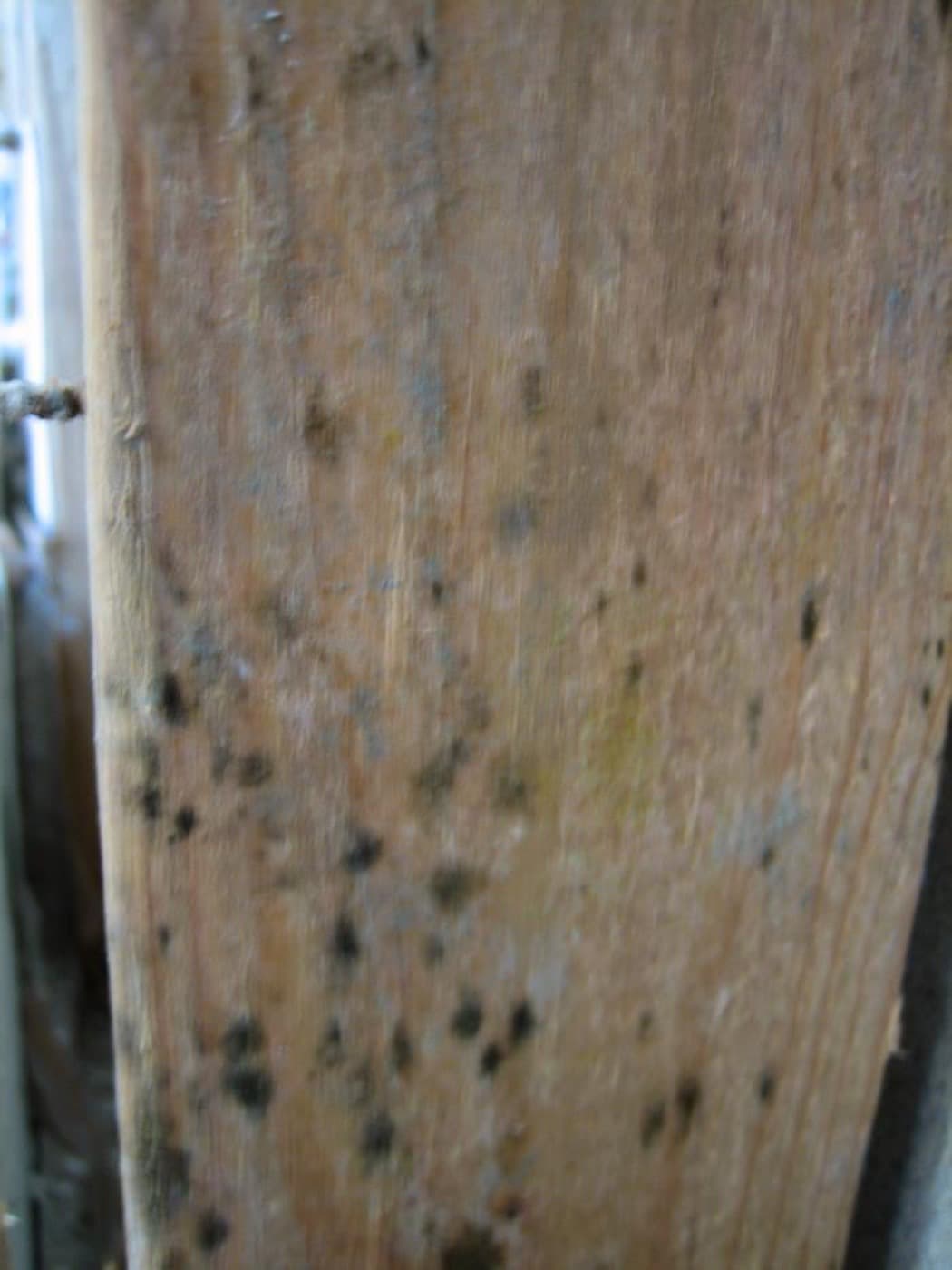
From Sukie's experience
When I pulled the baseboards off in my basement, the bottoms of several studs were black for about a foot up. I pushed a screwdriver into each one — most were rock-solid under the staining and cleaned up fine, but one near the old leak sank in like cork and had to be sistered with new lumber.
Surface mold vs. structural rot — the key distinction
The most important thing to understand about studs is the difference between surface mold and wood rot. Mold is a surface organism feeding on dust, residue, and the outer wood fibers; it discolors the lumber but often leaves the structure intact. Rot (caused by wood-decay fungi after prolonged saturation) actually breaks down the wood's cellulose, making it soft, crumbly, and weak. Black staining alone does not mean a stud is ruined — it means the wood got wet and grew mold. Whether it must be replaced depends on whether that wetness went far enough to cause decay.
The simple field test: press a screwdriver or awl firmly into the stained wood. If it stays hard and the tool barely dents it, the stud is sound and a candidate for cleaning. If the tool sinks in, the wood flakes, or it feels spongy and fibrous, that section has rotted and needs to be replaced or reinforced.
How to clean and treat studs you can keep
Once you have confirmed the wood is still solid and you have stopped the water source, you can treat the studs in place. Gear up first — N95 respirator, gloves, eye protection — and seal off the work area with a fan venting outside.
- Dry the framing completely. Run fans and a dehumidifier until a moisture meter reads normal. Treating wet wood is pointless.
- Knock down surface growth. Scrub the studs with a stiff brush. For heavy staining, light sanding or a wire brush removes the discolored surface layer where the mold lives.
- Apply a mold treatment. A product like a borate-based wood treatment or a dedicated mold control solution penetrates and inhibits regrowth. Let it dwell per the label.
- HEPA-vacuum the debris rather than sweeping, so you are not relaunching spores.
- Consider an encapsulant. After cleaning and drying, a mold-resistant sealer locks down any residual staining before you close the wall.
Our broader how to remove black mold from wood guide covers the cleaning chemistry in more depth, and what kills black mold compares the common treatment options.
Not sure if it's a DIY job or a pro job?
Get a ballpark price first, then decide.
Estimate my removal cost →When a stud has to be replaced
Some studs are past saving, and trying to treat rotted framing is a structural mistake, not just an aesthetic one. Replace or reinforce a stud when the wood is soft enough that a tool sinks in, when it crumbles or flakes apart, when it has visibly lost thickness or sagged, or when a large portion of a load-bearing member is affected. Sistering — fastening a new full-length stud alongside the damaged one — is the common fix for partial damage. If multiple framing members or any load-bearing wall is involved, bring in a contractor; this crosses from mold cleanup into structural repair.
Don't skip the moisture source
I cannot overstate this: cleaning or replacing studs without fixing why they got wet guarantees the problem returns. Studs get moldy from leaks (plumbing, roof, foundation), from chronic high humidity in basements and crawl spaces, from condensation on cold exterior walls, and from past flooding. Track down and repair the source before you close the wall, and address the room's humidity for good — a dehumidifier keeping the space around 30–50% relative humidity does more for long-term protection than any spray. See how to prevent black mold and our notes on the best dehumidifier for mold. The EPA's home mold cleanup guidance is clear that controlling moisture is the foundation of any lasting fix.
Treated lumber, framing, and why studs handle mold better than drywall
It helps to understand why framing is so much more forgiving than the drywall in front of it. Drywall is gypsum wrapped in paper — pure mold food that holds water and falls apart once wet. Framing studs are dense, solid softwood (usually spruce, pine, or fir). Mold can grow on the surface and in the outermost fibers, but the wood is far less hospitable to deep colonization, and it does not disintegrate the way wet gypsum does. That is the whole reason the standard advice flips between the two materials: moldy drywall almost always gets cut out, while moldy studs almost always get cleaned and saved.
This is also why the screwdriver test is the deciding factor rather than the staining. Black streaks on a stud are a cosmetic and moisture warning; soft, punky wood is a structural verdict. A stud can look alarmingly black and still be perfectly sound underneath — and a stud with only light staining can be rotten if it sat saturated long enough for decay fungi (a different organism than surface mold) to take hold.
Mold on studs in basements and crawl spaces specifically
The most common place I see moldy studs is in basements and crawl spaces, and the cause there is usually chronic humidity rather than a single dramatic leak. Below-grade spaces stay cool and damp; warm humid air drifts in, condenses on cool framing and the cold concrete behind it, and feeds slow mold growth low on the studs and along the bottom plate. That is exactly what happened in my own basement, where the staining climbed about a foot up the framing behind the baseboards.
The fix in these spaces is different from a one-off leak. Cleaning the studs is only step one; the real solution is controlling the space's humidity permanently — a dehumidifier, sealing obvious water entry, improving drainage, and in crawl spaces often a vapor barrier on the ground. Without that, you will be re-cleaning the same framing every year. Our black mold in basement page goes deeper on the moisture-control side, and a finished basement adds the drywall-and-baseboard layer covered in black mold behind drywall.
Sealing studs after treatment
Once studs are clean, dry, and the moisture is handled, a final encapsulating step is cheap insurance — especially before you close the wall back up where you will not see the wood again. A mold-resistant primer or encapsulant locks down any residual staining and adds a protective film that resists future growth. It is not a substitute for fixing the water (nothing is), but on framing that had a real mold problem it is worth the extra hour. Apply it only after a moisture meter confirms the wood is genuinely dry; sealing damp wood traps moisture against it and can cause the very rot you are trying to prevent.
When to call a professional
Cleaning a few accessible studs is a reasonable DIY job; here is when to step back. Call a certified remediation pro if the affected framing area is larger than about 10 square feet, if load-bearing studs show rot, if the moisture came from sewage or major flooding, if mold has spread widely behind walls and into adjacent framing, or if anyone in the home has asthma, allergies, or a weakened immune system. A pro can assess structural integrity, contain the work, and coordinate any framing repairs — and document everything if insurance is involved. Our black mold removal cost page gives you a pricing baseline before you call.
Get a realistic price before you call anyone
Use our free Black Mold Removal Cost Estimator to get a tailored price range for your room, size, and severity — built from current national and regional pricing data. Then you'll know whether a contractor quote is fair before you commit.
Open the Cost Estimator →