Will Borax Kill Black Mold? The Honest Answer

Will borax kill black mold? Yes — on hard, non-porous surfaces, and it has one genuine advantage over bleach that makes it worth knowing about. It also has a clear failure mode that the enthusiastic corners of the internet tend to skip past, and that failure mode is why some people clean the same wall three times.
Borax is sodium tetraborate, sold as a laundry booster in most supermarkets for a few dollars a box. It is fungicidal, it is cheap, and unlike bleach it leaves behind a residue that keeps working. Whether that makes it the right choice depends almost entirely on what your mold is growing on.
From Sukie's experience
I used borax on the painted concrete wall of our basement after the baseboards came off, mixed roughly a cup to a gallon of warm water. What sold me on it was not the cleaning — plenty of things clean — it was that the wall stayed clear through the following summer, which is when that corner had always come back before.
What borax actually does to mold
Borax works on mold through two mechanisms, and understanding both explains its strengths and its limits.
The first is pH. Dissolved in water, borax produces a strongly alkaline solution — around pH 9.3. Most molds prefer slightly acidic to neutral conditions, and an alkaline surface is genuinely inhospitable to them. This is the same reason lime wash was used on cellar and dairy walls for centuries before anyone had isolated a fungicide.
The second is the borate ion itself, which is toxic to fungi. Borates interfere with fungal metabolism and are used commercially as wood preservatives for exactly this reason — timber treated with borate compounds resists both fungal decay and insect attack.
The practical consequence is the part worth remembering: borax does not need to be rinsed off. When you clean a surface with bleach and rinse it, you have killed what was there and left nothing behind. When you clean with borax and leave the residue in place, you leave an alkaline, borate-rich surface that resists new growth. On a wall that keeps re-growing mold because you cannot fully eliminate the humidity, that residual effect is the whole point.
It is also worth being clear about what borax is not. It is not a miracle, it is not gentler than every alternative, and it is not a substitute for fixing the water problem. Nothing in a spray bottle is.
Borax compared with the alternatives
Most homeowners are choosing between four things they either own already or can buy for under ten dollars. Here is how borax sits against them.
| Kills mold | Works on porous surfaces | Leaves residual protection | Notes | |
|---|---|---|---|---|
| Borax | Yes, on surfaces | No | Yes — don't rinse | Cheap, low odour, no fumes. Toxic if ingested. |
| Bleach | Yes, on hard surfaces | No | No | Harsh fumes. Never mix with ammonia. EPA does not consider it necessary for routine cleanup. |
| Hydrogen peroxide 3% | Yes | Partially — penetrates a little | No — breaks down | Safe on most surfaces, can lighten fabrics. |
| White vinegar | Yes, many species | Slightly | Minimal | Acidic, so the opposite mechanism. Strong smell. |
| Detergent and water | Removes rather than kills | No | No | The EPA's baseline recommendation — physical removal is what matters most. |
The bleach comparison is the one people find surprising. The EPA's guidance on mold cleanup states plainly that using biocides such as bleach is generally not recommended for routine mold cleanup, and that the goal is to remove the mold rather than to kill it in place. Dead mold still contains the proteins that cause allergic responses. Physical removal matters more than chemistry.
Where borax earns its place is the combination of adequate killing power, no fumes, and residual inhibition. If you want the fuller comparison across every common option, our guide to what kills black mold covers each in more depth, and does bleach kill black mold tackles the bleach question specifically.
Not sure if it's a DIY job or a pro job?
Get a ballpark price first, then decide.
Estimate my removal cost →Where borax fails: the porous surface problem
This is the limitation that matters, and it applies equally to bleach, vinegar and every other liquid you might spray on a wall.
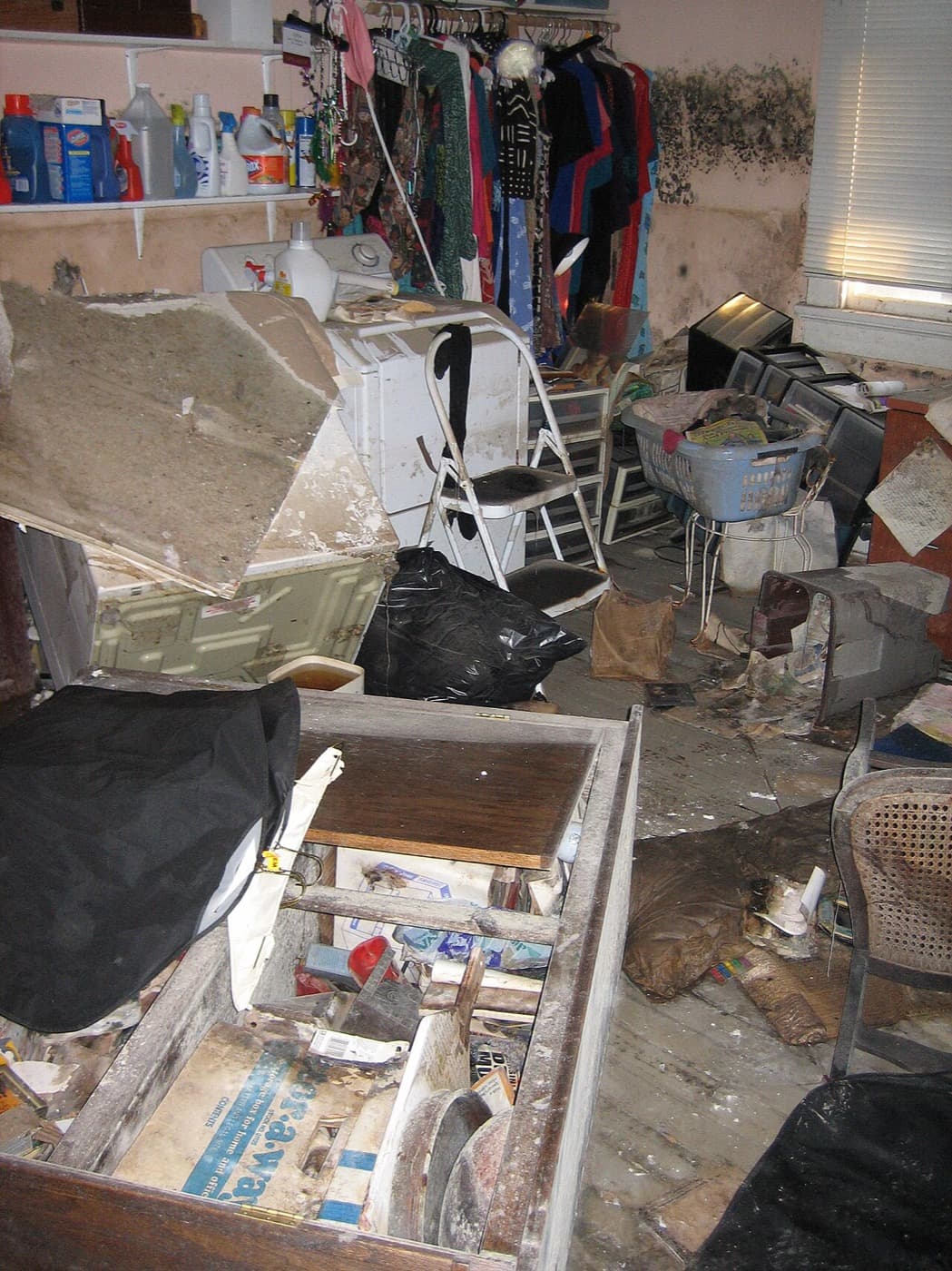
Porous materials — drywall, bare wood, wallpaper, ceiling tile, carpet, upholstery, insulation — do not just host mold on their surface. The mycelium grows into the material, threading through the fibres and the gypsum core. When you spray a borax solution on a porous surface, the liquid wets the top layer and the visible growth disappears. The colony inside the material is largely untouched.
What follows is predictable: the wall looks clean for a few weeks, then the same patch returns, and the homeowner concludes that borax does not work. Borax worked fine. It was applied to a problem it cannot reach.
So the decision rule is straightforward:
- Use borax on: glazed tile and grout, sealed or painted concrete, glass, metal, plastic, laminate, glossy and semi-gloss painted surfaces in sound condition, the exterior of sound timber.
- Do not rely on borax for: drywall where growth has broken through the paper facing, unsealed wood, wallpaper, ceiling tiles, carpet, fabric, insulation.
For porous materials that are genuinely affected, removal is the answer rather than treatment. Cut out the drywall, discard the carpet, replace the ceiling tile. This is not remediation companies upselling — it is a physical property of the material. Our guide to removing black mold from drywall covers where the cut line should go, and removing black mold from wood explains why timber is a partial exception, since surface growth on sound wood can often be cleaned and dried rather than replaced.
Mixing and applying it properly
The ratio most commonly cited is one cup of borax to one gallon of water, and it is a sensible working strength. Warm water dissolves it considerably faster than cold — stir until the solution is clear rather than cloudy, because undissolved granules do nothing.
Before you start, deal with protection and preparation:
- Fix the moisture source. If you skip this, everything below is temporary. Nothing else on this page matters as much as this line.
- Wear an N95 respirator, gloves and eye protection. The borax solution itself is mild, but disturbing mold puts spores into the air.
- Ventilate. Open a window, put a fan in it blowing outward, and close interior doors so you are not moving spores through the house.
- Mist the surface first with plain water. Damp spores stay put. Dry-brushing mold is the single most common mistake in home remediation.
Then the method:
- Apply the borax solution generously with a spray bottle or a sponge. Do not be sparing.
- Let it sit for ten to fifteen minutes so it penetrates the growth rather than just wetting it.
- Scrub with a stiff brush. On grout, a narrow grout brush or an old toothbrush reaches into the joint where the growth actually lives.
- Wipe away the loosened debris with a damp cloth or sponge, rinsing the cloth frequently in a separate bucket.
- Do not rinse the wall. Leaving the borax film in place is what gives you the residual protection. This is the step most people get wrong by instinct.
- Dry the area thoroughly — fans and a dehumidifier, running for days rather than hours. Aim for relative humidity under 50%.
Bag your cleaning materials in the room, seal the bag, and carry it straight outside rather than through the house.
A few safety notes worth stating plainly. Borax is toxic if swallowed and is a known reproductive toxicant at high exposures — keep it away from children and pets, store it sealed and labelled, and do not use it on surfaces where food is prepared without rinsing afterwards. Do not mix it with bleach or any other cleaning chemical. If you are pregnant, this is a job to hand to someone else; our page on black mold during pregnancy explains why the general advice is to avoid remediation work entirely.
When borax is the wrong tool entirely
There is a scale at which reaching for a supermarket box stops being the right response, and it arrives sooner than most people expect.
Stop and call a certified remediation professional if the affected area exceeds roughly ten square feet, if growth has spread into the wall cavity or onto framing, if it is in or near your HVAC system, if the water involved was sewage or floodwater, or if anyone in the household has asthma, a compromised immune system or an existing respiratory condition. In those cases the issue is not whether borax kills mold — it does — but whether a homeowner with a spray bottle and an N95 is the right person to be in that room.
The other signal is repetition. If you have treated the same patch more than twice and it keeps returning, the chemistry is not the problem. Something is still delivering water to that spot, and until it is found and stopped you are cleaning symptoms. Our page on preventing black mold covers the moisture side, and if the growth keeps coming back in a below-grade room, basement mold deals with the specific mechanisms there.
If you are weighing DIY against hiring someone, it helps to know the number first. Our black mold removal cost guide covers real pricing by scenario, and the cost estimator gives a tailored range for your room and severity — useful for judging whether a quote is fair before you commit to anything.
Get a realistic price before you call anyone
Use our free Black Mold Removal Cost Estimator to get a tailored price range for your room, size, and severity — built from current national and regional pricing data. Then you'll know whether a contractor quote is fair before you commit.
Open the Cost Estimator →