10 Warning Signs of Mold Toxicity, and What They Really Mean

10 warning signs of mold toxicity is one of the most-searched mold questions online, and most people who type it mean something simple: is the mold in my house making me ill, and how would I know? The phrase "mold toxicity" (you will also see "toxic mold syndrome" or "mold poisoning") is not a diagnosis you will find anywhere in the CDC's mold guidance. What the CDC does describe is a set of real, mostly allergy- and irritation-type effects that damp, moldy homes can cause in some people. In its own words, exposure "may cause a variety of health effects, or none at all."
So this page takes the ten signs people are really asking about and sorts them honestly: six your body can show, one at-risk warning, one pattern worth noticing, and two signs your house shows you. Each is tied to what the CDC and the EPA actually say (both read October 2026). I'm Sukie; I have cleaned up mold in two of my own homes, and I am not a doctor, so where your health is the question, the answer ends in a clinician's office.
From Sukie's experience
Before I ever saw the mold behind the baseboards in my finished basement, I noticed the smell: a stale, musty note that met me halfway down the stairs and was gone once I was back in the kitchen. The downspout was dumping water 18 inches from the foundation, and that smell was the earliest warning I had.
What "Mold Toxicity" Means, and What the CDC and EPA Actually Say
People who say mold toxicity usually mean an allergy, irritation, or the belief that mold releases poisons that build up in the body. The first two are well documented; the third runs ahead of the evidence.
Start with what the agencies actually stand behind. The CDC page on mold (CDC, read October 2026) says that for some people mold can cause "a stuffy nose, sore throat, coughing or wheezing, burning eyes, or skin rash," that people with asthma or a mold allergy "may have severe reactions," and that immune-compromised people and people with chronic lung disease "may get infections in their lungs from mold." It also cites a 2004 Institute of Medicine (IOM) review linking indoor mold to respiratory symptoms, cough and wheeze in healthy people, asthma symptoms in asthmatics, and hypersensitivity pneumonitis in susceptible people.
The EPA's Brief Guide to Mold, Moisture and Your Home (EPA, read October 2026) is the government source that comes closest to the word "toxic." It says molds produce allergens, irritants, "and in some cases, potentially toxic substances (mycotoxins)." A few lines later it adds the sentence the scary lists leave out: "Symptoms other than the allergic and irritant types are not commonly reported as a result of inhaling mold." The EPA adds that research is ongoing.
And on the mold people fear most, the CDC's Stachybotrys chartarum facts page (CDC, read October 2026) says that "no test exists that proves an association between Stachybotrys chartarum and particular health symptoms," calls the symptoms molds may cause "nonspecific," and says all molds "should be treated the same with respect to potential health risks and removal." Put plainly: no agency-recognized illness called mold toxicity, no test that proves a particular mold caused particular symptoms, and no reason to panic over a color. But every reason to take symptoms seriously and dry out a damp house.
The 10 Warning Signs, Read Honestly
Read these as signs that mold in your home may be affecting your health, or that you have a mold problem worth finding. Several overlap with colds and allergies, so the pattern matters more than any single item.
A stuffy or runny nose that hangs around at home. Nasal congestion is first on the CDC's list, and the EPA describes mold allergy as "hay fever-type symptoms, such as sneezing, runny nose, red eyes, and skin rash." A nose that stays blocked in one building and clears in another is the interesting kind.
A sore or scratchy throat. The CDC names sore throat directly, and the EPA says mold exposure can irritate the eyes, skin, nose, throat and lungs "of both mold-allergic and non-allergic people."
Coughing or wheezing. This is the sign with the strongest backing: the IOM review the CDC cites found sufficient evidence linking indoor mold to cough and wheeze even in otherwise healthy people. A new wheeze always deserves a doctor's attention.
Burning, red or itchy eyes. The CDC lists burning eyes generally, and red or itchy eyes for people who are sensitive to molds.
A skin rash or irritated skin. Both agencies mention it, the CDC as "skin rash" and the EPA as dermatitis, and the EPA points out that touching mold, not only breathing it, can trigger a reaction in sensitive people.
Asthma that is suddenly harder to control. The CDC says people with asthma may have severe reactions; the EPA says molds can cause asthma attacks in people with asthma who are allergic to mold; and the American Academy of Pediatrics' HealthyChildren.org lists mold among the allergic triggers that can make asthma worse in children. More rescue-inhaler use at home is worth raising with the prescriber.
Serious chest symptoms in someone at higher risk. For people who are immune-compromised or live with chronic lung disease, the CDC warns of lung infections from mold, and the IOM finding covers hypersensitivity pneumonitis in susceptible people. In a vulnerable person, new breathlessness is a call-the-doctor-now sign.
Symptoms that ease when you are away and return when you are back. No agency publishes this as a rule, so treat it as a clue. Still, the EPA itself says you may suspect hidden mold if there has been water damage "and residents are reporting health problems."
A musty smell. The CDC opens its mold page by saying mold "can smell musty" and that "if you see or smell mold, you should remove it." The EPA adds that a building which smells moldy when you cannot see the source is a reason to suspect hidden growth: the back of drywall or paneling, the underside of carpet and pad, or inside walls around leaking pipes. See what black mold smells like.
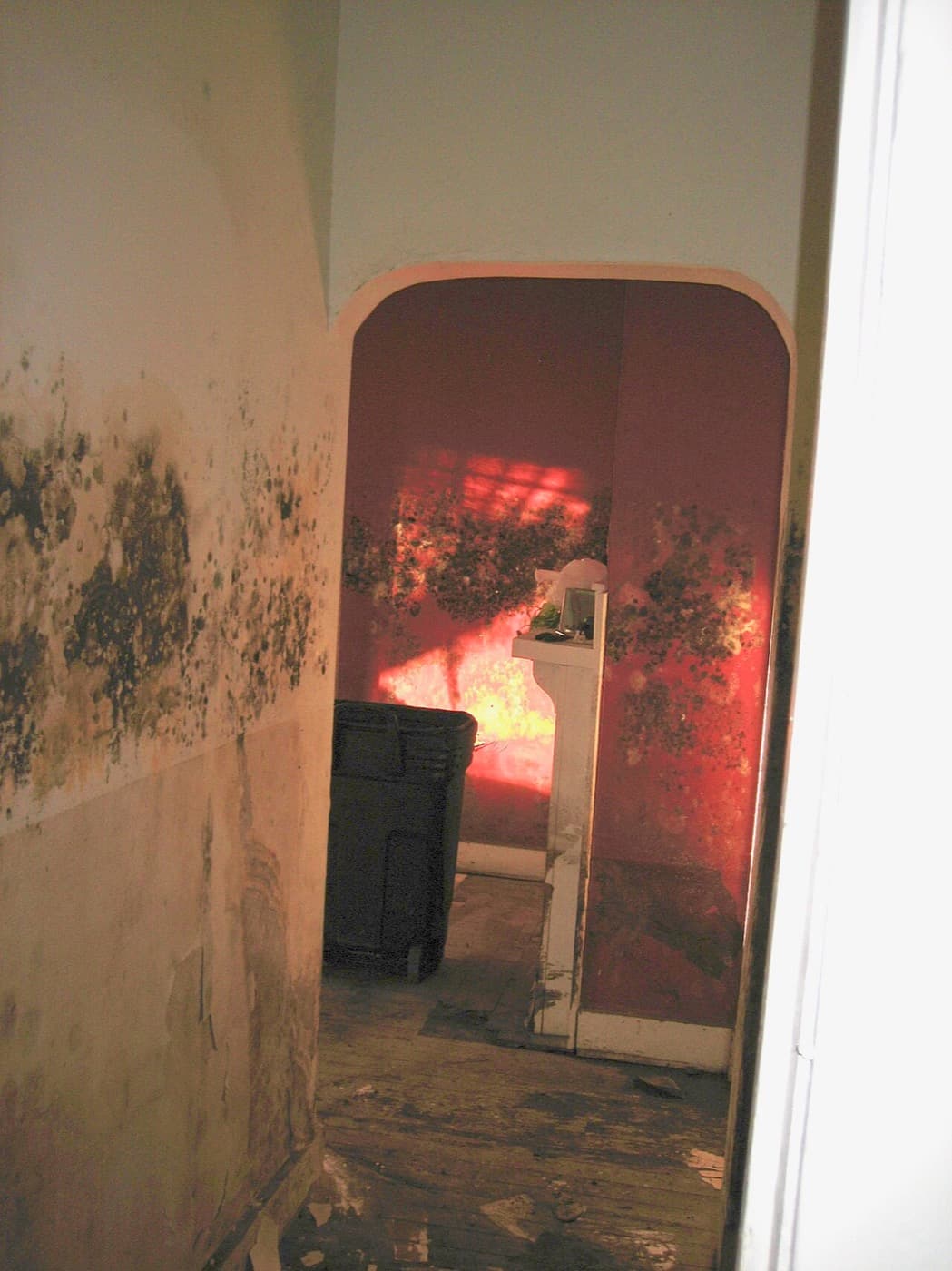
Visible growth or a history of water damage. The CDC says mold grows "where there is moisture, such as around leaks in roofs, windows, or pipes, or where there has been a flood." A stain that keeps coming back or bubbling paint near a leak counts. Our black mold identification hub walks through what to look for.
Notice what is not on the list. Neither the CDC page nor the EPA guide names memory problems, "brain fog" or cancer among mold's effects, and nothing in the sources this site relies on supports those claims. If you have symptoms like that, they deserve a medical work-up in their own right.
Not sure if it's a DIY job or a pro job?
Get a ballpark price first, then decide.
Estimate my removal cost →Why No Single Sign, or Test, Proves Mold Is the Cause
The uncomfortable truth about the 10 warning signs of mold toxicity is that most of them are common. Stuffy noses and itchy eyes also come with colds, pollen, dust mites and pets. That is why the CDC describes the symptoms molds may cause as "nonspecific."
The CDC is blunt about testing: "CDC does not recommend mold testing." Its reasons are that health effects differ from person to person, so sampling cannot tell you whether someone will get sick; good sampling can be expensive; and "there are no set standards for what is and what is not an acceptable quantity of different kinds of mold in a home." The EPA agrees that when growth is visible, sampling is usually unnecessary. On the body side, the CDC's Stachybotrys page says no test proves a link between that mold and particular symptoms.
What separates signal from noise is what your body and your house are doing together:
| What you notice | What it may suggest | Sensible first move |
|---|---|---|
| One or two nose, throat or eye symptoms; no damp, smell or stains at home | Could be almost anything: a cold, pollen, dust | Watch the pattern; see a doctor if it persists |
| Symptoms plus a musty smell or a known damp area | Mold may be part of the picture | See a doctor and start looking for the water source |
| Visible growth under about 10 sq ft and nobody unwell | A small mold problem | Fix the water, then clean it yourself with an N-95, gloves and goggles |
| Growth over about 10 sq ft, suspected hidden mold, or mold in the HVAC | A bigger or concealed problem | Follow EPA's professional guidance; hire an experienced contractor |
| Wheezing or breathlessness in someone high-risk | A possible serious reaction or infection | Contact a doctor promptly |
Sorting guide built from CDC and EPA guidance (both read October 2026). It is a way to decide your next step, not a diagnostic tool.
What to Tell Your Doctor
Bring the doctor the facts about your home, because those are the facts they cannot see. The EPA's guide says that for detailed health information you should "consult a health professional," and that if you have health concerns you should do so before you start any cleanup. The CDC's Stachybotrys page says that individuals with persistent symptoms should see their physician. Bring:
- Which symptoms, and when. Say whether they ease when you are away from home, at work or on a trip, and come back when you return.
- What you have seen and smelled. Which rooms, roughly how large the growth is, and a couple of phone photos.
- Your water history. Leaks, floods, condensation, and how long anything stayed wet.
- Who else is affected. Other people in the household with similar symptoms, and anyone with asthma, chronic lung disease or a weakened immune system.
- Whether you have been cleaning it. What you used and what protection you wore.
- Your existing conditions and medicines. Include how often you have needed an asthma inhaler lately.
Then ask two direct questions: whether an allergy evaluation makes sense for you, and whether anyone in your home should stay out of the affected rooms while the work is done. For children, ask their pediatrician.
If you want the fuller symptom picture before the appointment, our black mold symptoms guide goes room by room, and can black mold make you sick? covers who is most at risk.
Fix the Moisture First, Then the Mold, and Know When to Call a Pro
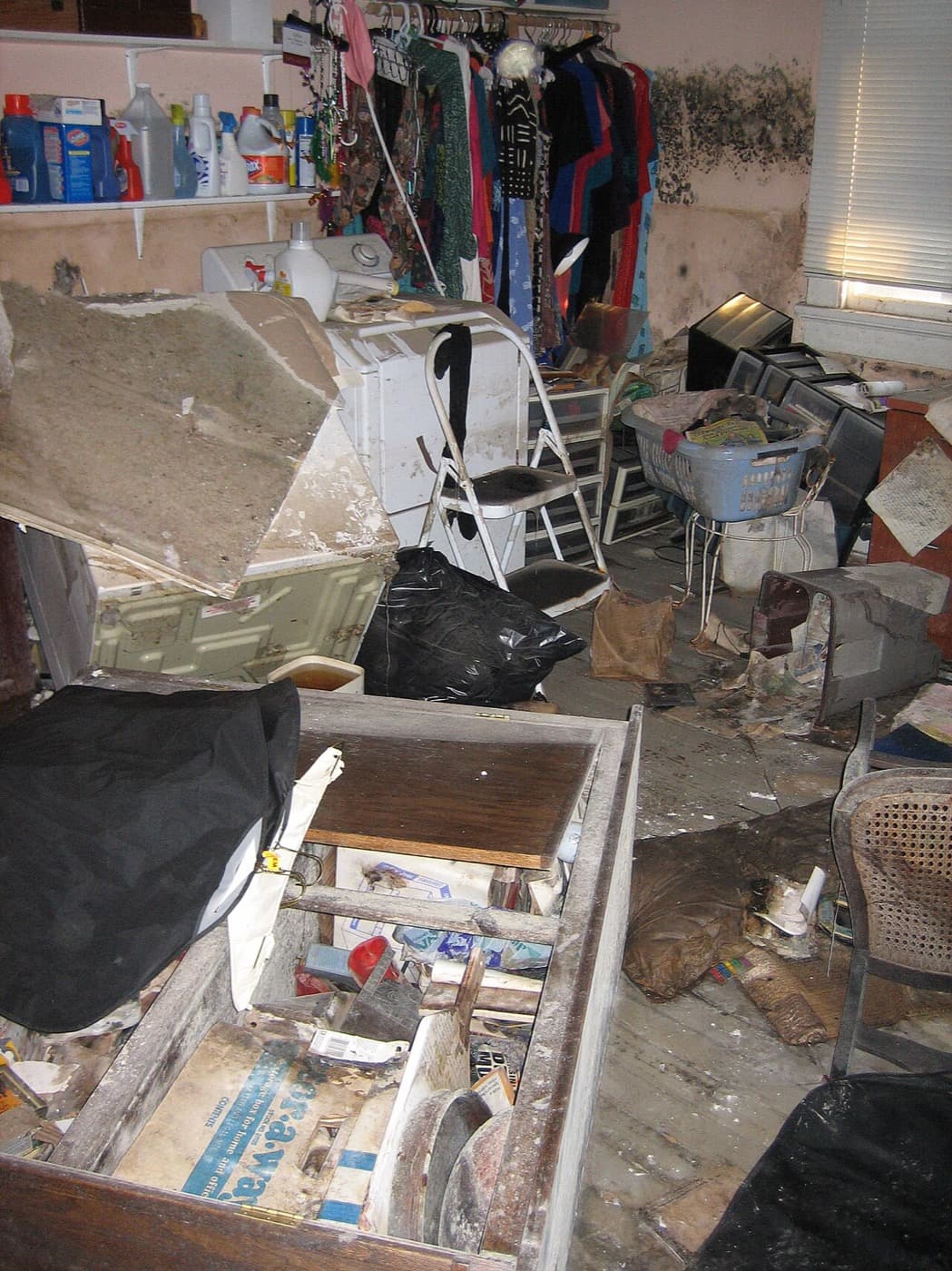
Every one of these signs points back to the same root cause, which is water. The CDC's instruction is short: "If mold is growing in your home, you need to clean up the mold and fix the moisture problem." Whatever the 10 warning signs of mold toxicity led you to suspect, the fix runs in this order:
- Stop the water. Repair leaks in the roof, walls or plumbing. Dry wet materials within 24 to 48 hours; the EPA says that in most cases mold will not grow if you do.
- Bring humidity down. The CDC says to keep indoor humidity no higher than 50% all day, using an air conditioner or dehumidifier.
- Size up the job. The EPA says that if the moldy area is less than about 10 square feet (roughly a 3 ft by 3 ft patch), in most cases you can handle it yourself. If there has been a lot of water damage or the growth is larger, the EPA points to its Mold Remediation in Schools and Commercial Buildings guidance, and for suspected hidden mold it suggests an experienced professional.
- Protect yourself. Wear an N-95 respirator, gloves and goggles without ventilation holes. The EPA says using a biocide such as chlorine bleach is not recommended as a routine practice; if you do use bleach on a hard surface, the CDC's limit is no more than 1 cup of laundry bleach per gallon of water, and never mix it with ammonia or other cleaners. Do not paint or caulk over mold (EPA).
- Leave the HVAC off if it is involved. The EPA: "Do not run the HVAC system if you know or suspect that it is contaminated with mold."
- Remove it, do not just kill it. The EPA notes that dead mold may still cause allergic reactions in some people.
Hand the job to someone else if the area is over about 10 square feet, the water was sewage or otherwise contaminated, the mold is in the ductwork, or anyone doing the work has asthma, a mold allergy, chronic lung disease or a weakened immune system. When hiring, the EPA's Mold Cleanup in Your Home page says to check references. Our step-by-step guide to getting rid of black mold covers the DIY side, and the professional remediation process page explains what a contractor should do. For everything else, start at the Black Mold Removal Hub homepage.
Get a realistic price before you call anyone
Use our free Black Mold Removal Cost Estimator to get a tailored price range for your room, size, and severity — built from current national and regional pricing data. Then you'll know whether a contractor quote is fair before you commit.
Open the Cost Estimator →