Mold Exposure Symptoms: Who Gets Them, and How to Tell

Mold exposure symptoms are usually ordinary: a stuffy nose, a sore throat, coughing or wheezing, burning eyes, or a skin rash. That is the list the CDC gives (CDC, read October 2026), and it starts with an important hedge: being around damp, moldy spaces "may cause a variety of health effects, or none at all." The same patch of mold can leave one person sneezing and the person next to them feeling fine. The things that change the picture most are who is breathing the air, how much mold is involved, and how long the exposure lasts.
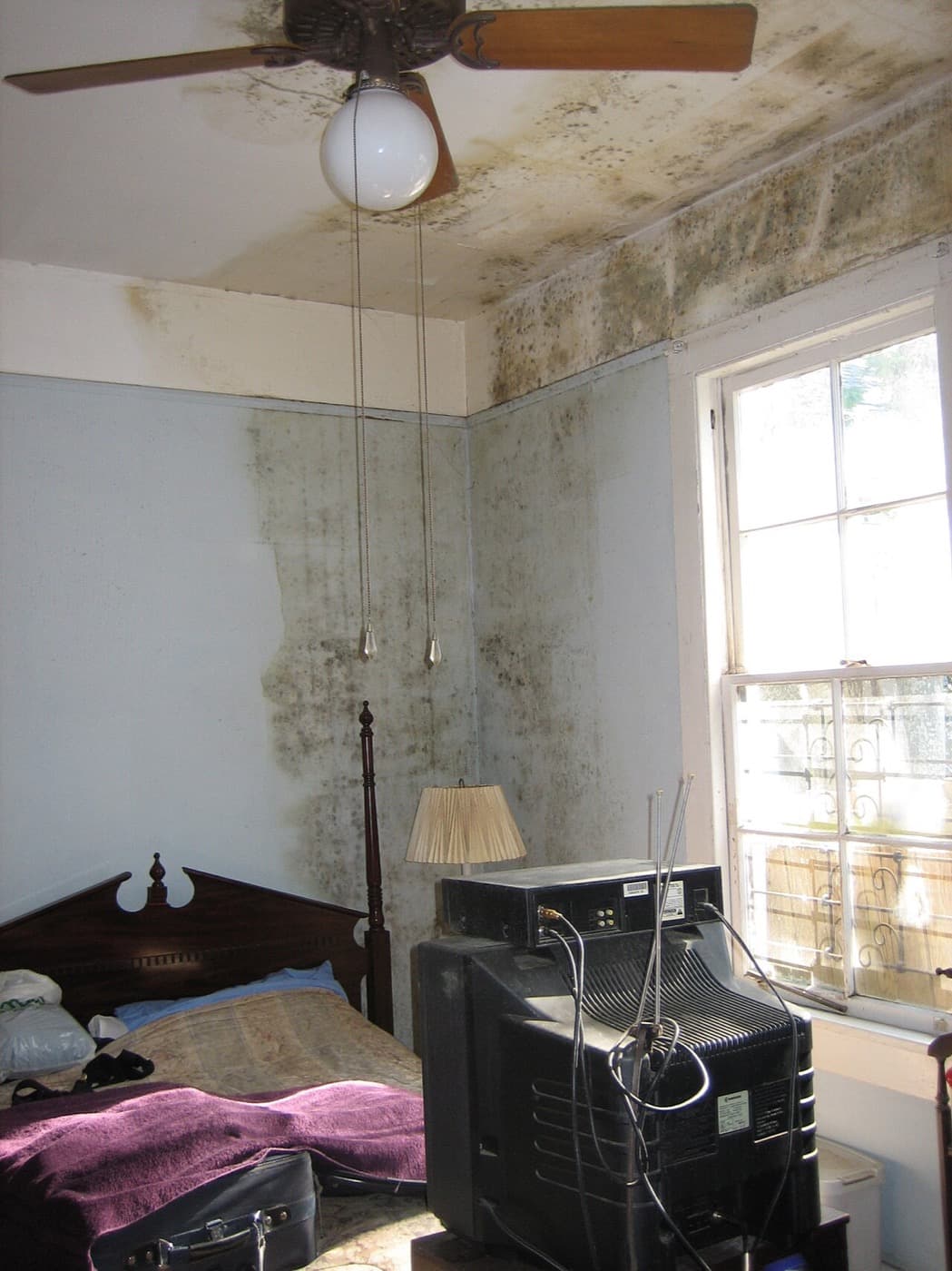
This page covers indoor mold in general, not only the dark growth people call "black mold." The CDC lists Cladosporium, Penicillium and Aspergillus as the most common indoor molds, and they come in many colors. If you want the black-mold angle in particular, read my black mold symptoms guide. Here I go through the symptoms by type of person, the difference between a one-off exposure and living with damp for months, how to tell mold from a cold or hay fever, what a doctor is likely to ask, and how to cut your exposure at home while you work it out. I'm a homeowner who has cleaned up mold twice, not a clinician, so treat this as background for talking to your doctor.
From Sukie's experience
During the months before we found mold behind the baseboards in our finished basement, I noticed my nose was stuffier on days I worked at the desk down there than on days I worked upstairs. I'm not a doctor and never had it diagnosed, but that where-and-when pattern is what finally pushed me to pull the baseboards, and the source turned out to be a downspout dumping water 18 inches from the foundation.
Mold Exposure Symptoms by Who Is Breathing the Air
The most useful thing to know about mold exposure symptoms is that they depend more on the person than on the mold. The CDC and the American Academy of Pediatrics describe different reactions for different groups, and the table below lines them up. Every row uses their wording. I have not added any symptoms they don't list.
| Symptom or effect | Who it is described for | Source |
|---|---|---|
| Stuffy nose, sore throat, coughing or wheezing, burning eyes, skin rash | "Some people" in damp, moldy homes | CDC |
| Upper respiratory tract symptoms, cough, wheeze | Otherwise healthy people | IOM 2004, summarized by CDC |
| Stuffy nose, wheezing, red or itchy eyes or skin | People who are sensitive to molds | CDC |
| Severe reactions | People with asthma or a mold allergy | CDC |
| Asthma symptoms | People who already have asthma | IOM 2004, summarized by CDC |
| Hypersensitivity pneumonitis | People susceptible to that immune-mediated condition | IOM 2004, summarized by CDC |
| Lung infections from mold | Immune-compromised people and people with chronic lung disease | CDC |
| Runny or stuffy nose, sneezing, itchy nose, throat or eyes, watery or red eyes, postnasal drip or cough | Children with environmental allergies (mold is on the list of common allergens) | AAP |
| Worse asthma symptoms | Children with asthma, for whom mold is a trigger | AAP |
| A possible link to developing asthma | Some children exposed early, particularly those genetically susceptible to asthma | CDC |
Sources: CDC, "About Mold" (page dated September 26, 2024), which also summarizes the Institute of Medicine's 2004 findings; AAP HealthyChildren.org, "Allergies in Children" (updated April 21, 2026). Both read October 2026. Wording is kept close to the originals on purpose, and nothing here comes from any other source.
Healthy adults
In 2004 the Institute of Medicine (IOM) reviewed the evidence and found it sufficient to link indoor mold exposure with upper respiratory symptoms, cough and wheeze in otherwise healthy people. In other words, you don't need an allergy diagnosis to react. For most healthy adults, though, the reaction looks like irritation: a congested nose, a scratchy throat, a cough that hangs around. The CDC's phrase "or none at all" applies here too. Plenty of healthy people live with some mold and never notice a thing.
People with allergies or asthma
This group reacts most noticeably. The CDC says people with asthma or a mold allergy "may have severe reactions," and the IOM linked indoor mold with asthma symptoms in people who already have asthma. In practice that can mean more wheezing, more coughing, or an inhaler that suddenly seems to be needed more often for no clear reason. A few susceptible people can develop hypersensitivity pneumonitis, an immune-mediated lung condition. That is a medical diagnosis, not something to work out at home.
Children
The AAP lists indoor and outdoor mold spores among the most common allergy triggers in children. It describes environmental-allergy symptoms as a runny or stuffy nose, sneezing, itchy or watery eyes, and postnasal drip or cough, and it says many children with asthma "can develop worse symptoms" around triggers that include mold. The CDC adds that research has suggested a potential link between early mold exposure and developing asthma "in some children, particularly among children who may be genetically susceptible." I've written more about this in mold symptoms in children.
People with weakened immune systems or chronic lung disease
For this group the concern changes from irritation to infection. The CDC says immune-compromised people and people with chronic lung disease "may get infections in their lungs from mold." The AAP describes the pediatric version in its aspergillosis guidance (read September 2026): an allergic form seen most often in children with chronic asthma or cystic fibrosis, and an invasive form in children whose immune systems are weakened. If someone in your home is in this group, call their care team rather than waiting to see how things go.
One Heavy Exposure vs. Months in a Damp Room
The National Institute of Environmental Health Sciences (NIEHS) puts it simply: molds affect health "depending on the type of mold, amount and duration of exposure, and the person exposed" (NIEHS, "Mold", read October 2026). Amount and duration are why mold exposure symptoms after one dusty afternoon can look so different from six damp months.
A short, heavy exposure
The classic example is disturbing mold yourself, for instance by tearing out a wet baseboard, emptying a moldy closet, or scrubbing a ceiling. That stirs up far more spores than normal living does. The CDC notes that severe reactions such as fever or shortness of breath have been reported among workers exposed to large amounts of mold in occupational settings, such as farmers handling moldy hay. The amount matters, and cleanup is when it peaks. That is why the EPA wants an N-95 respirator, gloves and goggles without ventilation holes even for a small job.
Ongoing, low-level exposure
Living above a damp crawl space or sleeping in a room with a hidden leak is a different kind of exposure. The amount at any moment may be small, but it goes on every day. Ongoing mold exposure symptoms tend to show up as a pattern rather than an event: a cough that never quite clears, a nose that is always congested in one room, or asthma that has become harder to control. None of the register sources gives a reliable timeline for when this starts, and anyone quoting you a number of hours or days is guessing. The question of timing gets its own page: how long it takes mold to affect you.
What about the "type" of mold?
Species do differ biologically, but the CDC is clear about what that means for a household: "You do not need to know the type of mold." Whatever the species, the answer is the same. Remove it and fix the moisture.
Not sure if it's a DIY job or a pro job?
Get a ballpark price first, then decide.
Estimate my removal cost →Mold, a Cold, or Hay Fever? Reading the Pattern
This is where most people get stuck, because the symptoms of mold exposure overlap almost completely with a cold and with seasonal allergies. You can't tell them apart from a single sniffle. What separates them is the pattern: where, when, and who.
- Place. If you feel worse in one room or building and better when you leave, that points toward something in that space. Mold, dust mites and pets all fit this pattern, so it is a clue, not a diagnosis.
- Season. Pollen allergies follow the calendar. Indoor mold follows the moisture: a wet spring in the basement, or winter condensation on cold windows.
- Course. A cold runs its course and ends. Symptoms that keep coming back in the same place are not behaving like a cold.
- Fever. The AAP notes that hay fever is "not caused by hay" and does "not cause fever." Fever is not on the CDC's list for ordinary household mold either. The CDC mentions it only for workers exposed to large amounts on the job. A fever suggests an infection or something else, which is one more reason to see a doctor.
- Other evidence. A musty smell, a stain, or a known leak makes mold more plausible. See the mold identification hub for what to look for.
What a doctor is likely to ask, and test
Expect questions about your history before any test. The AAP says that sometimes "explaining what happened when your child was exposed to a potential trigger is enough information," and that in other cases allergy testing may be needed. For aspergillosis in children, the AAP says pediatricians use IgE tests. To make mold exposure symptoms easier to assess, bring a short written record: which rooms you react in, how you feel when you're away, any known leaks or water damage, photos of the growth, and whether anyone else at home has similar symptoms. The AAP says a referral to a board-certified allergist makes sense when symptoms are severe, ongoing or hard to control, or when the trigger isn't clear.
What the doctor won't need is a mold test of your house. The CDC says it "does not recommend mold testing" because "the health effects of mold are different for different people," so sampling can't tell you whether someone will get sick. If you have read about dramatic "mold toxicity" warning signs online, take that list to your appointment as questions to ask, not as a self-diagnosis.
How to Cut Your Exposure at Home Right Now
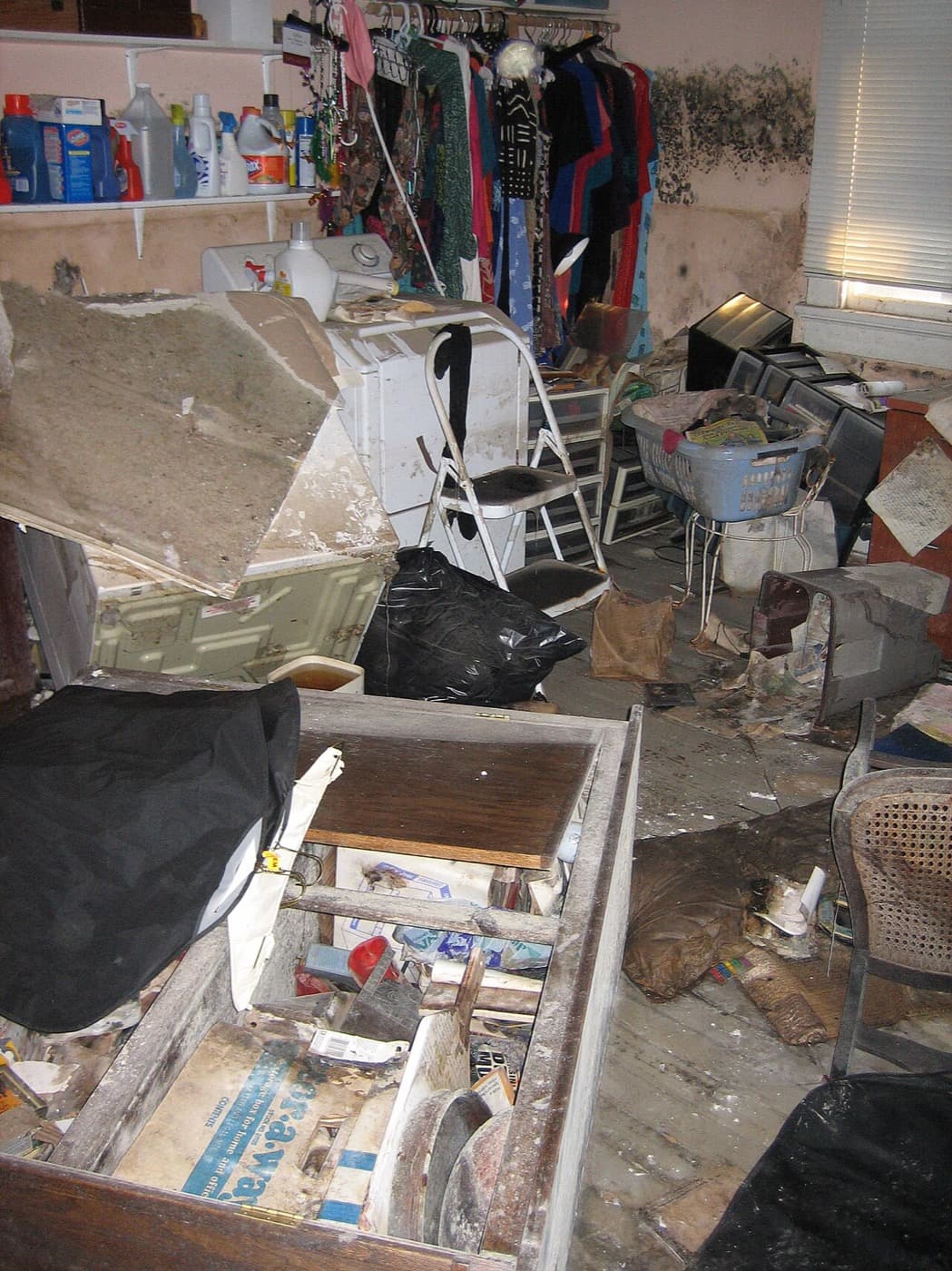
You don't have to wait for a diagnosis to start easing mold exposure symptoms. Most of what helps is the same work that prevents mold from coming back, and none of it needs a test.
- Find and stop the water. The CDC says to fix leaks in the roof, walls or plumbing and to dry out flooded areas fully within 24–48 hours. If you skip this step, the mold grows back however well you clean.
- Get humidity down. The CDC says to keep indoor humidity "no higher than 50%" all day, using an air conditioner or dehumidifier. The AAP also tells parents of children with allergies to "keep indoor humidity low." My notes on choosing a dehumidifier for mold cover sizing.
- Ventilate. Use kitchen and bathroom exhaust fans that vent outside, and make sure the dryer vents outside too (CDC).
- Clean small, hard-surface patches. The CDC says household products, soap and water, or a bleach solution of no more than 1 cup of laundry bleach per gallon of water will do. Never mix bleach with ammonia or other cleaners. The EPA's limit for doing it yourself is under about 10 square feet. Porous materials such as moldy carpet or ceiling tiles may have to be thrown away (EPA).
- Don't spread it. Don't run a heating or cooling system you suspect is contaminated (EPA), and HEPA-vacuum once areas are dry. Keep people who react away from the work area.
- Hand off the cleanup when it makes sense. The EPA says to consult a health professional before cleanup if you have health concerns. I would go further: if the person with symptoms has asthma, a weakened immune system or a lung condition, someone else should do the work. Larger areas, water from sewage, and HVAC contamination are jobs for a professional. Here is what a professional remediation involves.
The CDC also notes research suggesting that improving housing conditions "can reduce morbidity from asthma and respiratory allergies." That is the best argument for fixing the house rather than just treating the symptoms. For the rest of the site, start at the Black Mold Removal Hub homepage.
Get a realistic price before you call anyone
Use our free Black Mold Removal Cost Estimator to get a tailored price range for your room, size, and severity — built from current national and regional pricing data. Then you'll know whether a contractor quote is fair before you commit.
Open the Cost Estimator →