Where Does Black Mold Grow in a House?

Where does black mold grow comes down to a single rule: wherever water lingers longest and air moves least. That's why the same handful of places show up in almost every house — bathrooms, basements, behind bath surrounds, under sinks, around windows, in attics, inside wall cavities — and why mold in a bedroom almost always turns out to be caused by something in a neighbouring room.
This hub maps the house room by room, in rough order of how often each turns out to be the culprit. For each, it covers why mold favours that spot, the specific place to look first, and what the fix actually involves — then links to the full guide. Use it as a checklist: if you can smell mold but can't find it, working through these locations in order will usually find it.
From Sukie's experience
Both of my mold problems were in the two most predictable places in any house — a bathroom wall behind a tub surround, and a finished basement behind the baseboards. I remember feeling almost embarrassed about how textbook they were. In hindsight that's the useful part: mold is boringly predictable, which means a systematic sweep of the usual suspects genuinely works.
10 guides in by location — jump straight to the full list.
Browse all 10 guides ↓Bathrooms — the most reliable mold factory in any house
Bathrooms combine everything mold needs: daily water, warm air, and — usually — inadequate ventilation. A ten-minute hot shower releases a remarkable volume of vapour into a small enclosed room, and if it isn't extracted it condenses on every cool surface and sits there.
The failure is almost never the shower itself. It's the fan: absent entirely, wired to the light switch so it stops precisely when it's most needed, venting into the attic instead of outdoors, undersized for the room, or disconnected from its duct years ago. Running the extractor for fifteen to twenty minutes after you finish is the highest-value habit available and it costs nothing — and it maps directly onto the moisture-control priority in the EPA's mold guidance.
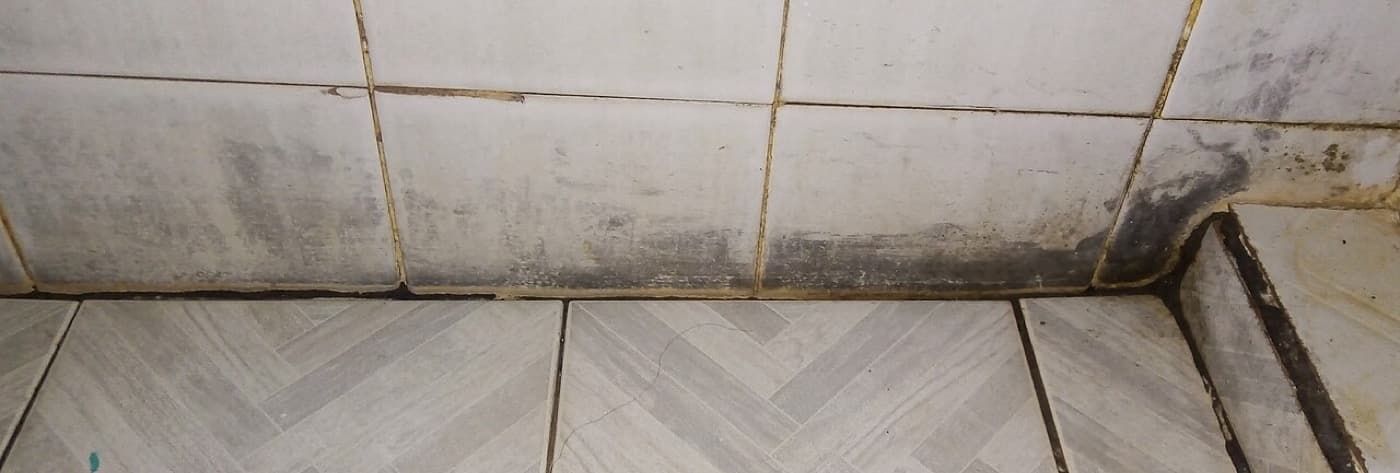
Within the bathroom, growth appears in a predictable order: grout lines and the tile-to-floor joint first, then silicone caulk around the tub, then the ceiling above the shower, then the wall cavity behind the surround if a seal has failed. Our guides cover each — black mold in the bathroom for the overview, black mold in the shower and caulk and grout for the joints, and bathroom ceiling mold for overhead growth. Pricing sits in bathroom removal cost.
Basements and crawl spaces — surrounded by wet soil
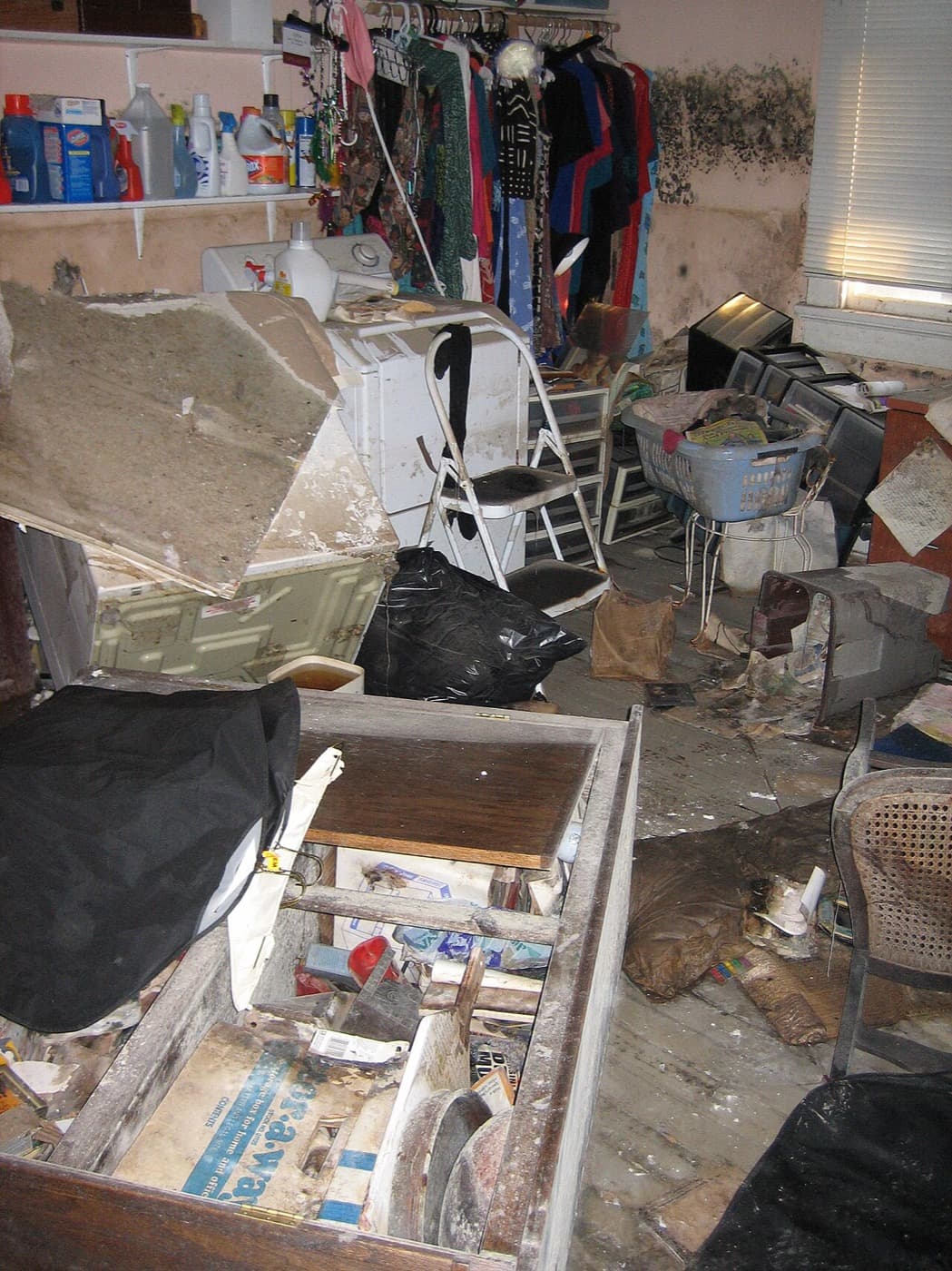
Below-grade spaces face a problem no other part of the house has: they're wrapped in soil that holds water, and concrete and masonry are not waterproof. Water moves through them by capillary action even with no crack anywhere, and saturated soil pushes it through under hydrostatic pressure.
Then there's the seasonal trap. Basements stay cool year-round, so in a humid summer, warm outdoor air entering the space condenses on every cold surface. This is why opening basement windows in July reliably makes damp worse rather than better — you're importing moisture. The counterintuitive correct move is to keep it closed and run a dehumidifier.
Where growth starts tells you which mechanism you have: low on the wall means ground moisture, high on walls and joists means condensation or a leak from above. That diagnostic is worked through in does basement mold start from the bottom or the top, with the full picture in black mold in the basement, masonry technique in removing mold from concrete, and costs in basement and crawl space pricing.
All 10 by location guides
Every guide in this section — each one covers a specific question in depth.
- Black Mold on the Bathroom CeilingBlack mold on bathroom ceiling spots is almost always steam or a leak. Learn the real cause, how to remove it overhead safely, and how to stop it returning.
- Black Mold in the ShowerBlack mold in shower grout, caulk, and corners is fed by constant water. Here's how to remove it for good, which cleaner to use where, and how to keep it gone.
- Black Mold in the BathroomBlack mold in bathroom spots? Learn why it grows, how to remove it safely with the right gear, and how to stop it coming back. A homeowner's hands-on guide.
- Black Mold in the BasementBlack mold in basement areas thrives on dampness and condensation. Learn why it grows, how I cleaned mine behind the baseboards, and how to keep it gone.
- Does Basement Mold Start at the Bottom or Top?Does basement mold start from the bottom or the top? Where growth begins tells you which moisture source you have — and which fix will actually work.
- Black Mold Around WindowsBlack mold around windows comes from condensation on cold glass and frames. Learn why it forms, how to remove it safely, and how to stop window mold returning.
- Black Mold Under SinkBlack mold under sink? Learn the real moisture source, how to clean it safely, when to call a pro, and how to stop it from coming back in the cabinet.
- Black Mold in Air VentsBlack mold in air vents spreads spores through your whole home. Learn why HVAC mold usually needs a pro, what you can safely clean, and how to prevent regrowth.
- Black Mold Behind DrywallBlack mold behind drywall hides until it's serious. Learn the signs of hidden mold, how to check safely, and when to cut out the wall vs. treat and save it.
- Black Mold on Wood StudsBlack mold on wood studs looks scary but framing can often be saved. Learn to tell rot from surface mold, how to treat studs, and when to replace them.
Kitchens, laundry rooms and under sinks — slow leaks nobody sees
Under-sink cabinets are among the most under-checked spots in any house, and they hide exactly the kind of leak that causes the most damage: slow, concealed, and running for months before anything shows on the outside.
The usual suspects are supply-line connections, the P-trap joint, and — in kitchens — the sink rim seal, which lets water track down into the cabinet base every time the sink is filled. Dishwasher and washing machine hoses fail the same way, and front-loading washing machines grow mold in their door gasket almost universally.
The check takes two minutes: empty the cabinet, run a torch across the base and back corners, feel for softness in the particleboard, and smell it. Discoloured or lifting cabinet base material means water has been there a while. Black mold under the sink covers the full inspection and repair.
Windows, attics and air vents — the edges of the building envelope
Windows are cold surfaces by definition, so they condense first. Growth on the frame, the reveal beside it, or the sill points to condensation rather than a leak — worse in winter, worse on north-facing elevations, worse in rooms where laundry is dried indoors. See black mold around windows.
Attics combine a cold roof deck with warm moist air leaking up from the living space through recessed lights, hatches and pipe penetrations. Because nobody goes up there, attic mold routinely spreads across the entire roof deck before discovery. Worth an annual look with a torch — and worth knowing that attic air reaches your living space through those same leaks, plus any ducting running through it. Costs in attic mold removal cost.
HVAC and ducting is the one that matters disproportionately, because the system actively distributes spores to every room it serves. Condensate drains block, oversized units cool without dehumidifying, and insulated duct lining holds moisture. Growth here escalates a contained problem into a whole-house one — black mold in air vents.
The seasonal pattern — when each location acts up
Mold locations aren't equally active year-round, and knowing which season drives which spot helps you both diagnose and prevent.
Winter is condensation season. Cold exterior surfaces meet warm indoor air, so growth appears on window reveals, exterior-wall corners, behind furniture on outside walls, and inside wardrobes against external walls. Heating patterns matter: rooms kept cool but occupied — spare bedrooms, home offices in a cold corner of the house — are the classic winter problem spaces. Drying laundry indoors makes it markedly worse, adding litres of water vapour to air that has nowhere to shed it.
Summer is basement season. Warm humid outdoor air entering a cool below-grade space condenses on every cold surface it meets — walls, cold water pipes, ducting, the underside of the floor above. This is the opposite failure mode from winter, and it's why the intuitive fix (open the windows and air it out) backfires so reliably in July. Keep it closed, run a dehumidifier.
Spring and autumn are leak season. Heavy rain and snowmelt expose roof, gutter and drainage defects, and freeze-thaw cycles open joints that were watertight in autumn. Growth that appears or worsens within a day or two of heavy rain is telling you the entry point is external — check gutters, downspout discharge and ground grading before anything else.
Bathrooms are the exception: they run year-round, because their moisture source is your daily routine rather than the weather. If a bathroom problem is seasonal at all, it's usually worse in winter, when the room's surfaces are colder and windows stay shut.
The practical upshot: a growth pattern that tracks the calendar is condensation or weather-driven, and a pattern that ignores the calendar is a plumbing leak or ground moisture. That single observation narrows the search enormously.
Inside the walls — where the visible patch is the small end
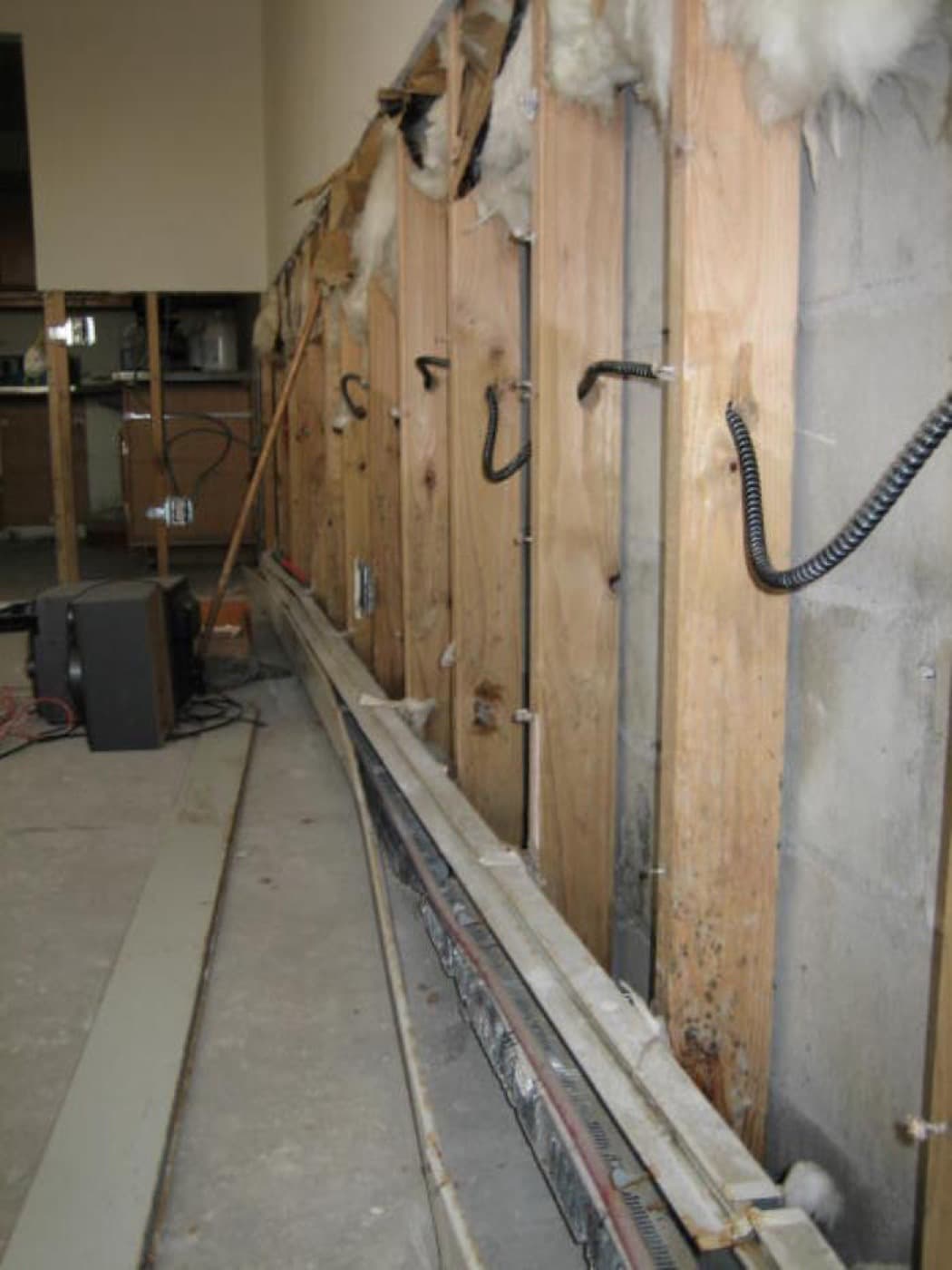
The locations above are all findable by looking. The hardest category is growth inside the structure, where the patch on your wall is the edge of something larger.
Wall cavities host mold on the back of drywall, on framing lumber and in insulation, fed by a concealed plumbing leak or by water tracking down from a roof or window. The signals are indirect: a musty smell that outlasts a thorough surface clean, paint bubbling in a patch rather than a line, skirting lifting or discolouring, a moisture meter reading high well beyond the visible stain, or the same spot returning after you've cleaned it twice.
Framing lumber is a partial reprieve — surface growth on sound wood usually cleans and dries rather than needing replacement, unlike the drywall in front of it. What isn't salvageable is wet insulation, which holds moisture and gets removed. See black mold behind drywall for investigating without demolishing the room, and black mold on wood studs for judging whether framing is sound.
One more location worth naming: someone else's property. In apartments and shared buildings, a leak in an adjacent or upstairs unit routinely produces growth in yours, sometimes well away from the actual source. If you can't find a cause within your own space, that's a conversation to have in writing with your landlord or building management — renters' rights around black mold covers how to document it.
How to sweep the house systematically
If you know something is wrong but can't find it, work the list in this order — it's roughly ordered by hit rate:
- Follow your nose. Walk the house and note where the musty smell is strongest, including low down and inside cupboards. Smell finds hidden growth better than sight.
- Bathrooms and the walls that back onto them. Check grout, caulk, the ceiling above the shower, and the far side of every shared wall.
- Under every sink and behind every water-using appliance.
- The lowest level. Basement or crawl space walls at floor level, plus stored cardboard and fabric.
- Window reveals and exterior-wall corners, especially north-facing and behind furniture.
- The attic, with a torch, looking at the underside of the roof deck.
- Anywhere the moisture meter disagrees with you. Twenty to forty dollars, used in a grid, finds wet zones that look perfectly normal.
Once you've found it, what causes black mold explains the mechanism, the removal hub covers the work, prevention keeps it gone, and the cost hub tells you what to expect if it's bigger than a weekend. Every location guide is listed below.
Get a realistic price before you call anyone
Use our free Black Mold Removal Cost Estimator to get a tailored price range for your room, size, and severity — built from current national and regional pricing data. Then you'll know whether a contractor quote is fair before you commit.
Open the Cost Estimator →