Mildew: What It Is, Where It Grows and How to Get Rid of It

Mildew is the thin gray, white or dark film that turns up on shower grout, the bottom of a shower curtain, a damp towel left in a gym bag, or a leather jacket that spent a humid summer in the back of a closet. It is not a separate organism from mold. University of Missouri Extension describes mildew as a growth produced by mold, usually thin and dark and sometimes white, and both the U.S. EPA and the CDC treat any indoor fungal growth the same way: clean it up and dry out whatever is feeding it.
That makes this an unglamorous but very fixable problem. Below I walk through what mildew is, the places it shows up indoors, how to remove it from each surface without ruining the material, and how to keep it from coming back. The last section covers the part people skip: how to tell when what looks like harmless mildew is actually the visible edge of a bigger mold problem. If you want the head-to-head comparison instead, I wrote a separate guide on black mold vs mildew.
From Sukie's experience
In my 1990s bathroom I scrubbed the gray film off the grout and the caulk bead along the tub more times than I can count, and it always came back. I filed it under housekeeping. What I eventually learned was that a slow leak behind the tub surround was keeping that whole corner damp, and the surface mildew was the only part of the problem I could actually see.
What mildew actually is
In everyday speech, "mildew" means mold that stays on the surface: a flat, powdery or slightly fuzzy film rather than a thick colony that has grown into a material. Biologically there is no clean line between the two. The University of Missouri Extension publication How to Prevent and Remove Mildew — Home Methods (GH5928, read October 2026) defines it simply as a growth produced by mold, a fungus, and notes that it is usually thin and dark, though sometimes white. The molds that cause it need two things to grow: moisture and a suitable temperature.
What mildew eats matters as much as where it lives. The same publication lists cotton, linen, rayon, silk, wool, leather, wood and paper as materials it attacks, and points out that many synthetic fibers resist it. It also notes that soil, greasy films and laundry starch give mold something to feed on, which is why a dirty towel mildews faster than a clean one and why a polyester shower liner with soap scum on it still grows a pink-gray rim at the bottom.
Left alone, it does real damage: musty odors, permanent discoloration, rotted fabric, and cracked or stained leather and paper. For people, the CDC says mold exposure may cause a variety of health effects, or none at all — stuffy nose, sore throat, coughing or wheezing, burning eyes or skin rash in sensitive people, and more severe reactions in people with asthma or allergies. There is no separate set of rules for "just mildew." It is mold, handled at a small scale.
Where mildew grows indoors
Missouri Extension's list of trouble spots reads like a tour of any house: cellars, crawl spaces, closets, basement rooms, shower curtains, and new houses whose building materials are still drying out. The common thread is a space that is damp, warm, dim or poorly ventilated. In practice, these are the places I see it most:
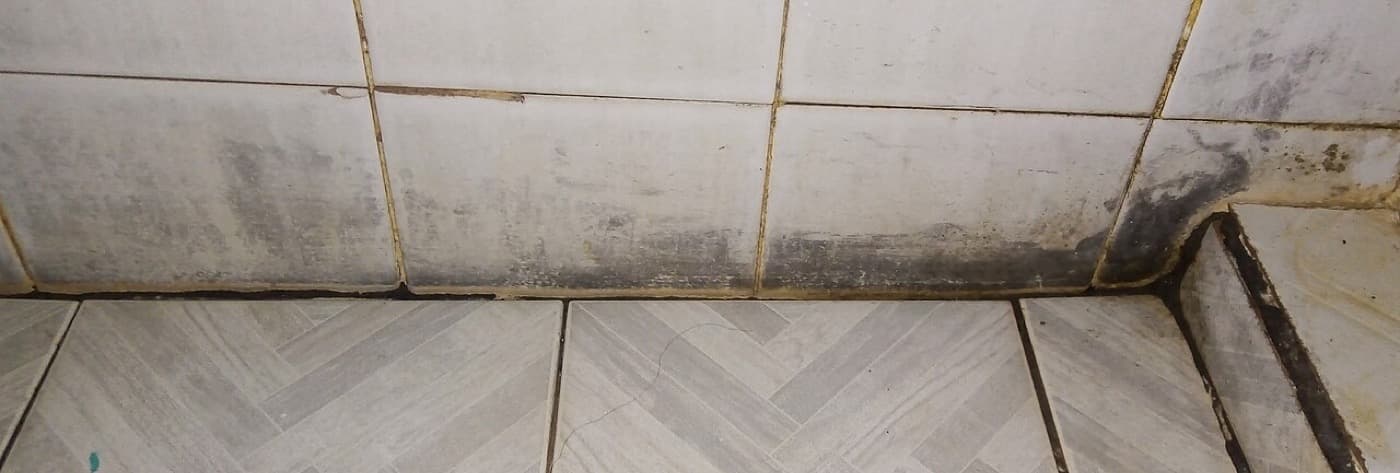
- Shower grout and caulk. Tile sheds water; grout and caulk hold it. That is why the film follows the joints and the seam where the tub meets the wall.
- Shower curtains and bath mats. A wet curtain left bunched up never dries in the folds.
- Towels, gym clothes and laundry left damp. A load forgotten in the washer overnight is often enough to give it that sour smell.
- Closets on exterior walls. Packed clothes, little airflow and a cold wall that collects condensation.
- Window sills and tracks. Condensation runs down the glass and sits in the track; dust gives it food.
- Front-loading washer door gaskets. The rubber fold holds water, lint and detergent residue after every cycle, especially if the door is kept shut.
- Books, papers and leather goods stored in basements, closets or enclosed bookcases.
Seeing it in several of these places at once usually points to whole-house humidity rather than any one surface.
Not sure if it's a DIY job or a pro job?
Get a ballpark price first, then decide.
Estimate my removal cost →How to remove mildew from each surface
Before starting on any surface, put on gloves and eye protection; for anything more than a light wipe, add an N95 respirator, which is the minimum gear the EPA lists for small mold cleanups. Open a window or run the fan. Then match the method to the material.
Shower tile, grout and caulk
Scrub with water and a detergent or household bathroom cleaner and a stiff brush, rinse, and dry the area with a towel. On hard, non-porous tile, the CDC's bleach option — no more than 1 cup of household laundry bleach in 1 gallon of water — is acceptable for stubborn staining. Grout is porous, so stains that survive scrubbing may be in the grout itself. Caulk that stays dark after cleaning usually has growth underneath it and is better cut out and replaced once the joint is fully dry. My full step-by-step for this is on the shower caulk and grout page.
Shower curtains and liners
Most fabric and plastic liners can go in the washing machine with detergent and a couple of towels to scrub them. Hang them back up stretched out, not bunched, so the folds dry.
Clothing, towels and linens
Missouri Extension's method: brush off any surface growth outdoors so you do not scatter spores inside, let the item sun and air, then wash it in soap or detergent and dry it, ideally in the sun. For stains that remain, the publication describes lemon juice and salt followed by sun-drying, or a bleach chosen for the fiber. It is explicit that chlorine bleach should never be used on silk, wool or spandex, so check the care label first. Non-washable items go to a dry cleaner.
Upholstery, mattresses and rugs
Take the item outside if you can, brush and vacuum it there, and dispose of the vacuum bag or empty the canister outdoors. Dry it thoroughly with a fan. Missouri Extension suggests sponging lightly with suds, or wiping with diluted alcohol (equal parts rubbing or denatured alcohol and water), then drying again. Treat that as a cleaning step, not a cure: in a lab test published in the International Journal of Environmental Research and Public Health (2015), 70% ethanol did not inhibit either of the two common indoor molds tested. Avoid steam cleaning, which adds moisture. Deeply infested mattresses and padding are usually a replacement job; the EPA notes that porous materials may have to be thrown away once they become moldy.
Closet walls and painted surfaces
Wash with detergent and water, rinse with clean water, and dry completely. Do not paint over it — the EPA's cleanup guide says plainly not to paint or caulk moldy surfaces. If the drywall is soft or the stain bleeds back within weeks, the problem is inside the wall; see the black mold removal hub for that.
Window sills and tracks
Vacuum loose debris out of the track first, then scrub with detergent and an old toothbrush and dry it. Missouri Extension cautions that mildew-resistant paints should not be used on window sills, because children can chew on them.
Front-loader door gaskets
Pull the rubber fold back, wipe out lint, hair and residue with a cloth and detergent solution, and dry it. Then leave the door ajar between loads so the fold can air out. None of my register sources tests a specific gasket cleaner, so I am not going to recommend one.
Books and paper
Missouri Extension's approach: make sure the paper is dry first, then brush the dry growth off with a soft cloth, outdoors if possible. Fan the pages to air them. For a book that is still damp, it suggests leaving cornstarch or talcum powder between the leaves for several hours to absorb moisture, then brushing it off.
Leather
Wipe with the same 1:1 diluted alcohol, then let the item air-dry. If marks remain, the publication suggests washing with a mild, saddle or germicidal soap. Test anything on a hidden spot first, because leather finishes vary.
Bleach, vinegar and other things people reach for
Bleach is the reflex for most people, and it has a narrower role than the bottle suggests. The EPA's Brief Guide to Mold, Moisture and Your Home states that using a chemical or biocide such as chlorine bleach is not recommended as a routine practice during mold cleanup. The CDC allows a solution of no more than 1 cup of bleach per gallon of water for hard surfaces, and adds a warning worth repeating: never mix bleach with ammonia or other cleaners, because the combination produces toxic fumes. On fabrics, follow the care label and Missouri Extension's rule against chlorine bleach on silk, wool and spandex. I go deeper on this in does bleach kill black mold.
Vinegar gets recommended everywhere, but the evidence is thin. The 2015 study cited above found household vinegar inhibited Penicillium chrysogenum but had no effect on Aspergillus fumigatus. It is fine as a mild cleaner on surfaces it will not etch; it is not a guaranteed kill.
For mildew, scrubbing and drying do most of the work; dryness is what stops it returning.
Keeping mildew from coming back
Every source I trust says the same thing in different words: if the dampness stays, the mildew comes back. The EPA calls the moisture problem the key to mold control, and the CDC recommends keeping indoor humidity no higher than 50%. A cheap hygrometer tells you where you stand; if a room sits above that, a dehumidifier or air conditioner is the practical fix (I compare models in best dehumidifier for mold).
- Bathrooms: run the exhaust fan during every shower and for a while afterward, squeegee or towel the walls, and spread the curtain flat to dry.
- Laundry: move washed clothes to the dryer promptly, never put damp items away, and leave a front-loader's door and detergent drawer open between loads. Vent the clothes dryer outdoors, as Missouri Extension advises.
- Closets: keep them clean, hang clothes loosely, and leave the doors open sometimes. Wash or clean clothes before storing them, and do not store items with starch in them, since molds feed on it.
- Windows: wipe condensation off sills on cold mornings and keep the tracks free of dust. Persistent condensation is a humidity signal, covered on the mold around windows page.
- Books and leather: store them somewhere dry, not in a basement or against an exterior wall.
- Leaks and spills: dry anything wet within 24–48 hours, the window both the EPA and the CDC give for preventing mold growth.
Missouri Extension also notes that ordinary household activities can add about 2 gallons of water to the air in a day, which is why closed-up houses in humid weather mildew so readily. More detail on whole-house moisture control is in my guide on how to prevent black mold.
When mildew is a sign of something bigger
Most mildew really is a surface nuisance. But a few signs mean you are looking at the visible edge of a deeper problem, and scrubbing it will not help:
- It comes back within days or a couple of weeks even though the room is ventilated and you dry the surface.
- The material underneath is soft, swollen, crumbling or stained after cleaning.
- The growth is raised, slimy or spreading across drywall, ceiling or trim rather than sitting on tile or fabric.
- There is a strong musty smell you cannot trace to anything visible.
- It is next to plumbing, a tub surround, a window that leaks, or a wall that has had water damage.
That was my situation: the grout film was real, but it was being fed by a leak I could not see. When the signs point that way, find and fix the water first, then follow the steps on the how to remove black mold hub. The EPA's line for doing it yourself is an area under about 10 square feet. Above that, or if the growth involves sewage or flood water, the HVAC system, or anyone in the home with asthma, allergies or a weakened immune system, bring in an experienced remediation professional. And do not bother testing to find out "what kind" it is: the CDC does not recommend mold testing, and the response is the same whatever the species. For a quick visual check, the black mold vs mildew comparison walks through texture, wipe and location tests, and the Black Mold Removal Hub homepage links to every guide on the site.
Get a realistic price before you call anyone
Use our free Black Mold Removal Cost Estimator to get a tailored price range for your room, size, and severity — built from current national and regional pricing data. Then you'll know whether a contractor quote is fair before you commit.
Open the Cost Estimator →