Mold Removal Products: What's Worth Buying

Mold removal products are where homeowners overspend most reliably, because the aisle is organised around marketing categories rather than around what mold actually requires. The honest position, which no product label will tell you, is that the highest-value purchases for a mold problem aren't cleaners at all — they're a $25 respirator, a $30 moisture meter and a dehumidifier.
This hub covers what each category of product genuinely does, where the money is well spent, and which products solve a problem you don't have. It's deliberately unenthusiastic: the EPA's own guidance is that detergent and physical removal handle routine mold cleanup, so the bar a specialist product has to clear is "better than soap and a brush," and several popular categories don't clear it.
From Sukie's experience
My most-used mold purchase across both houses is the least exciting thing I own: a $28 pin-type moisture meter. It's what told me the wet zone behind our bathroom wall extended almost two feet past the stain, and what told me — four days into drying the basement — that the block was still holding water even though it felt bone dry to the hand.
3 guides in products & gear — jump straight to the full list.
Browse all 3 guides ↓Buy protection before you buy anything else
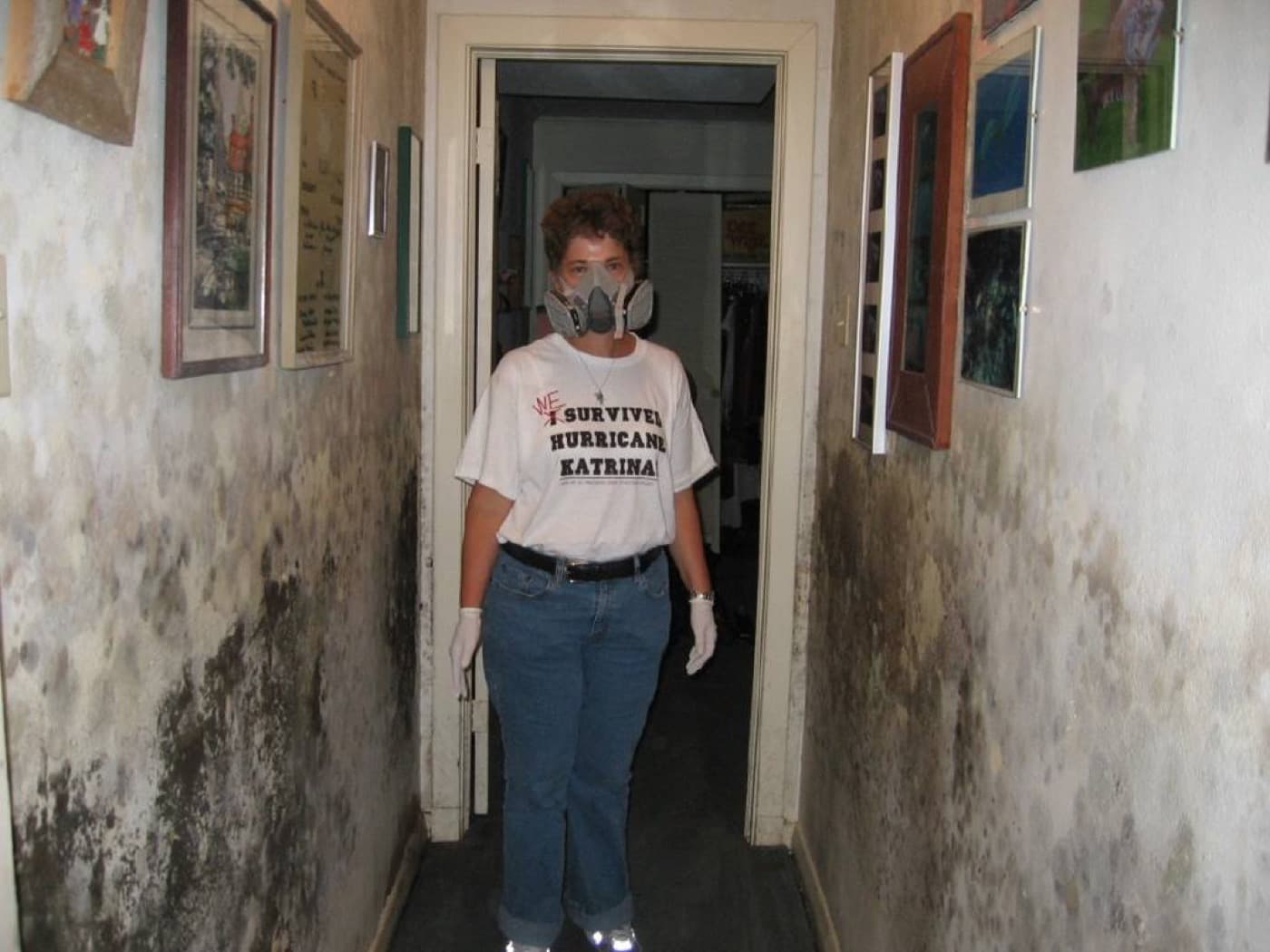
The single highest-value purchase in a mold job is the one that protects the person doing it. Exposure peaks at the exact moment you start disturbing growth, and the difference between an N95 and a cloth mask is the difference between filtration and theatre.
For small jobs, disposable N95 respirators ($15–$25 a box), forearm-length nitrile or rubber gloves, and sealed goggles — the vented kind let spores straight in — are the minimum. For anything larger or repeated, a half-face cartridge respirator with P100 filters ($30–$50) filters better, seals better and lasts years. Our comparison is in best respirator for mold removal.
The EPA's cleanup guidance escalates protective equipment with affected area, and it's worth taking literally: the gear that's optional for a one-square-foot patch is mandatory for a ten-square-foot one.
Diagnostic tools beat cleaning products
Two cheap instruments do more to resolve a mold problem than any bottle, because they answer the questions that determine whether your work lasts.
A moisture meter ($20–$40) maps the wet zone, which is almost always larger than the visible stain. It tells you how far to cut, whether a wall cavity is involved, and — critically — when drying is genuinely finished rather than when the surface merely feels dry. If you buy one thing from this page, buy this.
A hygrometer ($10–$15) tells you the room's actual relative humidity instead of your impression of it. Bathrooms routinely spike above 70% and stay there for an hour after a shower; basements sit high all summer. You cannot manage humidity you aren't measuring, and under 50% is the target.
Neither is marketed as a mold product, which is precisely why most people don't own them.
All 3 products & gear guides
Every guide in this section — each one covers a specific question in depth.
- Best Mold Test KitsBest mold test kits compared honestly: DIY petri dishes, lab-analyzed kits and 5-minute swabs. What they really tell you, what they don't, when to skip them.
- Best Dehumidifier for MoldBest dehumidifier for mold control: how to size by pints and square footage, the features that matter, and honest picks for basements and bathrooms.
- Best Black Mold Removal SprayBest black mold removal spray picks compared: RMR-86, Concrobium, Mold Armor and more. Honest blurbs, what works on porous vs. hard surfaces, and safety tips.
Cleaners: what the categories actually do
Ranked by what they accomplish rather than by shelf presence:
| Product | What it does | Worth buying? |
|---|---|---|
| Detergent + stiff brush | Physically removes growth — the EPA baseline | Yes. Start here |
| 3% hydrogen peroxide | Oxidises; penetrates porous surfaces slightly; breaks down clean | Yes — best all-rounder, ~$2 |
| Borax | Alkaline + fungicidal; leaves residual inhibition when not rinsed | Yes for damp-prone surfaces |
| White vinegar | Kills many species; no residual effect; smells | Situational |
| Commercial mold sprays | Varies hugely — some clean, some only bleach the stain | Read the label carefully |
| Bleach | Whitens stains; poor penetration into porous material | Rarely the right tool |
| Mold "bombs" / foggers | Treat air, not the colony | No |
The distinction that matters most on a commercial product label is stain remover versus mold killer. Several best-selling sprays are essentially fast bleaching agents: the black vanishes in seconds, which feels like success and is mostly cosmetic. Products that actually kill and help you remove growth work more slowly and need dwell time. Our breakdown is in best black mold removal spray, with the household options in home remedies, and the full method comparisons in hydrogen peroxide, borax and bleach.
Dehumidifiers and air purifiers — different jobs, often confused
These two get bought interchangeably and do entirely different things.
A dehumidifier removes moisture from air, which addresses the actual cause of most household mold. In a damp basement it's frequently the single most effective purchase available — more effective than any cleaner, because it changes the conditions rather than the symptoms. Size it to the space and target under 50% relative humidity. See best dehumidifier for mold.
An air purifier with a true HEPA filter removes spores already airborne. It helps with symptoms while remediation is pending and during cleanup, but it does not prevent growth and cannot substitute for removal — a purifier running beside a wet wall is losing a race. See best air purifier for mold.
The rule: dehumidifier treats the cause, purifier treats the air. If you're buying one and the room is damp, buy the dehumidifier.
Containment, drying and disposal — the unglamorous half of the list
Cleaning products get all the attention, but on any job bigger than a grout line, the equipment that controls where spores go and how fast the structure dries matters more than what's in the spray bottle.
Containment supplies are cheap and disproportionately effective. Plastic sheeting (4-mil or 6-mil, around $15 a roll) and painter's tape let you seal a doorway so the rest of the house isn't sharing your air. Add a box fan in the window blowing outward and you have crude negative pressure — air leaves the room rather than drifting through the house. This is a $25 setup that does most of what an expensive containment does at homeowner scale.
Air movers and dehumidifiers handle the drying phase, which is where DIY jobs most often fall short. A box fan moves air across a surface; a dehumidifier pulls the moisture out of the room so that air can keep absorbing more. You need both, and you need them running for days rather than hours. For a one-off job, renting a commercial dehumidifier for a week ($30–$60) beats buying a consumer unit that's undersized for the task.
A HEPA vacuum removes settled spores and post-demolition debris without exhausting them back into the room, which is exactly what a standard vacuum does. Worth renting for a day after any drywall cutting; hard to justify buying for a single job.
Disposal means heavy-duty contractor bags (3-mil or thicker) and the discipline to bag debris inside the affected room, seal it, and carry it straight outside rather than through the house. It costs almost nothing and prevents the specific failure of remediating one room while seeding another.
None of this is exciting, and all of it is the difference between a job that ends and a job that relocates.
Test kits, and where products stop being the answer
Consumer mold test kits are the category we're least enthusiastic about. Settle-plate kits grow something in essentially any home — spores are present in all indoor air — so a positive result carries very little information, and species identification rarely changes what you should do. Both the CDC and EPA advise removing visible growth regardless of type.
Where kits have a role is narrow: comparative sampling between rooms, or a preliminary look before deciding whether to pay for a professional inspection. When you need real answers — hidden growth, a real estate transaction, a landlord or insurance dispute, post-remediation clearance — pay for an inspection instead, where the value is the moisture meter, thermal camera and trained eye. See best mold test kits for the honest version, and mold inspection cost for what professional testing runs.
Finally, the boundary worth naming: no product on this page fixes a leak, regrades a garden, or ventilates a bathroom. Those are the permanent fixes, and they're covered in how to prevent black mold. Products help you do the work — they are not the work. The complete gear cluster is listed below.
Get a realistic price before you call anyone
Use our free Black Mold Removal Cost Estimator to get a tailored price range for your room, size, and severity — built from current national and regional pricing data. Then you'll know whether a contractor quote is fair before you commit.
Open the Cost Estimator →