Mold Inspection: What an Inspector Actually Does, and When You Need One

Mold inspection is a search for two things at once: where mold is growing in your home, and where the water feeding it is coming from. The second half matters more. A report that names every spore on the lab sheet but never says why the wall is wet has not done its job, because the U.S. EPA is blunt that if you skip the moisture source “the mold problem may simply reappear.”
This guide is about the process and the decisions, not the price. If you came here for numbers, the full breakdown lives on our mold inspection cost page. Here: what an inspection is, a walk-through you can do yourself first, when a professional is worth it, how to vet one, and how to read the report.
From Sukie's experience
In my finished basement the mold was behind the baseboards, but the water was coming from outside: a downspout was emptying about 18 inches from the foundation. I only found it by walking the outside of the house after a rain instead of staring at the stained wall, and that is the habit I would want any inspector, or any homeowner, to start with.
Inspection, testing and remediation are three different jobs
These three words describe different visits, and mixing them up is how homeowners pay for the wrong service.
- Inspection (assessment) is the investigation: a visual examination, moisture readings, and a written finding about where growth is and what is causing it. New York and Texas both license this work separately, calling the professional a mold assessor (NY) or mold assessment consultant (TX).
- Testing (sampling) is one optional tool inside an inspection: air or surface samples sent to a lab. It is the part most often sold and least often needed. The EPA says that “in most cases, if visible mold growth is present, sampling is unnecessary,” and the CDC states plainly that it “does not recommend mold testing.”
- Remediation is the cleanup: containment, removal of contaminated material, cleaning, drying and the moisture repair. See the professional mold remediation process.
It also helps to know what a mold inspection cannot promise. The IAC2 Mold Inspection Standards of Practice, the standard InterNACHI trains its inspectors on, says an inspection “is valid for the date of the inspection and cannot predict future mold growth” and “is not intended to eliminate the uncertainty or the risk of the presence of mold.” The EPA adds that “it is impossible to get rid of all mold and mold spores indoors.” Nobody can certify a house as mold-free.
Do this walk-through yourself before you book anyone
A homeowner with a pin-type moisture meter and a digital hygrometer (an indoor humidity gauge) can do the first pass of a mold inspection in an afternoon. The EPA's investigation chapter names both: moisture meters can “monitor the process of drying damaged materials,” and “humidity meters can be used to monitor humidity indoors.” Wear an N95, gloves and eye protection if you will be close to visible growth, and don't peel back wallpaper or panelling. The EPA warns that “removal of wallpaper can lead to a massive release of spores.”
- Follow your nose and write it down. Note every room where you smell mustiness, and whether it is worse after rain or after showers. A smell with no visible source is the classic sign of hidden growth (see black mold smell).
- Read the humidity in each room. The EPA's target is “below 60 percent (ideally between 30 and 50 percent) relative humidity.” A basement that sits well above that is a moisture problem whether or not you can see mold yet.
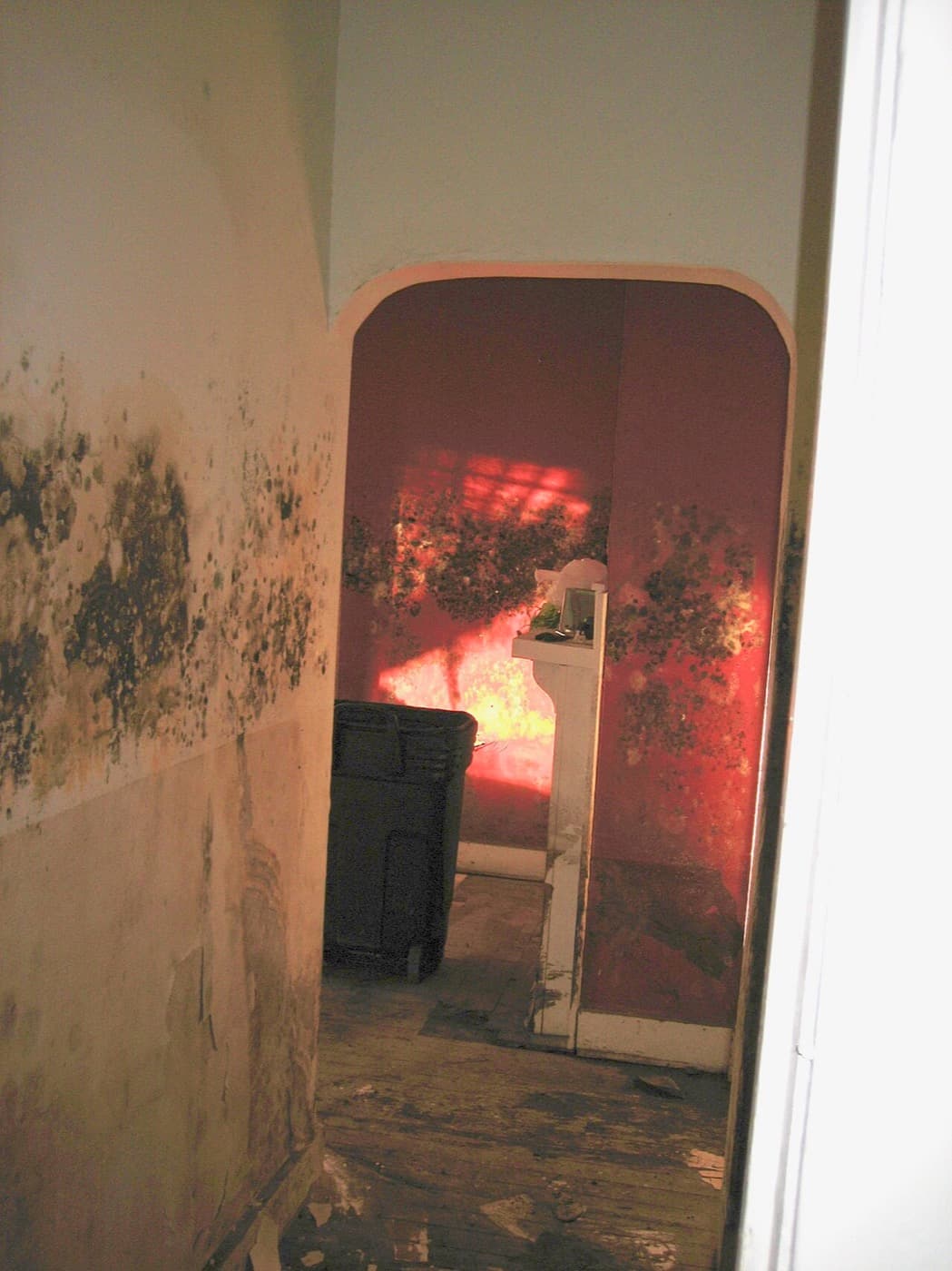
- Look at the known hiding places. Under sinks, around tub and shower surrounds, window sills, behind furniture on exterior walls (the EPA names “walls behind furniture (where condensation forms)”), the base of basement walls, and the condensate drain pan of your air handler.
- Take moisture readings and compare. Read the suspect wall, then a dry wall of the same material in another room. Mark any spot that reads noticeably wetter than its twin.
- Trace the wet spot to a source. Look above it (a bathroom, a roof valley, a pipe run) and outside it (grading, gutters, downspouts). Go back after a rain and see whether the readings rise.
- Measure any visible growth. Roughly how many square feet? The EPA's do-it-yourself line is “less than about 10 square feet (less than roughly a 3 ft. by 3 ft. patch).”
- Photograph everything with the date. Stains, meter readings, the hygrometer display. This is your baseline for an inspector or insurer.
A small patch with an obvious cause, such as a dripping trap, may need no inspector at all: fix the water and clean it up. A smell with no source, readings that stay high, or growth past the 10 sq ft line is a different story.
Not sure if it's a DIY job or a pro job?
Get a ballpark price first, then decide.
Estimate my removal cost →What a professional mold inspection looks like, step by step
A complete mold inspection under the IAC2 standard uses the same parts as the checklist above, with more instruments and a formal write-up.
1. History. Expect questions about what you have seen and smelled and past water events; your dated photos help.
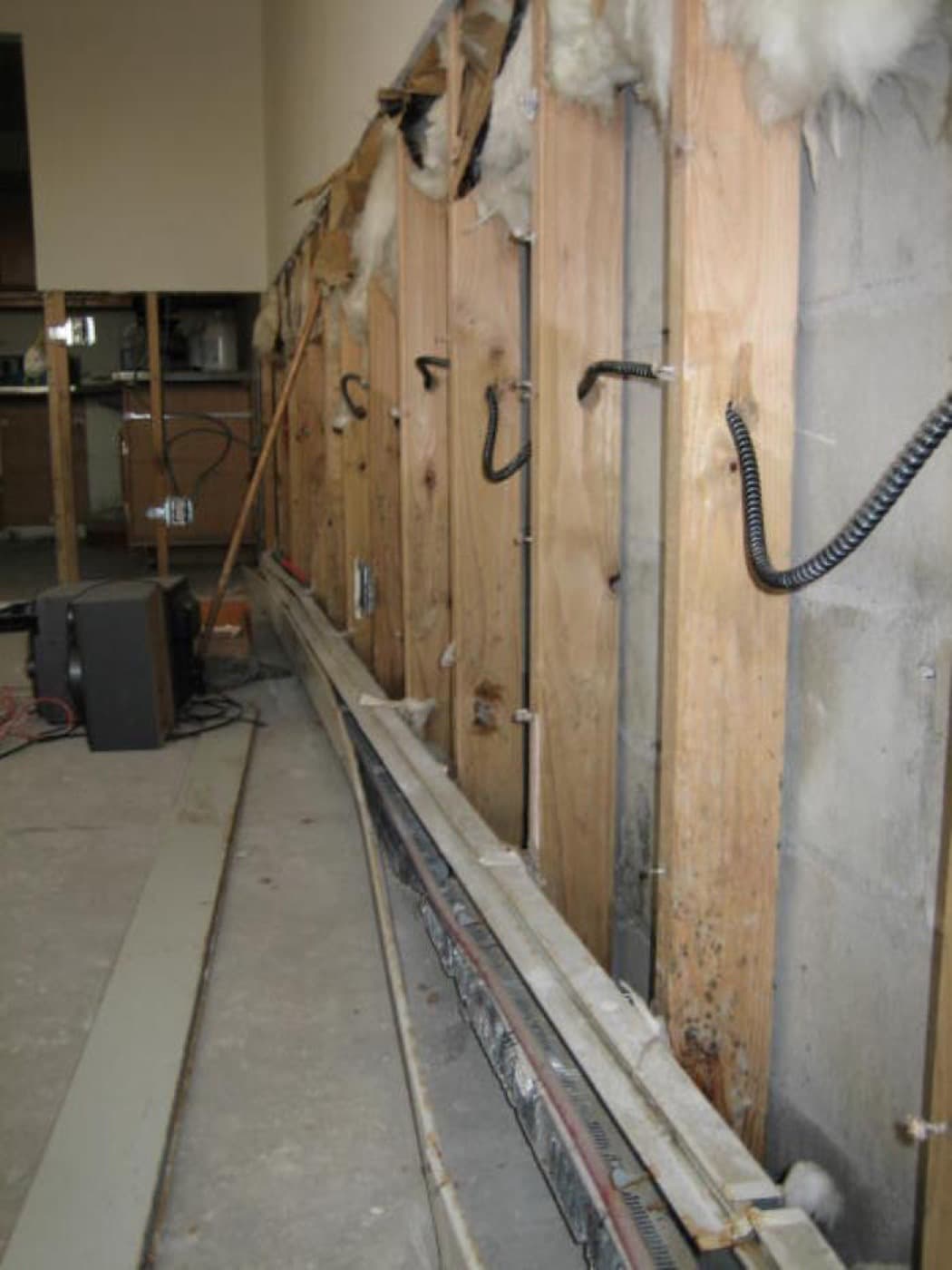
2. Visual examination. The IAC2 standard defines this as “a non-invasive visual examination of the readily accessible, visible, and installed systems and components.” Note the words non-invasive and readily accessible. Under the same standard the inspector is not required to “move any personal items or other inspection obstructions,” “dismantle, open, or uncover any system or component,” or determine hidden mold by physical examination. If you want a wall cavity opened, it has to be agreed in advance.
3. Moisture mapping. The standard requires “moisture, temperature and humidity measurements,” with moisture readings taken in affected areas. The point is to outline how far the wet zone extends, often well past the visible stain.
4. Thermal imaging, if offered. Many inspectors carry an infrared camera. It shows surface temperature differences, not water and not mold, so a cool spot is a lead to confirm with a moisture meter, not a finding on its own. None of the standards in our source register require it, so if you want it, ask whether it is included.
5. Sampling, only when there is a question to answer. When an inspector does sample under the IAC2 standard, the minimum is at least one surface sample in each area of concern, two outdoor air samples and at least one indoor air sample. The outdoor samples are the control; without them the indoor numbers mean nothing.
6. Lab analysis and the report. Samples go to a lab, and the report should combine the lab results with the visual findings and moisture map into a conclusion: where the growth is, how far it extends, and what is causing it.
A “limited” inspection confines all this to one area, such as only the crawl space.
Sampling: when it earns its place and when it is wasted
The single most useful thing to know before booking a mold inspection is that lab sampling is optional, and often pointless. The EPA, in both its brief guide for homeowners and its remediation guide for larger buildings, says sampling is usually unnecessary when you can already see mold. The CDC goes further: it does not recommend testing, and “you do not need to know the type of mold” to deal with it.
Sampling has real limits too. The EPA notes that “no EPA or other Federal threshold limits have been set for mold or mold spores,” so there is no official number that makes a home pass or fail. It also points out that “air sampling for mold provides information only for the moment in time in which the sampling occurred.”
Where sampling is justified, the EPA's rule is to have a reason first: “Sampling should be done only after developing a sampling plan that includes a confirmable theory.” Situations where a theory exists include:
- A persistent musty smell with no visible growth, where samples help confirm a hidden source.
- Checking that a remediated area is actually clean. The EPA notes that surface sampling “may be useful to determine if an area has been adequately cleaned or remediated.”
- A dispute, for example a landlord, seller or insurer who denies there is a problem, where documented results carry weight.
Store-bought kits are covered in our mold test kit guide.
When you genuinely need a professional
The DIY walk-through handles the easy cases. These are the ones where the EPA or the state rules point you to a professional, and where a professional mold inspection pays for itself:
- You suspect hidden mold. Persistent smell, a wet reading with nothing visible, staining that keeps coming back. The EPA's chapter on investigation says, “If you believe that you may have a hidden mold problem, you may want to consider hiring an experienced professional.” See black mold behind drywall.
- The HVAC system may be involved. The EPA's instruction is “Do not run the HVAC system if you know or suspect that it is contaminated with mold.” See our mold in air vents page.
- After flooding or sewage. If the damage came from sewage or other contaminated water, the EPA says to “call in a professional who has experience cleaning and fixing buildings damaged by contaminated water.”
- The growth is bigger than about 10 square feet. That is past the EPA's homeowner line.
- A home purchase or sale. The IAC2 standard is explicit that a mold inspection is not a home inspection; if a buyer's inspector notes staining, a separate mold inspection documents the scope.
- Someone in the home has health concerns. The EPA says, “If you have health concerns, consult a health professional before starting cleanup.” The CDC notes that people with asthma, allergies, weakened immune systems or chronic lung disease can react more severely.
If you are not sure which professional fits, our who to call for black mold removal guide walks through the options.
How to vet a mold inspector
There is no federal mold inspection licence. Licensing is set state by state, so the first question is what your state requires. Two states with clear rules:
New York. Under Labor Law Article 32 the NY Department of Labor makes it unlawful to “engage, advertise or hold themselves out as a mold assessor” without a licence, and the same applies to remediation contractors. Its minimum work standards require “an independent mold assessment to define the scope of the remediation work,” prohibit “the performance of both the assessment and remediation on the same property by the same individual,” and require a post-remediation assessment. The department runs a licensed mold contractor search tool.
Texas. The Texas Department of Licensing and Regulation licenses the people who “inspect and test for mold in buildings,” and states that “you are not allowed to conduct both mold assessment and mold remediation activities on the same project” (school districts are the exception). TDLR also notes that a real estate inspector needs a mold licence to collect air or spore samples, though simply noting visible mold does not. Its owner exemption, under 25 contiguous square feet of visible mold, is a Texas rule only; it is not a national standard. TDLR's site has a “Verify a License” search.
In any other state, check your state's licensing agency before assuming a licence exists or doesn't. Then ask every candidate:
- Do you also do remediation? If so, will you refer the cleanup elsewhere? NY and TX both separate the roles.
- Which standard do you work to? The EPA's hiring guidance points to its own Mold Remediation in Schools and Commercial Buildings guide, ACGIH guidelines and IICRC.
- If you sample, why, and will you take outdoor controls?
- Will the report name the moisture source and include a moisture map and photos?
Be wary of “we always test.” HomeGuide's cost survey puts a typical inspection at $300 to $650; the line-by-line pricing is on our cost page.
Reading your mold inspection report
Read the report in this order.
Start with the moisture source. The report should say where the water is coming from: a leak, condensation, groundwater, or an HVAC drain. If the report never names a source, ask for one in writing.
Then the extent. Look for a moisture map or marked photos showing the affected area. That boundary, not the visible stain, is what a remediation quote should be based on.
Then the lab results, against the outdoor control. The EPA's benchmark is that “the types and concentrations of mold in indoor air samples should be similar to what is found in the local outdoor air.” Indoor counts well above outdoors, or indoor types that are absent outside, point to an indoor source. Names like Cladosporium, Penicillium and Aspergillus are named by the CDC as common indoor molds, so their presence alone is not alarming.
Finally the recommendations. They should be proportionate to the findings and should include fixing the water.
Red flags: a report that is all species names and no source; a recommendation for whole-house work based on a single elevated sample; a “mold-free” certificate (no such thing is possible); and an inspector whose company is also quoting the cleanup.
The inspection after the cleanup
The most overlooked mold inspection is the one after remediation. It answers a different question: did the work succeed?
The industry standard for remediation, ANSI/IICRC S520 (4th edition, 2024), includes post-remediation verification and a defined role for the indoor environmental professional, the independent assessor who checks the work. New York's minimum work standards require a post-remediation assessment. In Texas, TDLR says that “in order to determine if a project has achieved clearance, the consultant must conduct a post-remediation assessment,” and the remediator then issues a Certificate of Mold Damage Remediation, which insurers may not use to make an adverse underwriting decision on a residential policy when the certificate is provided.
Outside those states, you can still ask for the same thing. The EPA's own completion checks are practical ones you can verify yourself: no visible mold or mold odors, the moisture problem fixed, and occupants without complaints.
For prices, go to mold inspection cost; for the wider budget, see the mold removal cost hub; and for everything else, start from the Black Mold Removal Hub homepage.
Get a realistic price before you call anyone
Use our free Black Mold Removal Cost Estimator to get a tailored price range for your room, size, and severity — built from current national and regional pricing data. Then you'll know whether a contractor quote is fair before you commit.
Open the Cost Estimator →Frequently asked questions
Can I just buy a test kit instead of getting a mold inspection?
Should the company that inspects my house also remove the mold?
Sources
- U.S. EPA — A Brief Guide to Mold, Moisture and Your Home (read October 2026)
- U.S. EPA — Mold Cleanup in Your Home (read October 2026)
- U.S. EPA — Mold Remediation in Schools and Commercial Buildings, Chapter 3 (read October 2026)
- CDC — Mold: About (read September 2026)
- New York State Department of Labor — Mold Program (read October 2026)
- Texas Department of Licensing and Regulation — Mold Assessors and Remediators FAQ (read October 2026)
- IAC2 — Mold Inspection Standards of Practice (read October 2026)
- IICRC — ANSI/IICRC S520 Standard for Professional Mold Remediation, 4th ed. (2024)