Black Mold Identification: Is It Mold, and Does It Matter?

Black mold identification is where most homeowners start, usually at an unhelpful hour, holding a phone torch at a dark patch and trying to decide whether to panic. Two things are worth knowing before you go further. First, a meaningful share of dark wall marks aren't mold at all — soot, thermal ghosting and old water stains account for a lot of late-night searching. Second, when it is mold, the exact species almost never changes what you should do about it.
That second point runs against most of what you'll read online, so it's worth stating plainly: both the CDC and EPA take the position that if you can see or smell mold indoors, you remove it and fix the moisture — regardless of what type it turns out to be. This hub covers how to tell mold from its look-alikes, what the health picture actually supports, and where to go next for your specific question.
From Sukie's experience
The mark that taught me to slow down was in our upstairs hallway: dark, vertical, evenly spaced stripes I was convinced were mold spreading behind the drywall. They were thermal ghosting — dust settling on the cold line of each stud. I'd have spent a weekend and $40 of peroxide cleaning dust off a wall that needed insulation.
15 guides in identify & health — jump straight to the full list.
Browse all 15 guides ↓Texture first, colour second
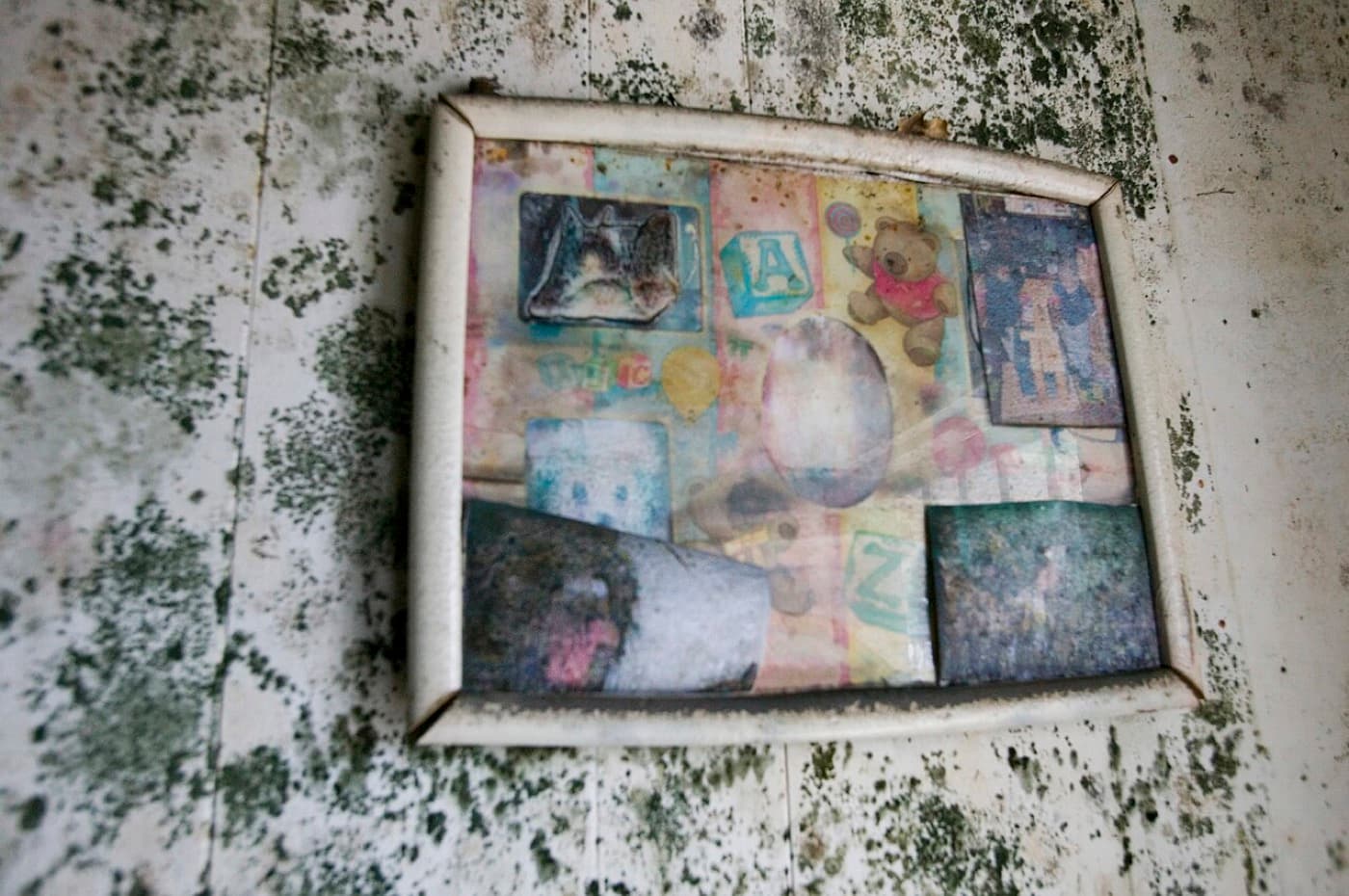
The single most reliable identification test costs nothing: hold a torch nearly flat against the wall so the light rakes across the surface, and look for relief.
Real established mold growth has three-dimensional texture — it stands off the surface and casts tiny shadows. Stains, soot and ghosting are perfectly flat. Overhead lighting hides this completely, which is why so many photos are inconclusive and why camera flash makes identification harder, not easier.
The second test: wipe a small area with a damp white cloth. Soot and dirt transfer readily and leave the wall visibly lighter. Mold smears rather than lifts, and the surface stays discoloured underneath. Efflorescence — the mineral deposit common on masonry — powders under your finger and dissolves in water.
Colour, meanwhile, tells you far less than people expect. Mold appears black, green, grey, brown or white depending on species, surface, moisture level, light and age. "Black" is a description of appearance, not an identification. The detailed visual walkthrough is in what does black mold look like, with the two most-searched specific presentations covered in black fuzzy mold on wall and black splotches on walls.
The look-alikes, and why misidentifying costs money
Four things get mistaken for mold routinely, and each needs a completely different response:
- Mildew — flat, powdery, grey-to-white, wipes off entirely. Genuinely a mold, but surface-only and trivial to remove. The comparison is in black mold vs mildew.
- Soot and smoke residue — flat black deposits from candles, fireplaces or gas appliances, heaviest above heat sources. Smears greasily, no texture.
- Thermal ghosting — evenly spaced vertical stripes tracing the studs behind the drywall, caused by dust settling on cold spots. No amount of cleaning fixes it permanently; it's an insulation issue.
- Efflorescence — white or grey crystalline deposit on masonry, left by water moving through the wall. Not biological, but it's telling you water is moving, which is worth acting on.
The cost of getting this wrong runs both directions. Treating ghosting as mold wastes a weekend. Treating mold as "just a stain" and painting over it costs you the paint job plus the eventual remediation.
All 15 identify & health guides
Every guide in this section — each one covers a specific question in depth.
- What Does Black Mold Look Like?What does black mold look like? Usually dark green-black, slimy or fuzzy patches on damp walls, wood, or ceilings. Learn to spot it vs look-alikes.
- Is Black Mold Dangerous?Is black mold dangerous? Here is the measured, evidence-based answer on health risks, who is most at risk, and when to worry, drawn from CDC and EPA guidance.
- Black Mold vs MildewBlack mold vs mildew: mildew is a surface fungus you can wipe away, while black mold grows deeper and signals a bigger moisture problem. How to tell them apart.
- Black Mold SymptomsBlack mold symptoms range from a stuffy nose and cough to worsening asthma. Learn the realistic signs of mold exposure and when to see a doctor.
- Black Mold SmellBlack mold smell is typically musty, earthy, and damp, like wet cardboard or rotting wood. Learn what causes the odor, where to look, and how to get rid of it.
- Black Fuzzy Mold on WallBlack fuzzy mold on wall surfaces means growth is mature and actively sporing. Here's how to tell fuzzy mold from soot or mildew, and what to do next.
- Black Splotches on WallsBlack splotches on walls aren't always mold. Work through the shape, texture and location of yours to identify the cause before you spend money fixing it.
- Black Mold & DogsIs black mold dangerous to dogs? Learn the signs to watch for, why pets may be exposed more than people, and when to call your vet and a remediation pro.
- Can Mold Make You Sick?Can black mold make you sick? Here's what the CDC and EPA actually say, the symptoms reported, who's most at risk, and how to clean it up safely.
- What Causes Black MoldWhat causes black mold comes down to one thing you control: moisture. Here are the eight sources that account for nearly every case, and how to find yours.
- Mold Exposure TimelineHow long does it take for black mold to affect you? From minutes for allergy-prone people to weeks of mild symptoms. Here's the realistic timeline.
- Black Mold Exposure: What to Do at HomeBlack mold exposure treatment at home has real limits. What actually helps, which symptoms mean seeing a doctor, and why no home remedy detoxes mold.
- Mold & PregnancyIs black mold dangerous during pregnancy? A measured, evidence-based answer, why you shouldn't do mold removal while pregnant, and what to ask your doctor.
- Mold Toxicity Warning Signs10 warning signs of mold toxicity, checked against CDC and EPA guidance: the symptoms and home clues that matter, what to tell a doctor, and when to call a pro.
- Mold Exposure SymptomsMold exposure symptoms by person type: healthy adults, allergies and asthma, kids, weak immunity. Telling mold from a cold, and what a doctor will ask.
Do you need a test? Usually not
Mold testing is heavily marketed and rarely decisive for homeowners with visible growth. The CDC's guidance notes that identifying the species generally doesn't change the recommended response, and the EPA takes the same line: remove visible growth and correct the moisture, whatever it is.
Cheap settle-plate kits are worse than useless for most purposes — they grow something in essentially any home, because spores are present in all indoor air, so a positive result carries almost no information.
Testing genuinely earns its cost in four situations: locating hidden growth you can smell but can't find; a real estate transaction; a dispute with a landlord or insurer where you need documentation; and post-remediation clearance on a major job. In those cases pay for a professional inspection rather than a kit — the value is in the moisture meter, thermal camera and trained eye, not the petri dish. Pricing is in mold inspection cost.
Where you found it narrows what it is
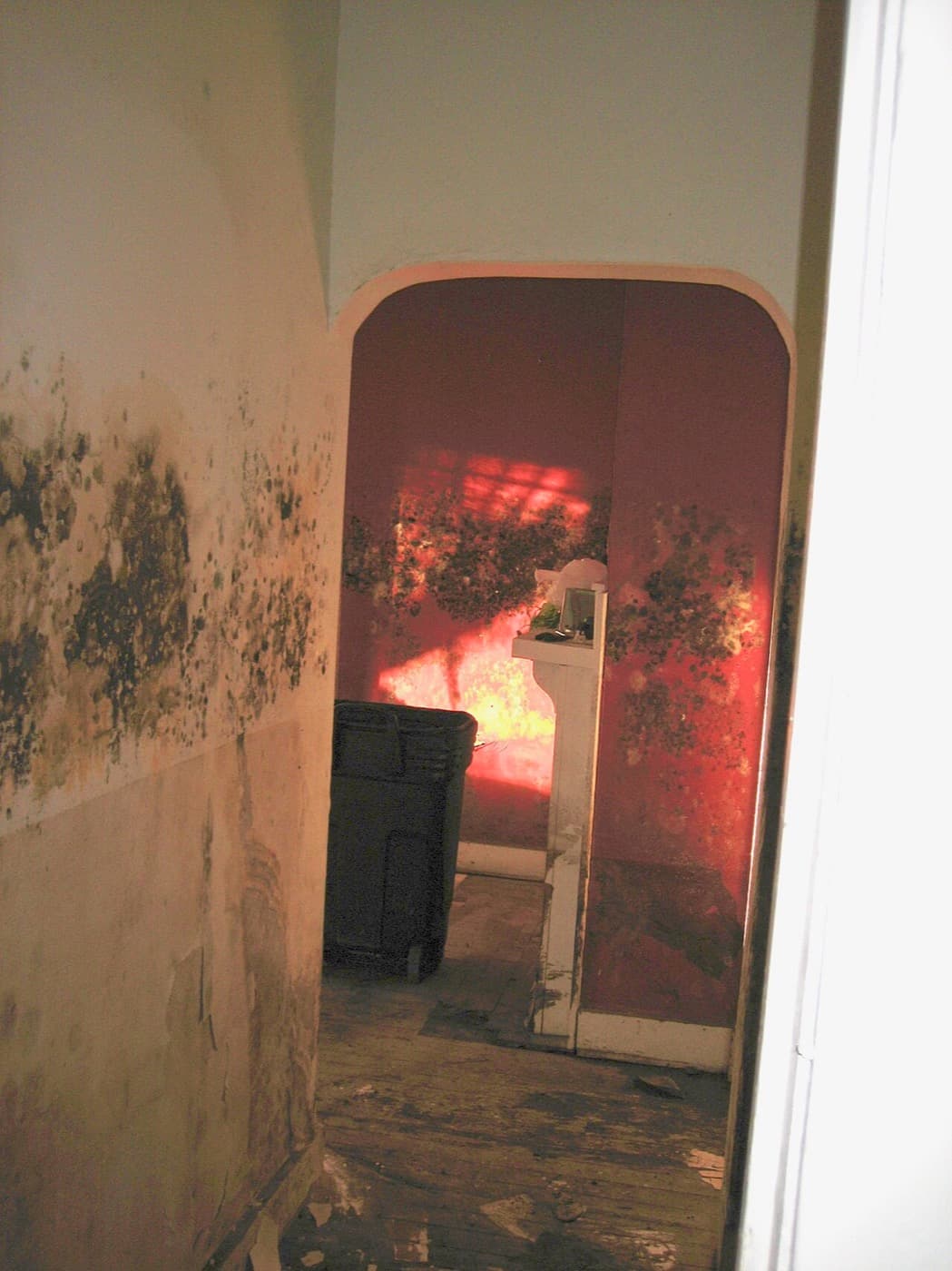
Location is diagnostic in a way most identification guides skip. The same dark patch means different things depending on where it sits, and reading that correctly saves you from treating the wrong problem.
High on a wall or on the ceiling points upward — a roof, a bathroom or plumbing run above, or condensation on an uninsulated surface below a cold roof space. Growth here often appears in a different room from the actual defect, because water travels along joists before it surfaces.
In a corner, worst near the ceiling is the classic condensation signature: two exterior walls meeting means maximum heat loss, so that's the coldest surface in the room and the first place humid air condenses. There's usually no leak to find, and the fix is ventilation, heating and insulation rather than plumbing.
Low on the wall or along the skirting in a below-grade room points to ground moisture — capillary rise through masonry or hydrostatic pressure from saturated soil. The direction growth starts from is genuinely informative here, covered in does basement mold start from the bottom or the top.
A defined patch mid-wall usually means a point source directly behind it — a supply line, a shower valve, a waste connection. If the wall backs onto a bathroom, kitchen or laundry, treat concealed plumbing as your leading hypothesis.
Around a window is condensation on the coldest glazing and frame surfaces, often worse in winter and on north-facing elevations.
Thin speckling across a whole room isn't a leak at all — it's room-wide humidity, and a dehumidifier will do more than any cleaning product.
Our location cluster covers each of these in depth; the by-location hub is the index.
The health picture, stated honestly
This is the topic where the internet is least reliable, so here's the measured version.
Most reactions to indoor mold are allergic or irritant: congestion, sneezing, runny nose, itchy eyes, coughing, wheezing, throat and skin irritation. People with asthma may find it worsens. These are real, common and usually resolve once exposure ends. The symptom picture is detailed in black mold symptoms, with timing in how long it takes to affect you and the broader question in can black mold make you sick.
The claims that outrun the evidence involve mycotoxins and "toxic mold syndrome." Mycotoxins are genuinely dangerous in agricultural contexts — contaminated grain eaten in quantity — but evidence that inhaling them at typical indoor levels causes the wide range of conditions attributed to them online is weak. The CDC describes reports linking indoor mold to rare severe conditions as unproven. Our balanced treatment is in is black mold dangerous, and the practical "what do I do now" version in black mold exposure treatment at home — which is direct about the fact that no home remedy detoxes mold from your body.
Higher-risk groups warrant more caution regardless: asthma, COPD, cystic fibrosis, weakened immune systems, infants, older adults, and pregnancy — see black mold during pregnancy. Pets too: is black mold dangerous to dogs. For these households, professional removal rather than DIY is the sensible default.
None of this is medical advice. Persistent symptoms deserve a doctor, not a search engine — and the single most useful thing you can tell them is whether symptoms improve when you're away from home.
Using your nose, and what to do once you've identified it
Smell deserves more credit than it gets. Established growth produces a distinctive earthy, musty odour — wet cardboard, old cellar, rotting wood. Because that odour travels, it frequently reveals colonies you can't see: inside wall cavities, under flooring, in ducting. A room that smells persistently musty no matter how much you clean is telling you something, and the technique for tracking it to its source is in black mold smell.
Once you've established that you are in fact looking at mold, identification hands off to two questions. Why is it here? — answered in what causes black mold, which works through the eight moisture sources in order of likelihood, because the cause determines the permanent fix. And how do I get rid of it? — answered in our removal hub, with pricing in the cost hub if the job looks bigger than a weekend.
The full identification and health cluster is listed below.
Get a realistic price before you call anyone
Use our free Black Mold Removal Cost Estimator to get a tailored price range for your room, size, and severity — built from current national and regional pricing data. Then you'll know whether a contractor quote is fair before you commit.
Open the Cost Estimator →