What Kills Black Mold: Cleaners That Work and Ones That Don't

What kills black mold is a fair question, but it hides a more important one: on most surfaces, physically removing the mold matters more than killing it, because dead spores can still trigger allergies. That said, the right cleaner makes removal faster and helps tackle stains and lingering growth — so it's worth knowing which agents actually work, which work only on certain surfaces, and which are overhyped. I've tried most of them across two mold cleanups, and the differences are real.
This page breaks down the common mold-killing agents one by one, compares them in a quick table, and is honest about a recurring theme: porous materials (drywall, soaked wood, carpet) usually can't be saved by any cleaner, no matter how strong. For those, removal beats any spray.
From Sukie's experience
I kept a spray bottle of plain white vinegar under my bathroom sink for a year after my cleanup, and a light weekly misting on the grout did more to keep mold from returning than the expensive 'mold killer' I'd bought first — which mostly just smelled strong and bleached the stain without stopping regrowth.
First, the truth: removal beats killing
The EPA's guidance is blunt about this — for cleaning up mold, soap and water and scrubbing to physically remove the growth is the baseline, and you don't necessarily need a biocide. The reason is that dead mold can still cause allergic reactions and irritation. Spraying something that 'kills' mold but leaves the dead material in place isn't a complete fix. So as you read about each agent below, think of them as tools that help you remove and stain-treat mold on cleanable surfaces — not magic that lets you skip the scrubbing.
And none of them work if the surface stays wet. Killing the current colony on a damp wall just clears space for the next one. Fix the moisture first, every time.
It also helps to understand what 'killing' even means with mold. A mold colony has surface growth you can see plus a network of root-like hyphae and a constant supply of microscopic spores in the air. A biocide might neutralize the surface growth it directly contacts, but it doesn't vacuum up the dead material, and airborne spores re-settle the moment conditions allow. So the realistic goal of any agent below is to make removal easier and to treat staining — not to sterilize your home. With that framing, the question stops being 'which product is strongest' and becomes 'which one suits this surface and this stain.'
White vinegar — the porous-surface workhorse
White distilled vinegar is mildly acidic and, importantly, it penetrates porous and semi-porous surfaces where bleach can't. It's reported to kill a large share of common household mold species and it's cheap, low-fume, and safe around kids and pets compared to harsher chemicals. Spray it on undiluted, let it sit for an hour, then scrub and wipe. It's my default for grout, painted walls, and window sills. The trade-off: the smell is strong (it fades as it dries) and it's not a registered disinfectant, so for heavy or health-sensitive jobs it's not a substitute for proper remediation. One caution: don't use undiluted vinegar on natural stone (marble, granite, travertine) or on waxed or unsealed wood, because the acid can etch stone and dull finishes — test a hidden spot first. For everything else in the typical bathroom or kitchen, it's hard to beat for the price.
Not sure if it's a DIY job or a pro job?
Get a ballpark price first, then decide.
Estimate my removal cost →Hydrogen peroxide — disinfects and lifts stains
Standard 3% hydrogen peroxide from the drug store is antifungal and antibacterial, and it helps lighten the dark staining black mold leaves behind. Spray it on, let it bubble and sit for 10 minutes, then scrub and wipe. It works on a range of surfaces including some fabrics (test first — it can lighten color). It's gentler than bleach in terms of fumes but can still bleach textiles, so spot-test. A combination approach some people use: vinegar first, wipe, then peroxide — but never mix the two in the same bottle, and never combine peroxide with bleach.
Borax and baking soda — scrub and deodorize
Borax dissolved in water (about a cup per gallon) makes a good mold-scrubbing solution; it inhibits mold growth and doesn't release toxic fumes. Apply, scrub, wipe the residue, and you can leave a light film behind to discourage regrowth. Baking soda is milder — a teaspoon in a spray bottle of water, or made into a paste — and is great for light mold plus odor absorption, which makes it handy in places like the fridge or a musty cabinet. Neither is as aggressive as the chemical options, but both are safe and effective for light, surface-level mold.
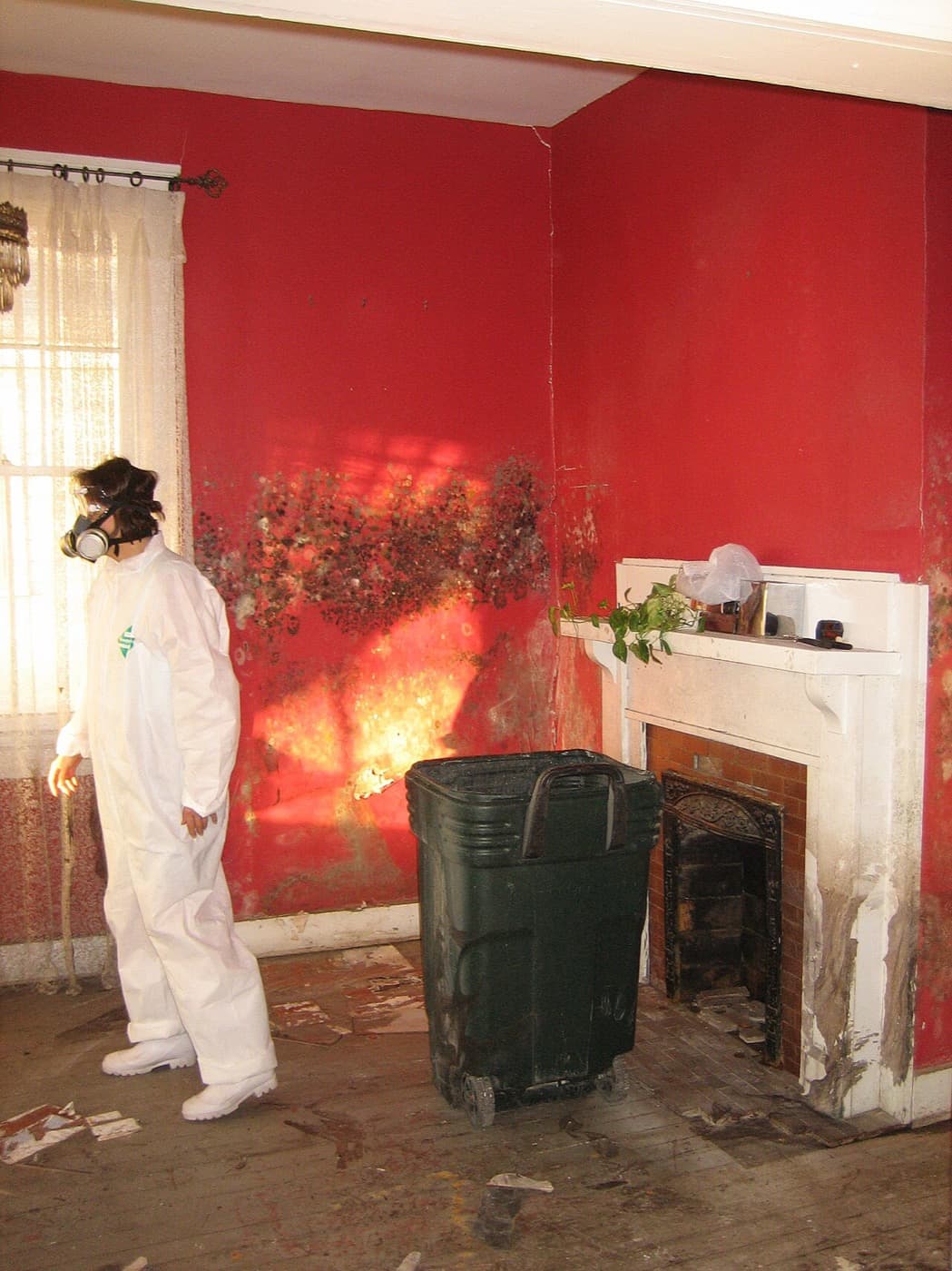
The EPA's mold cleanup guidance uses roughly ten square feet as the point where a job stops being a reasonable DIY project, and that threshold is worth keeping in mind here.
Bleach — hard surfaces only, with caveats
Chlorine bleach kills mold on hard, non-porous surfaces like tile, glass, sinks, and tubs, and it whitens stains effectively. But it's widely misused on porous materials. Because bleach is mostly water, on drywall or wood the water soaks in while the chlorine stays on the surface — you lighten the stain but feed the mold underneath. It also produces harsh fumes and must never be mixed with ammonia or vinegar (which creates toxic gas). Use it sparingly, on hard surfaces, with ventilation. I dig into this in much more depth on the dedicated bleach page linked below.
Dedicated commercial mold cleaners
Products like Concrobium, RMR-86, and EPA-registered fungicidal sprays are formulated specifically for mold. Some (like Concrobium) work by encapsulating and crushing spores as they dry and leave an anti-microbial film; stain removers (like RMR-86) excel at erasing the dark marks fast. They cost more than pantry staples but can be worth it for tough stains or larger areas. Read the label: a stain remover is not the same as a disinfectant, and an EPA registration number is the sign a product is actually vetted for what it claims.
Quick comparison: what to use where
Here's how the common agents stack up by surface and use case:
| Agent | Best on | Penetrates porous? | Notes |
|---|---|---|---|
| White vinegar | Grout, painted walls, sills | Yes (somewhat) | Cheap, low-fume, no disinfectant claim |
| Hydrogen peroxide (3%) | Many surfaces, light fabric | Some | Disinfects, lifts stains, can bleach color |
| Borax | Hard surfaces, scrubbing | No | Inhibits regrowth, low fumes |
| Baking soda | Light mold, odors | No | Gentle, deodorizes |
| Bleach | Tile, glass, tubs | No | Hard surfaces only; harsh fumes |
| Commercial mold cleaner | Tough stains, larger jobs | Varies | Read label; look for EPA registration |
Never mix bleach with vinegar or ammonia, and don't combine peroxide with bleach — these create dangerous gases.
How surface type decides the winner
If the table feels like a lot, here's the simpler way I think about it, organized by what you're cleaning:
- Tile, glass, tubs, sinks, metal (non-porous): almost anything works. Bleach, a commercial cleaner, vinegar, or peroxide all do the job. Pick based on fumes and stain — peroxide and commercial removers for stubborn dark marks, vinegar if you want low fumes.
- Grout and caulk (porous, in a hard setting): vinegar or peroxide to penetrate, baking soda to scrub. If caulk is badly stained, replace it — it's faster than rescuing it.
- Painted walls (semi-porous): vinegar is my first choice because it penetrates without soaking the surface; follow with peroxide if staining lingers.
- Bare drywall, soaked wood, carpet, insulation (porous): none of these agents reliably save heavily molded material. Remove and replace.
- Natural stone or unsealed/waxed wood: avoid acidic vinegar; use a pH-neutral cleaner or a product rated for that surface.
Match the agent to the surface and you'll almost always land on the right tool the first time, instead of buying three products to solve one bathroom corner.
What does NOT reliably kill or fix black mold
A few things to set expectations on:
- Painting over it — doesn't kill anything; the mold grows under the paint.
- Killing mold on saturated porous material — even if you kill the surface, the roots in drywall/soaked wood/carpet survive and regrow. Remove and replace these.
- Ozone generators and most air purifiers as a 'cure' — they may reduce airborne spores, but they don't remove the colony on the surface.
- Any cleaner on a still-wet surface — without fixing the moisture, nothing lasts.
When the moldy area is larger than about 10 square feet, involves HVAC, or came from contaminated water, no cleaner is the answer — that's a professional remediation job.
If you take one thing from this page, let it be the order of priorities: fix the moisture, remove the growth, treat the stain, keep it dry. The choice of agent sits at step three and matters far less than people think. I spent money on a strong-smelling 'mold killer' early on that did nothing my dollar-store vinegar couldn't, because I'd skipped the steps that actually mattered. Pick the agent that fits your surface, use it to help you physically remove the mold, and put your real effort into the moisture and the drying — that's what keeps black mold from coming back.
Get a realistic price before you call anyone
Use our free Black Mold Removal Cost Estimator to get a tailored price range for your room, size, and severity — built from current national and regional pricing data. Then you'll know whether a contractor quote is fair before you commit.
Open the Cost Estimator →