Black Mold in Basement: Causes, Cleanup, and Keeping It Dry

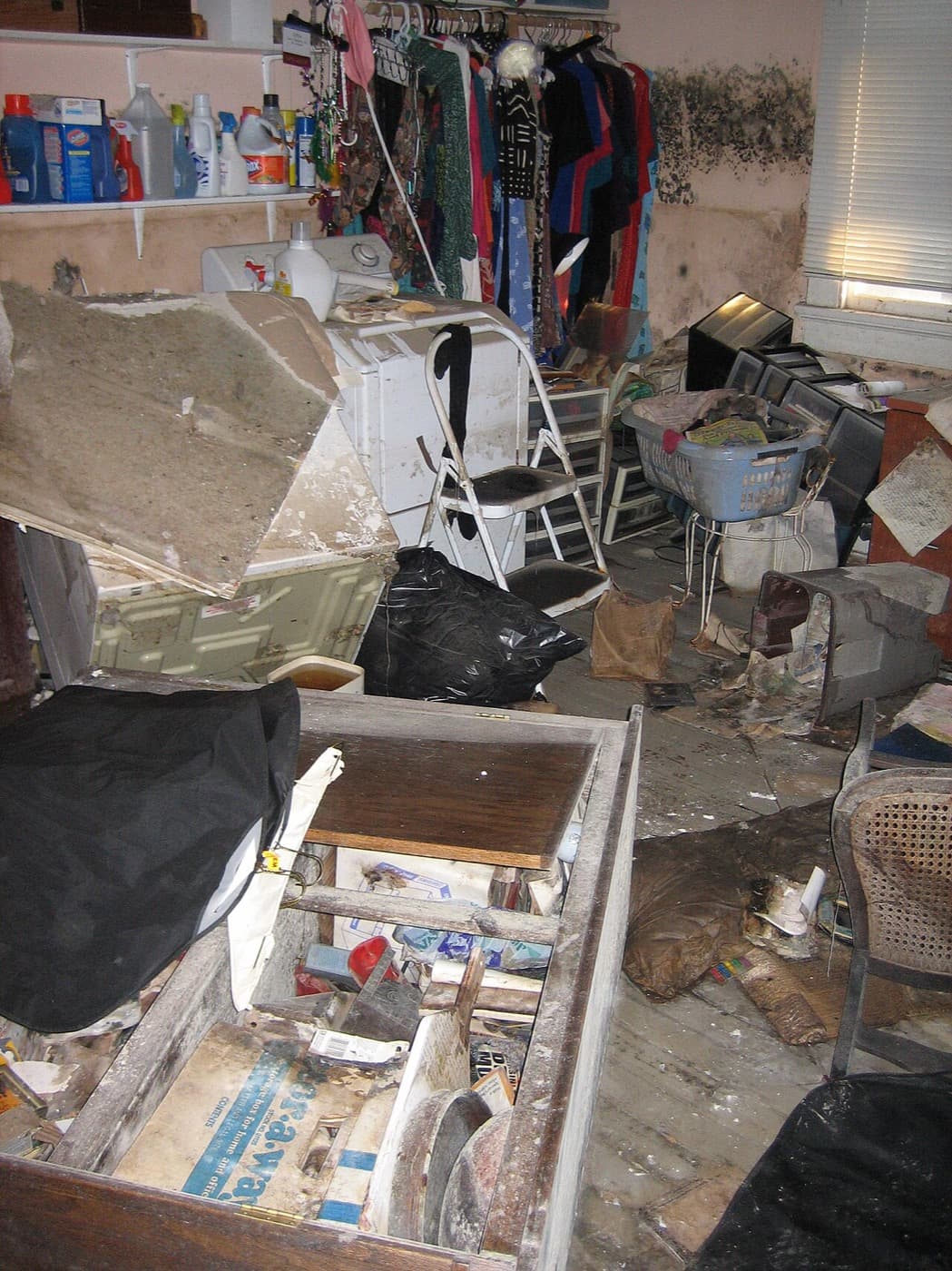
Black mold in basement spaces is so common that it's almost expected, and the reason is structural: basements are below grade, surrounded by cool, damp soil, and they collect moisture from every direction at once. Water seeps through foundation cracks, vapor rises through unsealed concrete, warm humid air from upstairs sinks down and condenses on cold walls, and the whole space tends to sit still with little airflow. Add the typical basement contents — cardboard boxes, carpet, drywall, stored furniture — and you have an all-you-can-eat buffet for mold that nobody looks at for months at a time. In my own finished basement, the mold wasn't even visible at first; it was growing on the back of the baseboards and the bottom of the drywall, fed by condensation I didn't know was forming behind the wall. By the time I smelled it, it had spread along an entire wall. This guide walks through what's actually happening down there, how to clean it up safely, and the moisture controls that finally kept my basement dry for good.
From Sukie's experience
My finished basement looked fine for a year, but a damp musty smell kept nagging at me. When I pulled off a section of baseboard, the back of it and the bottom edge of the drywall were coated black — condensation had been forming between the foam-backed wall and the cold concrete the whole time. I ended up replacing the bottom two feet of drywall on that wall and running a dehumidifier ever since.
Why basements are mold magnets
Three separate moisture pathways converge in a basement, and any one of them is enough to start mold:
- Liquid water intrusion. Rain and groundwater push against the foundation and find their way in through cracks, gaps around pipes, failed sealant, or up through the slab where it meets the wall. This is the obvious one — you see puddles or stains.
- Water vapor through concrete. Concrete is porous. Even a dry-looking foundation lets soil moisture diffuse through it as vapor, which is why an unsealed basement floor or wall can feel damp without any visible leak.
- Condensation. This is the sneaky one that got me. Warm, humid air — from upstairs, from a dryer, from people and showers — meets the cold surfaces of basement walls, pipes, and ductwork, and the moisture condenses out, exactly like a cold drink sweats on a summer day.
Because basements also have poor air circulation and stay cool, anything that gets damp stays damp. The EPA's mold resources make the central point repeatedly: without controlling moisture, you cannot control mold. In a basement, that means figuring out which of these three pathways you're fighting.
Finding the moisture source first
Before cleaning anything, play detective. Where is the water coming from? A few quick tests:
The plastic sheet test. Tape a one-foot square of plastic sheeting tightly to a bare concrete wall or floor and leave it a day or two. If moisture collects on the room side of the plastic, your problem is condensation (humid air). If it collects under the plastic against the concrete, moisture is coming through the foundation. This single test tells you whether to attack humidity or attack water intrusion.
Look at the patterns. Mold and staining low on the walls near the floor often point to seepage; mold high up or on cold pipes and ducts points to condensation; mold near a window well or a specific crack points you straight to the entry point.
Don't skip this. I wasted weeks scrubbing before I realized condensation, not a leak, was my real enemy — and the fix for those two problems is completely different.
Not sure if it's a DIY job or a pro job?
Get a ballpark price first, then decide.
Estimate my removal cost →Cleaning basement mold safely
Once you know the source, suit up and clean. Protect yourself with an N95 respirator, gloves, and sealed eye protection — basements have poor ventilation, so spores linger in the air longer than they would upstairs. If you can, set a box fan in a window blowing outward to vent the space while you work.
- Remove porous junk that's molded. Cardboard, moldy carpet, soaked insulation, and water-damaged drywall usually can't be saved — bag them in plastic and discard them. Trying to salvage moldy cardboard boxes is a losing battle.
- Clean hard surfaces. Concrete, painted block, and finished framing can be scrubbed. Use a mold cleaner or detergent and water; for staining on concrete, a diluted bleach solution can lighten it (never mix bleach with other cleaners).
- Dry aggressively. Fans plus a dehumidifier. The surface must be bone dry before you re-insulate or rebuild anything.
The EPA's roughly 10-square-foot guideline applies here too: if mold covers a large area, has gotten into wall cavities, or followed a sewage backup or flood, hire a certified remediation contractor. Basement floods in particular often involve contaminated water, which is not a DIY situation. For the step-by-step on porous materials, the guide on how to get rid of black mold covers technique in more detail.
Fixing water intrusion (the leak side)
If your plastic-sheet test showed water coming through the foundation, cleaning is pointless until you stop the water. Start outside and work in. Make sure gutters are clear and downspouts discharge at least several feet from the foundation — an enormous share of basement water problems trace back to roof runoff dumping right next to the house. Re-grade soil so it slopes away from the foundation. Inside, seal obvious cracks and gaps around pipe penetrations with hydraulic cement or a masonry sealer. For chronic groundwater, a properly working sump pump and interior drain system may be needed, which is a job for a foundation contractor. None of the cleanup or dehumidifying below will hold if water keeps pouring in.
Beating condensation and humidity
If condensation is your problem (the most common cause in finished basements), the strategy is to keep the air dry and surfaces warmer. This is where a dehumidifier earns its keep. Steps that worked for me:
- Run a dehumidifier sized for the space and keep relative humidity below 50 percent, ideally around 40 to 45 in a basement. A built-in hygrometer or a cheap separate one lets you confirm it's actually working.
- Insulate cold surfaces. Insulating foundation walls and wrapping cold water pipes stops them being condensation magnets. Crucially, do not trap moisture — basement walls should be insulated in a way that doesn't sandwich a damp surface, or you recreate exactly the hidden-mold situation I had behind my baseboards.
- Improve airflow. A fan or two keeps air moving so no corner stays stagnant and damp.
- Vent the dryer outside, never into the basement.
- Don't store cardboard and fabric directly on the floor. Use plastic bins on shelves off the concrete.
For choosing equipment, see the rundown on the best dehumidifier for mold, which covers sizing for damp basements specifically.
How bad is basement mold, really?
People tend to swing between two extremes with basement mold: either ignoring it entirely because 'it's just the basement,' or panicking about toxic black mold. The honest middle ground is this. Basement air doesn't stay in the basement — the stack effect pulls it upward through the house, so mold and musty odors downstairs affect the air you breathe upstairs. The CDC describes typical mold exposure symptoms as nasal stuffiness, throat irritation, coughing, and eye irritation, with stronger reactions for people who have allergies, asthma, or weakened immune systems. It avoids sweeping claims about 'toxic mold' causing exotic illnesses, and so should you. What's clear is that a large, established mold colony in a damp basement is worth taking seriously and removing — not for fear of a specific scary species, but because ongoing exposure and chronic dampness are genuinely bad for both the house and the people in it.
The amount and the moisture matter far more than the color. A coin-sized spot on a concrete wall is not the same problem as mold creeping along an entire finished wall the way mine did. Scale your response to the scale of the growth, and when in doubt about a large area, get a professional assessment rather than guessing.
Rebuilding so mold can't return
If you tore out drywall, carpet, or insulation, rebuild smarter than the original. In a basement I'd avoid paper-faced drywall low on the walls and standard wall-to-wall carpet over concrete — both are mold food the moment they get damp. Mold-resistant drywall, inorganic insulation, sealed concrete floors, and area rugs you can lift and dry are far more forgiving. Keep a small air gap and ventilation behind finished walls rather than pressing insulation tight against cold concrete. The goal is a basement that, if it does get a little damp, dries out instead of feeding mold. Honest truth from my own rebuild: spending a bit more on moisture-tolerant materials was cheaper than tearing the wall out a second time.
Get a realistic price before you call anyone
Use our free Black Mold Removal Cost Estimator to get a tailored price range for your room, size, and severity — built from current national and regional pricing data. Then you'll know whether a contractor quote is fair before you commit.
Open the Cost Estimator →