Basement Mold Removal Cost: A Homeowner's 2026 Breakdown

Basement mold removal cost in 2026 typically runs $1,500 to $6,000, and severe cases that involve finished walls, flooring, and a chronic moisture problem can climb to $15,000 or more. Basements are the most expensive room to remediate for a frustrating reason: they're below grade, they're damp by default, and the mold usually hides behind drywall and baseboards where you can't see it until it's a real project. I learned all of this the hard way in my second house, where mold had been quietly colonizing the cavity behind the finished basement baseboards for who knows how long.
This is a deeper-than-usual guide because basements have more variables than almost any other space. I'll cover the real price ranges, the cause-by-cause cost differences, what made my own bill what it was, the moisture fixes you have to budget alongside removal, and exactly where I'd spend and where I'd save.
From Sukie's experience
In my finished basement, the mold was completely invisible until I pulled off a section of baseboard and found a black bloom climbing the back of the drywall; the remediation itself was $1,950, but the new dehumidifier, the regrading work outside, and the drywall rebuild roughly doubled the total before it was truly done.
The honest price range for basement mold
Basements span a huge cost spectrum depending on size, finish level, and how wet the space is. Here's the 2026 breakdown I trust, drawn from national contractor data and matched to real quotes.
| Basement situation | Typical 2026 cost |
|---|---|
| Small surface mold (unfinished, under ~10 sq ft) | $500-$1,500 |
| Typical finished basement, contained | $1,500-$6,000 |
| Severe / widespread with rebuild | $6,000-$15,000 |
| Mold inspection (if needed) | $300-$650 |
The midpoint most homeowners hit is in the $2,500-$4,000 range, which lines up with the national average of roughly $2,400 for a contained job, nudged upward by basement-specific complications. This Old House notes basements and other below-grade spaces consistently price higher than above-ground rooms.
Why basements cost more than other rooms
If you've priced bathroom mold and basement mold, the basement number can feel like a different sport. A few structural reasons:
- They're below grade. Water pressure from the surrounding soil pushes moisture through foundation walls and floors year-round.
- They're chronically humid. Cool surfaces plus warm air equals condensation, which feeds mold continuously.
- The mold hides. Finished basements bury the problem behind drywall, paneling, and baseboards, so by the time you find it, it has spread.
- The moisture fix is expensive. Sump pumps, drainage, regrading, and waterproofing are real costs that have to happen alongside removal.
- Materials soak it up. Carpet, carpet pad, and drywall in a basement act like sponges and usually can't be salvaged.
Not sure if it's a DIY job or a pro job?
Get a ballpark price first, then decide.
Estimate my removal cost →Cost by cause: what created the mold
The root cause is the single biggest driver of total cost, because fixing the cause is often pricier than the remediation itself. Roughly what each scenario adds:
- High humidity only. The cheapest scenario. A good dehumidifier ($200-$400) plus surface cleaning may resolve it.
- Minor seepage or condensation. Adds drainage tweaks, vapor barriers, and possibly some drywall replacement.
- Plumbing leak. Repair cost plus targeted demolition where water traveled.
- Foundation water intrusion. The expensive one. Waterproofing, French drains, regrading, or a sump pump can add thousands on top of remediation.
- Flooding or sewage backup. Requires professional remediation regardless of size, and may total well into five figures.
My basement was a mix of high humidity and minor seepage, which is why regrading the soil outside ended up being a line item I never anticipated.
Finished versus unfinished basements
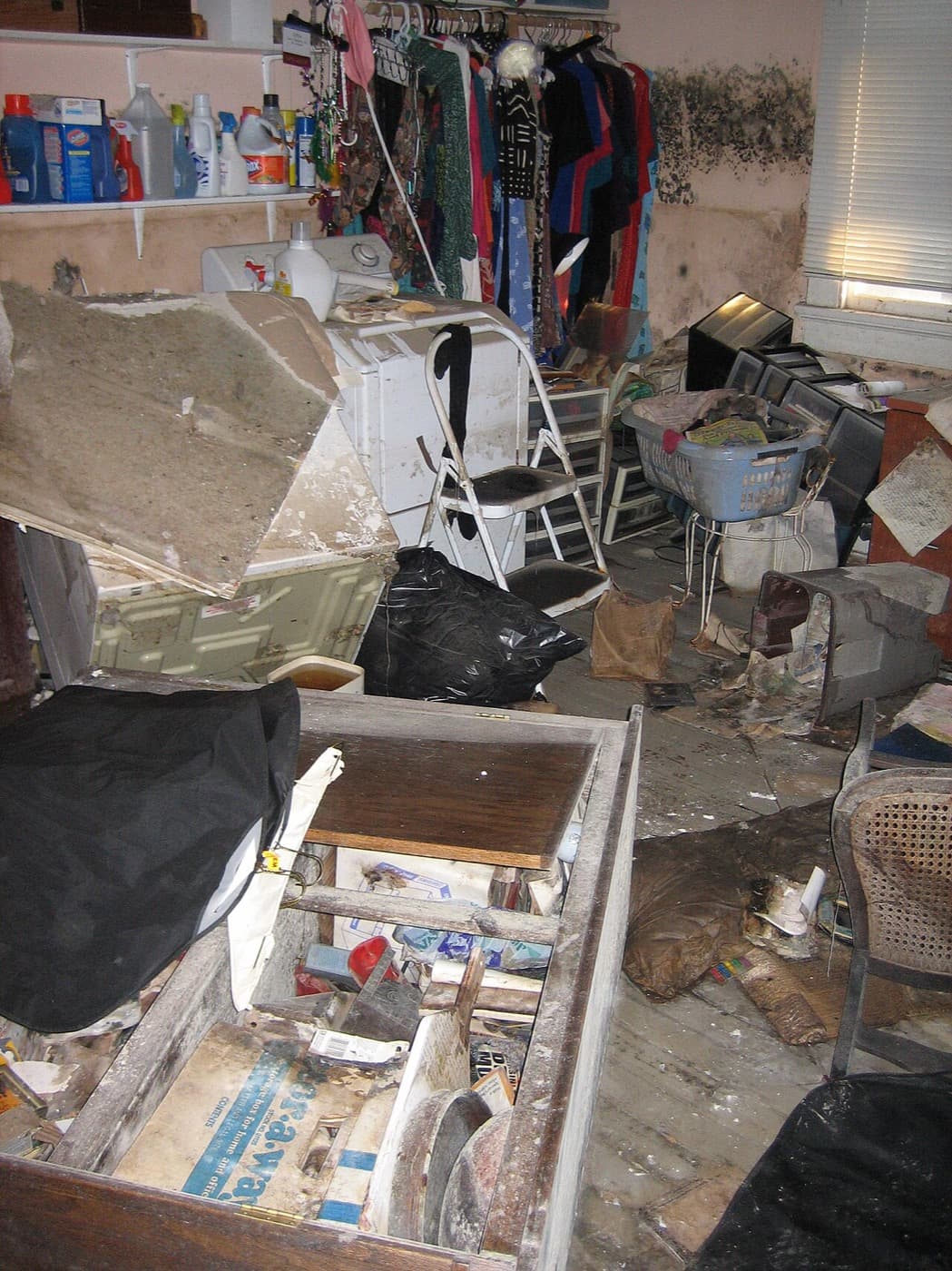
The finish level dramatically changes the bill. An unfinished basement, just concrete walls and floor, is the cheapest scenario because the surfaces are non-porous and the mold is usually visible and accessible. You can often surface-clean sealed concrete for a few hundred dollars. A finished basement is a different story: the crew has to remove drywall, insulation, trim, flooring, and sometimes built-in cabinetry to reach and treat the mold, then it all has to be rebuilt. That demolition and reconstruction is where finished basements rack up costs, frequently adding $2,000-$8,000 in rebuild alone on top of the remediation.
The moisture fixes you must budget alongside removal
This is the part that ruins budgets, and it's non-negotiable. The EPA is unambiguous: if you don't fix the moisture source, the mold comes back. For basements, common moisture fixes and their rough costs:
- Dehumidifier: $200-$400 (and run it constantly).
- Sump pump install: $1,000-$3,000.
- Exterior regrading: $1,000-$3,000.
- Interior or exterior waterproofing: $2,000-$10,000+.
- Gutter and downspout extensions: a few hundred dollars, and often the highest-value fix.
I started cheap, gutters and a dehumidifier, before committing to the regrading, and that staged approach kept me from overspending on waterproofing I didn't end up needing.
DIY or pro for basement mold?
For a small patch of surface mold on unfinished concrete, under roughly 10 square feet, DIY is reasonable with an N95 respirator, gloves, and eye protection. But basements push you toward professionals fast. Call a pro if the mold covers a large area, has gotten behind finished walls, followed a flood or sewage event, involves the HVAC system, or if anyone in the home has asthma or a weakened immune system. The damp, enclosed nature of basements also means spores spread easily without proper containment, which is hard to do well yourself. My surface concrete cleaning I did myself; the hidden growth behind the finished walls was firmly a pro job.
What my basement job actually cost, line by line
Transparency helps, so here's roughly how my numbers broke down: remediation (containment, removal of moldy drywall and baseboard, HEPA filtration, antimicrobial treatment, disposal) was $1,950. Drywall and trim rebuild plus paint came to about $1,400. A new dehumidifier ran $320. Exterior regrading and gutter extensions were around $1,800. All in, I was just over $5,400 for what started as a "small" basement mold problem. The remediation itself was the smallest of those major line items, which surprised me, and is the main lesson I want every basement homeowner to absorb before getting quotes.
It's also worth noting what I chose not to spend on. The second company that quoted me had bundled in full interior perimeter waterproofing with an interior drain and a second sump, which would have added roughly $9,000. After the regrading and gutter work dried the basement out and a few months of monitoring showed humidity holding steady, that expensive waterproofing turned out to be unnecessary for my situation. Staging the fixes from cheapest to most invasive, and giving the cheap ones time to prove themselves, is genuinely how I avoided spending five figures. Your situation may truly need the waterproofing, but don't let a contractor sell you the most invasive fix before the simple ones have had a fair chance.
How to keep basement mold from coming back
The cheapest remediation is the one you never have to repeat. After my job, the prevention habits that actually held: I run a dehumidifier targeting 30-50% relative humidity, I keep gutters clear and downspouts extended away from the foundation, I check the regraded soil slopes away from the house each spring, and I do a quick baseboard-line inspection a couple of times a year. None of it is expensive, and it's a fraction of what re-remediation would cost. For deeper prevention strategy, the EPA's mold resources are a solid free reference.
One number that reframes the whole thing: my entire annual prevention budget, dehumidifier electricity, the occasional bag of gutter guards, a tube of foundation sealant, runs maybe $80 a year. Compare that to the $5,400 the remediation and its dominoes cost me, and the math is brutally simple. Prevention isn't just the responsible choice for a basement, it's the single highest-return spending you can do, because the alternative isn't a slightly bigger bill, it's the same multi-thousand-dollar project all over again. After paying once, I treat that $80 a year as the cheapest insurance policy in the house.
Smart ways to lower your basement quote
Where I'd genuinely save without buying a worse outcome:
- Get three in-person estimates. Basement quotes vary more than any other room; in-person inspections are the only reliable ones.
- Handle safe surface cleaning yourself on unfinished concrete under 10 sq ft.
- Stage your moisture fixes from cheapest to most invasive, gutters and a dehumidifier first.
- Separate remediation from rebuild in your bids so you can compare apples to apples and possibly hire the rebuild out cheaper.
- Check insurance if a sudden event (burst pipe, appliance failure) caused it.
What I would not cut: containment, the moisture fix, and post-job verification that the area is actually dry. Those are the things standing between you and a repeat invoice.
Get a realistic price before you call anyone
Use our free Black Mold Removal Cost Estimator to get a tailored price range for your room, size, and severity — built from current national and regional pricing data. Then you'll know whether a contractor quote is fair before you commit.
Open the Cost Estimator →