How to Test for Mold in House Rooms, Walls and Air: When a Test Helps

Quick answer
Usually you don't need a lab test. If you can see mold, the EPA says sampling is usually unnecessary and the CDC does not recommend testing: fix the moisture and clean it up. Test with your eyes, nose and a moisture meter first. Pay for a professional assessment with air and surface sampling only when you smell mold but can't find it, need to verify a cleanup, or need proof for a landlord, insurer or court.
Is a mold test really the step you need? Most people who look up how to test for mold in house rooms, walls or air want to know two things: is there mold here, and what happens next. For visible growth, the U.S. EPA says sampling is usually unnecessary and the CDC does not recommend testing.
This guide covers the checks you can do yourself, compares the common test methods side by side, and shows when a professional assessment with air or surface sampling is worth paying for.
Do you need a mold test at all?
If you can already see mold, you do not need a test to confirm it. The EPA puts it plainly: "In most cases, if visible mold growth is present, sampling is unnecessary" (EPA, A Brief Guide to Mold, Moisture and Your Home, read November 2026). The CDC goes further: "CDC does not recommend mold testing," and "You do not need to know the type of mold" (CDC, About Mold, read October 2026).
The Minnesota Department of Health writes that "In most situations, MDH does not recommend mold testing," and "If you can see or smell mold in your home, you know you have a mold problem" (Minnesota Department of Health, Mold and Moisture, read November 2026).
A test cannot change what you do about growth you can see. The CDC says the same of Stachybotrys chartarum, the mold most people mean by "black mold": "All molds should be treated the same with respect to potential health risks and removal" (CDC, Facts About Stachybotrys chartarum, read October 2026).
If you can see the growth, go straight to whether you can clean it yourself; the DIY mold checker walks through that. If you smell mold but cannot find it, or need proof for someone else, testing has a job to do.
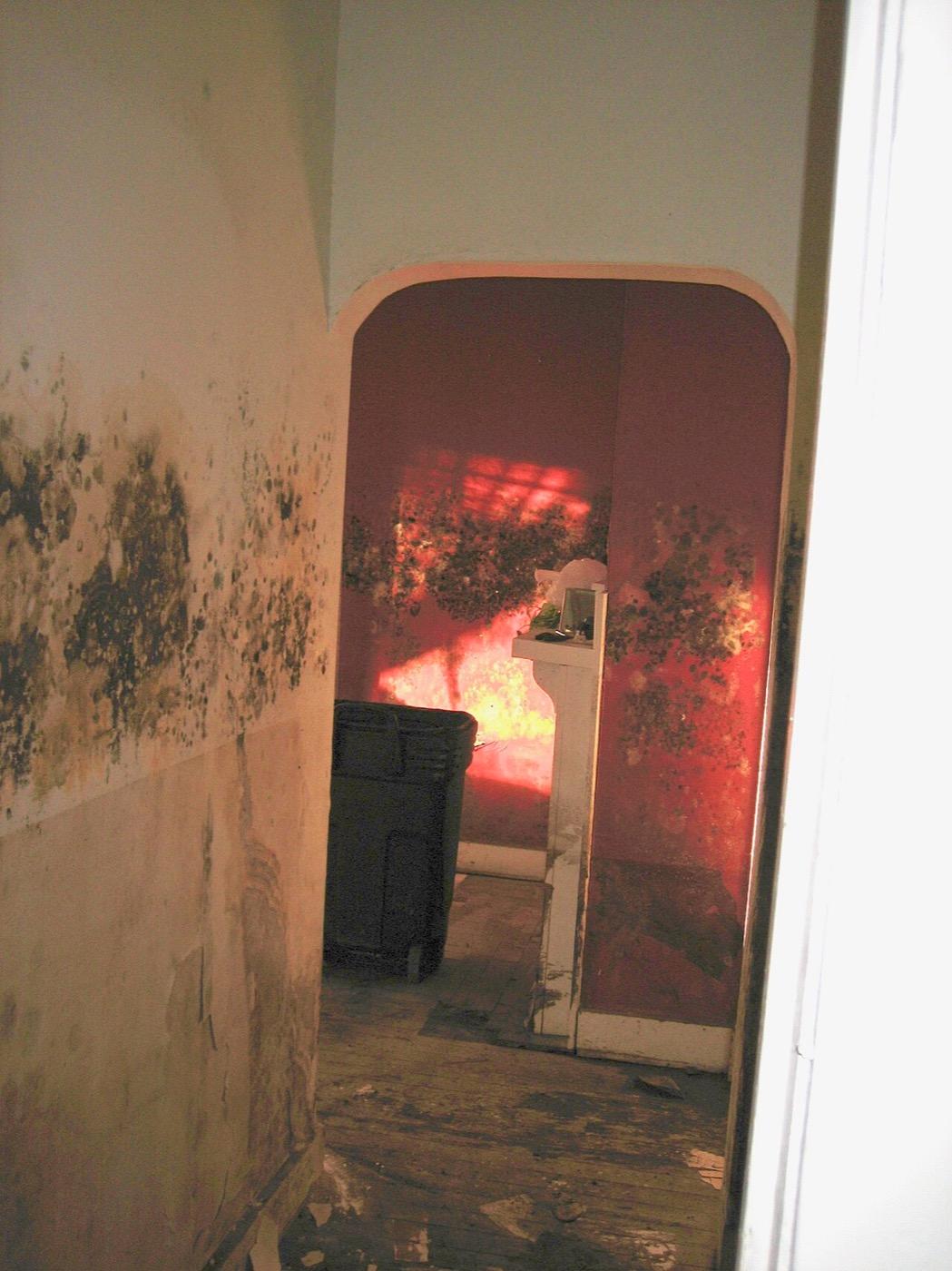
The walk-through to do before you buy any kit
A careful walk-through is the test most homes need: a flashlight and, ideally, a moisture meter. The Minnesota Department of Health "advises people to investigate potential mold problems on their own first," and adds that "Testing should never be a substitute for a good visual inspection." Work through the house in this order:
- Follow your nose first. Note where a musty smell is strongest: a closet, a basement corner, the cabinet under a sink. The CDC says mold "can smell musty. If you see or smell mold, you should remove it."
- List every past and present water event. Roof leaks, burst pipes, a wet basement, window condensation. EPA: molds "will grow" only with "water or moisture," so this list is your list of places to look.
- Look at the surfaces near each water source. Shine a flashlight at a low angle along walls and ceilings. Check grout, sealant, window sills, under sinks and basement baseboards.
- Check the hidden places the EPA lists. Mold may sit on "the back side of dry wall, wallpaper, or paneling, the top side of ceiling tiles, the underside of carpets and pads," inside walls around leaking pipes, behind furniture and inside ductwork.
- Measure moisture where you suspect a problem. A moisture meter shows whether a material is wet now; EPA notes they "can be used on materials such as carpet, wallboard, wood, brick and concrete" and can "monitor the process of drying damaged materials."
- Measure indoor humidity. EPA says "Inexpensive ($50) models are available that monitor both temperature and humidity." EPA's target is "below 60 percent (ideally between 30 and 50 percent)."
- Stop before you open anything up. EPA warns that "removal of wallpaper can lead to a massive release of spores" if mold is growing behind it. If the evidence points inside a wall, call a professional.
You will end in one of three places: visible growth (no test needed), a wet material with no growth (fix the water, watch the spot), or a musty smell with no source. Only the third points toward professional sampling.
Signs of mold in a house, and what each one tells you
Signs of mold in a house carry different weight, and none needs a lab to interpret.
- Visible growth. Spreading spots or patches, often fuzzy or speckled. The CDC notes mold "can look like spots of many different colors," so do not wait for it to be black. Unsure a dark patch is growth? The photo guide to mold, soot and dirt shows the look-alikes.
- A musty smell with no visible source. This is the strongest sign of hidden mold. EPA: "You may suspect hidden mold if a building smells moldy, but you cannot see the source, or if you know there has been water damage and residents are reporting health problems."
- Water staining, bubbling paint or warped materials. These show where water has been and where to aim the moisture meter.
- Condensation that keeps coming back. EPA lists "Walls behind furniture (where condensation forms)."
- Allergy-type symptoms. EPA lists "sneezing, runny nose, red eyes, and skin rash" among allergic responses to mold. Symptoms are not a test result: The CDC says "you cannot rely on sampling and culturing to know whether someone might become sick," so health questions belong with a doctor, not a kit.
Mold test methods compared: what each one can and cannot tell you
Each common way to check for mold, set against the same questions. Costs appear only where a named source publishes one.
| Method | What it tells you | What it cannot tell you | Cost (where sourced) |
|---|---|---|---|
| Look and smell walk-through | Where visible growth, musty odor and water damage are; enough to act on (EPA, CDC). | What is behind closed walls, under carpet pads or inside ducts. | Free |
| Moisture meter | Whether drywall, wood, concrete or carpet is wet now, and whether it is drying. | Whether mold is growing; wet means conditions for mold, not mold. | Not published in the sources used here |
| Humidity (hygro) meter | Whether indoor air sits above EPA's 30–50% ideal range. | Anything about a specific surface or hidden cavity. | About $50 for a temperature-and-humidity model (EPA) |
| DIY settle plate (petri dish) | That spores landed on a dish of growth medium. UConn EHS: "it would be rare not to get mold growth on the petri dishes." | Whether the home has a mold growth problem or where spores came from. "There are no accepted standards for conducting these tests and interpreting the results." | Not published in the sources used here |
| DIY swab or tape lift mailed to a lab | What kind of mold is on one surface you sampled. | Anything you could not already see, and nothing about safety: CDC says there are "no set standards for what is and what is not an acceptable quantity." | Not published in the sources used here |
| Professional air sampling with outdoor controls | What was in the air at the moment of sampling, compared with the air outside. | Anything outside that moment: EPA calls it "much like a snapshot." It cannot certify a home as safe. | Included in an inspection, below |
| Professional surface sampling | Whether an area has been adequately cleaned after remediation (EPA). | Hidden growth elsewhere in the house. | Included in an inspection, below |
| Full professional mold inspection | A visual examination plus moisture, temperature and humidity readings, samples and lab results (IAC2 standard). | Future growth: the report is "valid for the date of the inspection." | $300–$650; up to $1,000 for a large home (HomeGuide) |
Sources: U.S. EPA, A Brief Guide to Mold, Moisture and Your Home and Mold Remediation in Schools and Commercial Buildings, Ch. 3 (read November 2026); CDC, About Mold (read October 2026); UConn Environmental Health and Safety, Facts About DIY Mold Test Kits (read November 2026); IAC2 Mold Inspection Standards of Practice (read October 2026); HomeGuide, Mold Removal Cost (read September 2026).
The pattern: the meters, which cannot detect mold at all, tell you most about what to do, because they find the water.
What can a DIY mold test kit actually tell you?
Less than the box suggests. Most kits are settle plates: you open a dish of growth medium, leave it, seal it, and watch what grows. The University of Connecticut's Environmental Health and Safety office explains the problem in one line: "Because mold spores exist naturally, it would be rare not to get mold growth on the petri dishes!" The dishes "give a FALSE impression of there being a mold problem in a space when there is not" and "It's easy for dishes to be contaminated" (UConn EHS, Facts About DIY Mold Test Kits, read November 2026).
UConn adds: "It's normal and expected to have mold spores indoors; mold growth indoors is not normal or expected." A dish measures spores; your concern is growth, and the dish cannot tell you where the spores came from.
Swab and tape-lift kits mailed to a lab can name what is on a sample, but you can only swab what you can see, and the CDC says you do not need to know the type. There is no scale to read results against either: the EPA notes that "no EPA or other Federal threshold limits have been set for mold or mold spores," and the Minnesota Department of Health says "There is no health-based standard for mold levels in air."
A kit cannot decide whether a home is safe. If you still want one, the guide to mold test kits compares the kit types and explains how to avoid the most common errors.
When a professional assessment with sampling makes sense
EPA's guide lists the cases where you "may consider sampling": "Cases where litigation is involved," when "The source(s) of the mold contamination is unclear," and when "Health concerns are a problem." It adds that surface sampling "may also be useful in order to determine if an area has been adequately cleaned or remediated" (EPA, Mold Remediation, Ch. 3, read November 2026). In practice:
- You smell mold and cannot find it. Inspectors "may have tools such as moisture meters, scoping cameras and infrared cameras" (Minnesota DOH).
- You need to verify a cleanup. After remediation, "the types and concentrations of mold in indoor air samples should be similar to what is found in the local outdoor air."
- Someone else needs proof. A landlord dispute, lawsuit or insurance claim.
- A doctor has asked about the home. The CDC says no test links a specific mold to specific symptoms, so let the physician lead.
EPA says sampling "should be done only after developing a sampling plan that includes a confirmable theory regarding suspected mold sources and routes of exposure," and warns that "Inadequate sample plans may generate misleading, confusing and useless results." The IAC2 inspection standard sets minimums: "at least one (1) surface sample in EACH area of concern," "two (2) outdoor samples" and "at least one (1) indoor sample." If an inspector proposes one indoor air sample with no outdoor comparison, ask why.
On cost, HomeGuide puts a mold inspection at $300–$650, rising to as much as $1,000 for a large home (HomeGuide, Mold Removal Cost, read September 2026). See the mold inspection cost guide and the mold inspection guide for what happens on site.
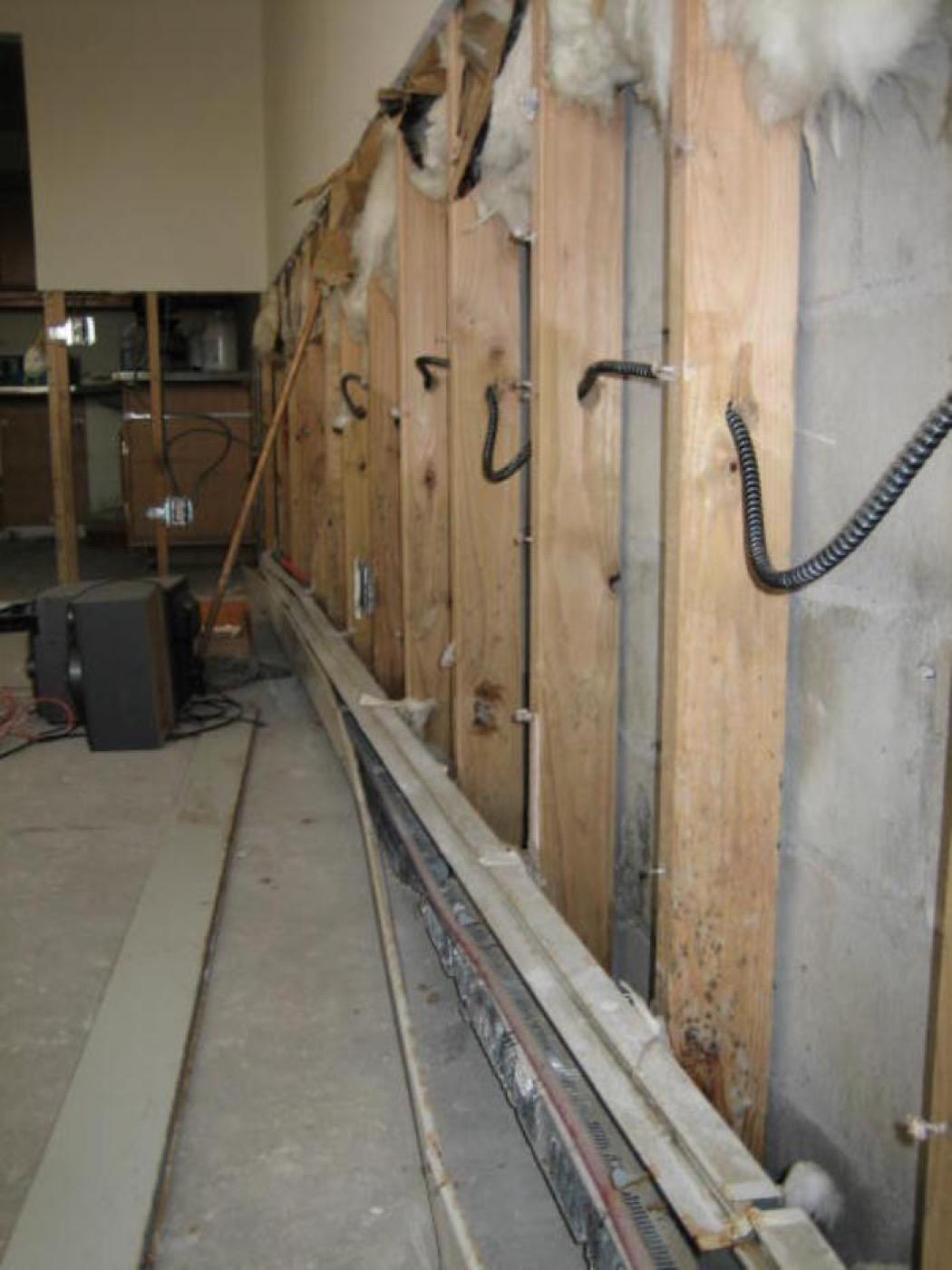
Who is allowed to test, and why the tester should not be the remover
There is no federal mold licence. The Minnesota Department of Health states that "Neither the state of Minnesota nor any federal agency licenses or certifies mold investigators or remediators." States that license the work mostly share one rule: the tester should not profit from the cleanup.
- New York licenses mold assessors and remediators and prohibits "the performance of both the assessment and remediation on the same property by the same individual" (NY State DOL, Mold Program, read October 2026).
- Texas licenses both through TDLR: "you are not allowed to conduct both mold assessment and mold remediation activities on the same project," and a real estate inspector needs a licence "to collect air or visible spore samples" (Texas TDLR FAQ, read October 2026).
- Florida licenses assessors through DBPR, and an assessor may not perform remediation on a structure where the assessor's company "provided a mold assessment within the last 12 months" (F.S. §468.8419, read November 2026).
- Louisiana makes it a violation to "Perform both mold assessment and mold remediation on the same property" (R.S. 37:2158, read November 2026).
- Oklahoma says anyone who inspects houses for mold "shall not also render service for removing the mold," unless the combined cost is $200 or less and the consumer consents (15 O.S. §765.4, read November 2026).
- Washington, D.C. instead requires licensees to "Disclose any known or potential conflict of interest" (20 DCMR ch. 32, read November 2026).
Several of these states exempt owners working on their own property; Florida's wording exempts "A residential property owner who performs mold assessment on his or her own property." Elsewhere, the logic still holds: hire an assessor who does not sell remediation.
After the test: turning any result into a decision
The next step depends on moisture and size, not a spore count:
- Visible growth under about 10 square feet, from a known and fixed water source. EPA sets the DIY limit at "less than about 10 square feet (less than roughly a 3 ft. by 3 ft. patch)." Wear an N-95 respirator, gloves and goggles without ventilation holes, scrub hard surfaces with detergent and water, and dry everything. The DIY checker covers the exceptions.
- Growth over about 10 square feet, inside an HVAC system, or from sewage or flood water. Bring in a professional. EPA says "Do not run the HVAC system if you know or suspect that it is contaminated with mold." Anyone with asthma, mold allergy or a weakened immune system should leave it to a professional; EPA advises consulting a health professional before starting if you have health concerns.
- A professional report showing indoor air unlike outdoor air, or hidden growth inside a wall. Get a written scope, then quotes from a separate remediation company.
- A clean result but a musty smell that will not go away. A negative test is not proof. IAC2 notes an inspection is "not intended to eliminate the uncertainty or the risk of the presence of mold." Keep looking for the water.
- A kit dish full of growth and nothing else. Expected. Go back to the walk-through and look for moisture.
One rule covers every path: if you clean up mold without fixing the water, EPA says "most likely, the mold problem will come back." Fix the leak, dry materials within 24–48 hours, and keep indoor humidity between 30 and 50 percent.