Black Mold Symptoms in Children: What Parents Should Watch For

Quick answer
Usually like a cold that will not leave. The black mold symptoms in children listed by the CDC and the American Academy of Pediatrics are a stuffy or runny nose, a cough, wheezing, red or itchy eyes, sometimes a skin rash, and more frequent asthma attacks in children with asthma. None is specific to mold, so watch whether symptoms improve away from home, and talk to a pediatrician.
If your child has a cold that never seems to clear, it is worth asking whether the house is part of the reason. Black mold symptoms in children look, most of the time, like a cold that will not leave: a stuffy or runny nose, a cough that is worse at night, wheezing, red or itchy eyes, sometimes a skin rash — and in a child who already has asthma, more frequent or more severe attacks. That list comes from the CDC and the American Academy of Pediatrics, not from a mold-removal company, and this page stays inside what those two sources actually say, because this is a subject where the internet is full of frightening claims that nobody has measured. One thing first, in plain words: this page is general information, not medical advice. If your child has any of the symptoms below, the person to talk to is their pediatrician. What this page can do is explain what the evidence supports, what makes children different from adults, what a pediatrician is likely to ask you, and how to find and fix the damp that is causing it.
What do the CDC and AAP actually say about mold and children?
The CDC's current mold page opens its health section with a sentence worth reading twice: "Exposure to damp and moldy environments may cause a variety of health effects, or none at all." Then it lists what those effects can be: "For some people, mold can cause a stuffy nose, sore throat, coughing or wheezing, burning eyes, or skin rash. People with asthma or who are allergic to mold may have severe reactions. Immune-compromised people and people with chronic lung disease may get infections in their lungs from mold."
The evidence base behind that list
The CDC cites the Institute of Medicine's 2004 review, which "found there was sufficient evidence to link indoor exposure to mold with upper respiratory tract symptoms, cough, and wheeze in otherwise healthy people; with asthma symptoms in people with asthma; and with hypersensitivity pneumonitis in individuals susceptible to that immune-mediated condition." It also notes the World Health Organization's 2009 guidelines on dampness and mould.
What is specific to children
Two things. First, the CDC reports that "other recent studies have suggested a potential link of early mold exposure to development of asthma in some children, particularly among children who may be genetically susceptible to asthma development, and that selected interventions that improve housing conditions can reduce morbidity from asthma and respiratory allergies." Note the careful wording — potential link, some children — and note the practical half of the sentence: fixing the housing helps. Second, the AAP's parent site, HealthyChildren.org, lists "mold spores, both indoors and outdoors" among the most common allergens in children and states that "many children with asthma can develop worse symptoms if they are exposed to certain triggers. These include allergic triggers, such as pollen, dust mites, mold or pet allergens."
What the sources do not say
Neither the CDC nor the AAP describes "toxic mold syndrome," "mold poisoning" as a diagnosis, or a link between household mold and cancer, memory loss or developmental delay. You will find those claims on other sites. They are not in the sources this page is built on, so they are not repeated here.
The symptoms, and how they show up at different ages
The list of black mold symptoms in children below is the CDC's and the AAP's, organised the way a parent experiences it. None of these symptoms is specific to mold — every one of them is also a cold, an allergy to something else, or a virus going round the classroom. What points toward the house rather than the season is the pattern: symptoms that improve when the child is away for a few days and return at home, that are worse in one room, or that persist through a season when colds should have come and gone.
Nose, throat and eyes
- Stuffy or runny nose that lasts weeks rather than days (the AAP lists a "runny or stuffy nose" as a typical environmental-allergy symptom).
- Sore throat, often from post-nasal drip.
- Burning, red or itchy eyes — the CDC's wording.
Chest
- Coughing, particularly at night or on waking.
- Wheezing — a whistling sound on breathing out. In a child without an asthma diagnosis, new wheezing is a reason to see the pediatrician on its own.
- In a child with asthma: more frequent use of the rescue inhaler, more night-time symptoms, or attacks that seem to have no other trigger.
Skin
- Rash or hives; the AAP notes allergic reactions can produce "itching, rashes, swelling."
Infants and toddlers
Babies cannot tell you their eyes itch. What you see instead is congestion that interferes with feeding or sleep, a persistent cough, noisy or fast breathing, and irritability. Any breathing difficulty in an infant is an urgent medical matter regardless of cause. The CDC's general guidance applies with extra force here: if you see or smell mold in a room a baby sleeps in, remove it, and until then move the baby.
School-age children and teenagers
At this age the pattern is easier to spot: a child who is fine at school and symptomatic at home, or fine at a grandparent's for the weekend and stuffy again by Monday. Keep a simple note of when symptoms are worse. Pediatricians find this genuinely useful, and it is the kind of evidence the CDC is pointing at when it says health effects are "different for different people" and cannot be predicted by testing the house.
| Age | What you are likely to notice | What to do |
|---|---|---|
| Infants and toddlers | Congestion that interferes with feeding or sleep, a persistent cough, noisy or fast breathing, irritability | Any breathing difficulty is urgent. Remove mold from the room a baby sleeps in; until then, move the baby. |
| School-age children and teenagers | Fine at school and symptomatic at home, or better after a weekend away | Keep a note of when symptoms are worse and take it to the pediatrician. |
| A child with asthma (any age) | More rescue-inhaler use, more night-time symptoms, attacks with no other trigger | See the pediatrician; new wheezing in a child without asthma is a reason on its own. |
Summary of the CDC (About Mold) and AAP HealthyChildren.org symptom lists above, read September 2026.
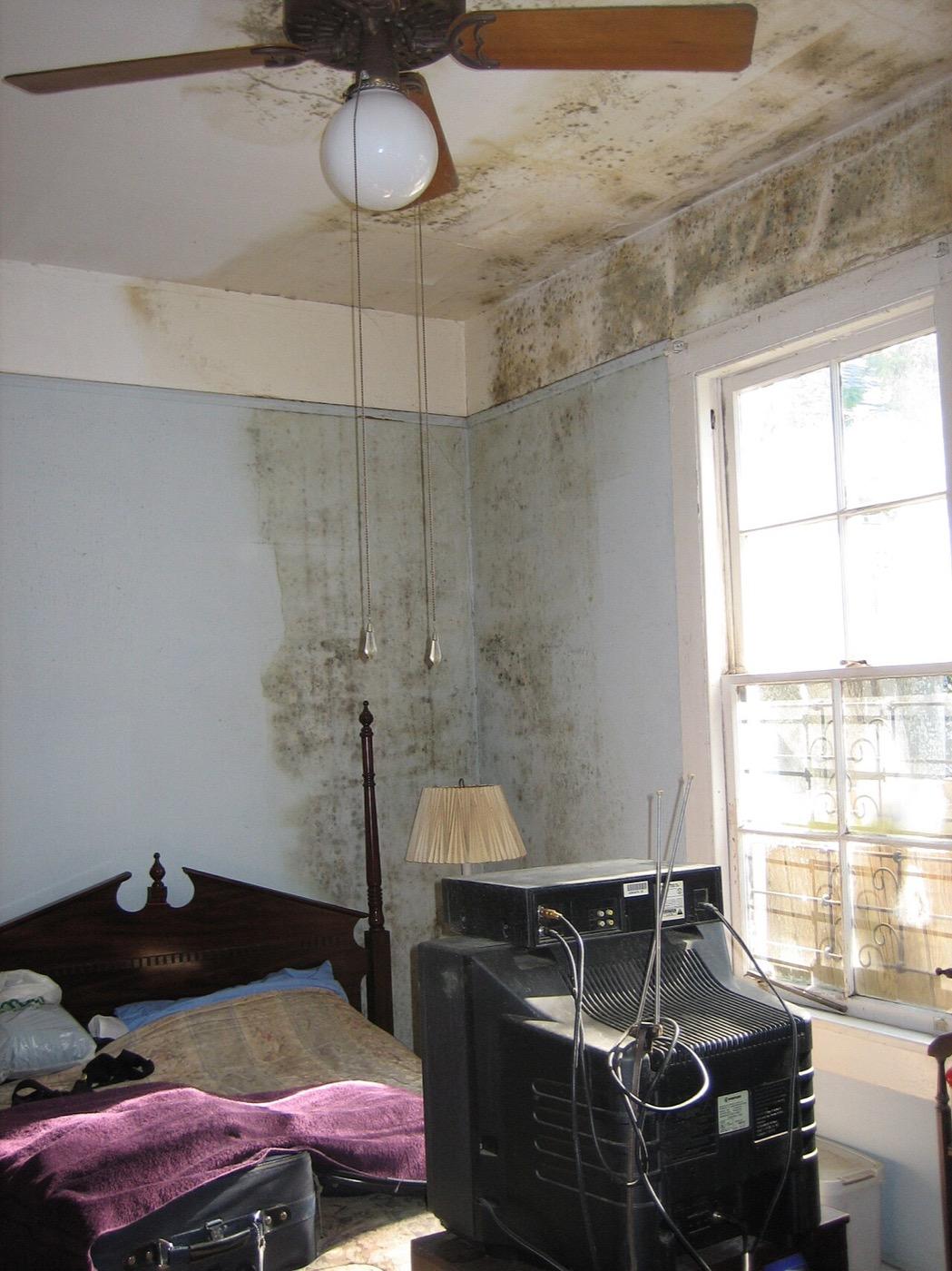
When should a child with these symptoms see a pediatrician?
See the pediatrician for any of these: wheezing or breathing difficulty; a cough that keeps recurring or does not go away; a child with asthma whose control has worsened; recurrent "colds" without fever; or any breathing change in an infant, which is urgent. The EPA's cleanup guidance says to "consult a health professional before starting cleanup" if you have health concerns, and that applies doubly when the concern is a child.
What to tell them
- That there is visible mold or a musty smell in the home, where it is, and roughly how large the area is.
- How long the symptoms have lasted and whether they change when the child is away from home.
- Whether anyone else in the household has symptoms.
- Any known allergies or asthma, and how the asthma has been behaving.
What they may do
A pediatrician will examine the child and, if allergy is suspected, may test for sensitisation to common allergens including molds; the AAP notes that allergic aspergillosis — a specific reaction to Aspergillus, which "occurs most often in children with chronic asthma or cystic fibrosis" — is diagnosed with blood tests for immunoglobulin E and antibodies to the fungus. Treatment is the pediatrician's call: for most children it means managing the allergy or asthma while the exposure is removed.
What they will not do, and why you should not either
They are unlikely to send you home to test the mold. The CDC's position is unambiguous: "CDC does not recommend mold testing. The health effects of mold are different for different people so you cannot rely on sampling and culturing to know whether someone might become sick. No matter what type of mold is present, you need to remove it." A test kit will not tell you whether your child is reacting to the mold. Your child's pediatrician can. The kit money is better spent on a dehumidifier.
Fixing the damp at home
The CDC's framing is the right one: "If mold is growing in your home, you need to clean up the mold and fix the moisture problem." Both halves. For a child's room specifically, this is a sensible order to work in.
- Move the child out of the affected room until it is dealt with. If the mold is in the bedroom, that means a different bedroom, not the same room with a fan.
- Find the moisture. A musty smell with no visible growth usually means mold behind something — a bed pushed against an exterior wall, a closet on a cold corner, a ceiling under a bathroom. What causes black mold walks through the usual suspects.
- Remove the growth, or have it removed. Under about 10 square feet the EPA says most people can handle it themselves — the protocol is in black mold cleanup — but do the work with the child out of the house, because disturbing mold releases spores. Over that size, or if it is hidden, bring in a contractor; see who to call for black mold removal.
- Bring humidity down and keep it down. The CDC's target is "no higher than 50% — all day long," using air conditioning or a dehumidifier. A cheap hygrometer in the child's room tells you whether you are there.
- Ventilate. Bathroom and kitchen exhaust fans vented outside, and the clothes dryer too — all on the CDC's list. Bathrooms next to children's bedrooms are a common source.
- Deal with soft furnishings. Carpet, upholstery and mattresses that have been damp and moldy generally cannot be treated; the CDC advises removing or replacing soaked carpets and upholstery that cannot be dried right away, and its advice not to carpet bathrooms or basements is worth extending to a damp bedroom.
- Watch the symptoms after the fix. The CDC's note that housing improvements "can reduce morbidity from asthma and respiratory allergies" is the hopeful part of all this. If symptoms do not change after the mold and moisture are gone, that is important information for the pediatrician too — it points away from the house.
For the broader picture of who is most affected and why, is black mold dangerous covers adults and vulnerable groups, black mold symptoms is the general reference, and the parent page for this whole section is black mold identification — start there if you are not yet sure the black patch is mold at all. Everything on Black Mold Removal Hub comes back to the same two jobs: remove the growth, fix the damp.
Free tools: decide what to do about your mold
Frequently asked questions
What are the first signs of black mold exposure in a child?
Are children more sensitive to black mold than adults?
Can black mold cause asthma in kids?
Does black mold cause a rash in children?
How do I know if my child's cough is from mold?
Should I get my child tested for mold allergy?
Should I test the mold in my house to see if it's the dangerous kind?
Is it safe for my baby to sleep in a room with black mold?
Can mold make a child sick even if you can't see it?
What do I tell the doctor about the mold?
How long after removing the mold should symptoms improve?
Can I do the cleanup myself with kids in the house?
Will a dehumidifier or air purifier fix it?
Sources
- CDC — Mold: About (health effects, IOM 2004, children and asthma, testing; read September 2026)
- American Academy of Pediatrics / HealthyChildren.org — Allergies in Children (updated April 2026)
- American Academy of Pediatrics / HealthyChildren.org — Aspergillosis
- U.S. EPA — A Brief Guide to Mold, Moisture and Your Home (read September 2026)
- U.S. EPA — Mold Cleanup in Your Home (read September 2026)