Mold Remediation Quote Checker: Is Your Quote Fair?

Quick answer
A mold remediation quote or written estimate is in the normal range if it sits inside the published figures for that job: about $10 to $30 per square foot, $500 to $2,000 for a bathroom, and $10,000 to $30,000 for a whole house (HomeGuide, This Old House, 2026). Above that, ask for line items and a second quote.
A mold remediation quote is fair when its price matches the size of the job and its scope matches what EPA says the job needs. Most quotes fail the second test, not the first. Enter your number below and the checker compares it with the national ranges published by HomeGuide and This Old House, then lists the parts of the quote worth questioning before you sign. It takes about a minute, and nothing you type is sent anywhere.
Published benchmarks, read September 2026: $10–$30 per square foot, $500–$2,000 for a bathroom, $10,000–$30,000 for a whole house. If you do not have a quote yet, start with the black mold removal cost calculator instead.
Check your mold remediation quote
Compares your quote with published national ranges and flags the scope problems EPA and CDC warn about. Nothing you enter leaves this page.
Enter the quote total to check it
The checker needs the quote total and either the type of job or the size of the affected area to compare against published ranges.
| Published range | Source | Range | Your quote |
|---|---|---|---|
| Bathroom | HomeGuide | $500–$2,000 | — |
| Bathroom | This Old House | $500–$1,000 | — |
Things to question (1)
- Check: It is not clear who fixes the leak or humidity. Ask, in writing, whether the moisture source is in this quote or must be fixed by another trade first. (EPA, A Brief Guide to Mold, Moisture and Your Home)
Ask the contractor before you sign
- How many square feet of material are you removing, and from which rooms?
- What containment will you set up? (EPA calls for limited containment from 10 to 100 sq ft and full containment above 100 sq ft.)
- What is causing the moisture, and is fixing it in this price?
- Which materials will you remove and which will you clean? (EPA: absorbent materials such as ceiling tiles and carpet may have to be thrown away.)
- How will we know the job is finished? (EPA: no visible mold, no moldy odors, and the moisture problem fixed.)
- Is rebuilding (drywall, paint, flooring) in this price or a separate quote?
National ranges only: your area, access and hidden damage can move a fair price. Ranges from HomeGuide (Feb 2026) and This Old House (Mar 2026), both read September 2026; rules from U.S. EPA, CDC, the FTC and state law (NY, TX, FL, LA, IL, DC, OK), read November 2026.
The published ranges your quote is measured against
Two cost guides publish current, dated numbers for mold remediation, and the checker uses only those two. They do not always agree, so the table shows both rather than averaging them into a number neither source printed.
| Job | HomeGuide (Feb 2026) | This Old House (Mar 2026) |
|---|---|---|
| Per square foot | $15–$30 | $10–$25 (average $18) |
| Bathroom | $500–$2,000 | $500–$1,000 |
| Basement | $1,500–$6,000 partial; $6,000–$15,000 full | $500–$3,000 |
| Attic | $1,500–$6,000 partial; $6,000–$15,000 full | $1,000–$4,000 |
| Crawl space | $1,500–$4,000 | $500–$2,000 |
| HVAC / ducts | $2,000–$10,000 | $3,000–$10,000 |
| Whole house | $15,000–$30,000 (over 1,000 sq ft) | $10,000–$30,000 |
| Typical job | $1,500–$6,000 average | $1,200–$3,750 (average $2,300) |
Source: HomeGuide, Mold Removal Cost (Kristen Cramer, 5 Feb 2026) and This Old House, Mold Remediation Cost (updated 11 Mar 2026), both read September 2026.
HomeGuide also prices by the size of the affected area: $500–$1,500 for 10 to 100 sq ft, $1,500–$6,000 for 100 to 300 sq ft, $6,000–$15,000 for 300 to 1,000 sq ft, and $15,000–$30,000 above 1,000 sq ft. Neither guide gives a range for patches under 10 sq ft, and EPA's home guidance says an area that small is usually something you can clean yourself, so the checker does not invent one.
The checker calls a quote inside the ranges when it sits inside at least one range that fits the job. It calls it above only when it is higher than every fitting range, and well above past one and a half times the highest of them. That is a deliberately generous test. A quote it flags as high is high by any published measure, not just by the strictest one.
Read the scope, not just the total
Price is only half of a quote. The other half is whether the work described is the work your job needs, and EPA's remediation guide sets that out by size. Its Table 2, in Mold Remediation in Schools and Commercial Buildings, has three tiers:
- Under 10 sq ft: an N-95 respirator, gloves and eye protection; no containment.
- 10 to 100 sq ft: limited or full protective gear and limited containment, which EPA defines as a single layer of 6-mil fire-retardant polyethylene sheeting, vents and doors sealed, and negative pressure from a HEPA-filtered fan exhausted outside.
- Over 100 sq ft: full protective gear and full containment: a double layer of polyethylene and a decontamination chamber or airlock, under negative pressure.
So a quote for 40 sq ft that has no containment line is missing something EPA calls for. A quote for 40 sq ft that prices full containment with an airlock is pricing a bigger job than the guide asks for. Neither is automatically wrong, because the contractor may have seen something you did not, but both are fair questions.
The other lines worth finding on the paper are the removal of absorbent materials (EPA says ceiling tiles and carpet "may have to be thrown away if they become moldy"), HEPA vacuuming once materials are dry, disposal, drying, and what counts as finished. EPA's finish line is plain: no visible mold, no moldy odors, and the moisture problem fixed. A quote that does not say how the job will be judged done gives you nothing to hold the contractor to.
The standard many contractors work to is ANSI/IICRC S520, the Standard for Professional Mold Remediation (4th edition, 2024). It covers the inspection, the remediation itself, documentation and post-remediation verification. Asking "does this quote follow S520?" is a quick way to find out whether the company knows it exists.
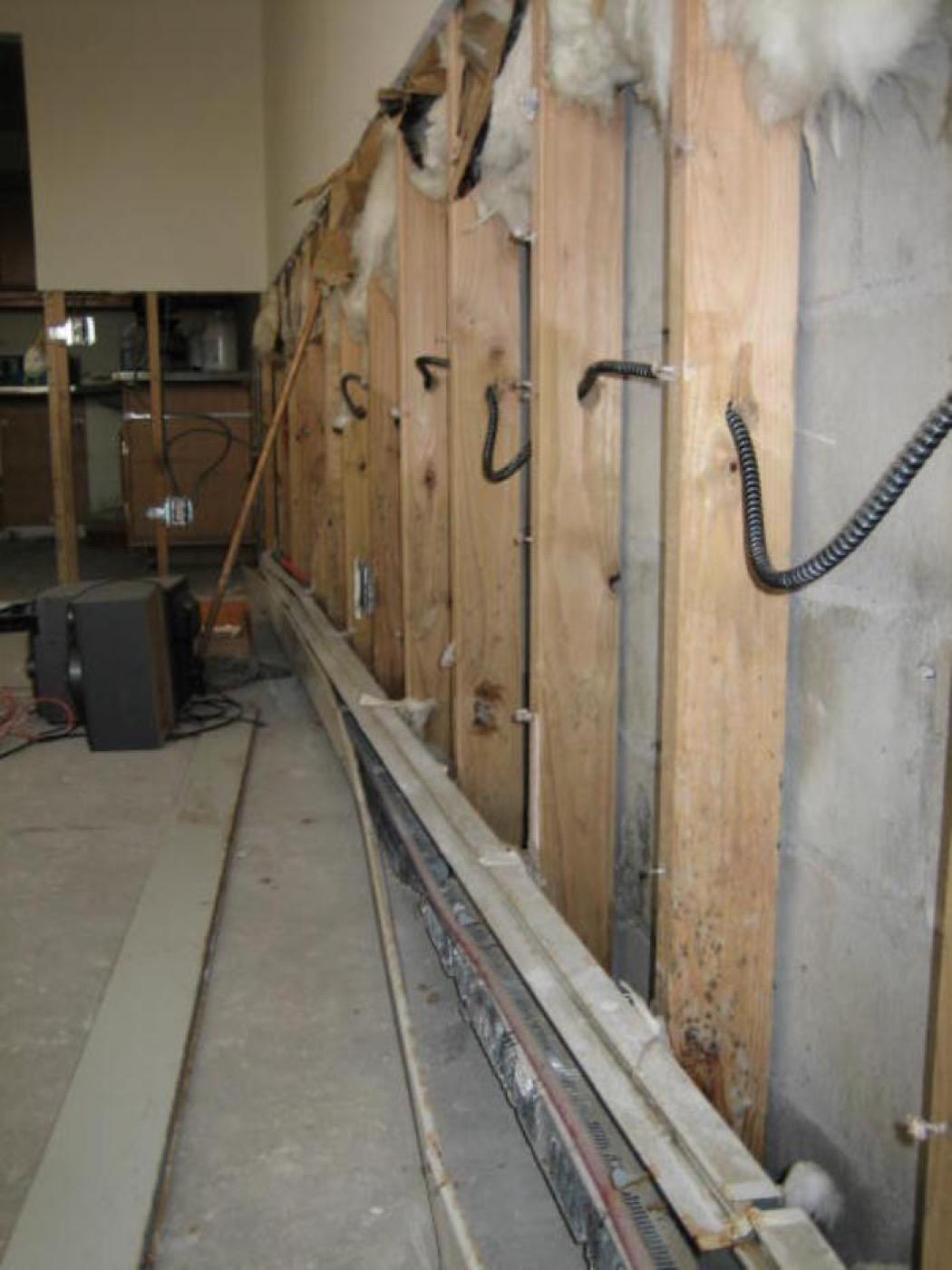
Seven things to question, with the source for each
These are the checker's warnings. Each one is tied to a public rule, so you can quote the rule back to the contractor rather than argue from instinct.
- Paying for a mold test when you can already see the mold. EPA: "In most cases, if visible mold growth is present, sampling is unnecessary." CDC goes further and does not recommend testing at all. Testing has uses, such as hidden mold or checking a finished job, but ask what the result will change.
- A higher price because it is "toxic black mold". CDC: "All molds should be treated the same with respect to potential health risks and removal." The colour of the mold does not change the method or the gear.
- A promise of a "mold-free" home. EPA: "It is impossible to get rid of all mold and mold spores indoors." CDC adds that "there are no set standards for what is and what is not an acceptable quantity." No one can certify a result that has no standard.
- Painting or sealing over the mold. EPA: "Do not paint or caulk moldy surfaces." Coatings applied after the mold has been removed are a different thing; ask which one the quote means.
- Nothing about the water. EPA's Brief Guide puts it in one line: "The key to mold control is moisture control." If the leak, the condensation or the humidity is not fixed, by this contractor or by a plumber or roofer first, the mold comes back.
- The inspector is also the remediator. In New York the same individual may not do both the assessment and the remediation on one property, and in Texas "you are not allowed to conduct both mold assessment and mold remediation activities on the same project." Florida (within 12 months), Louisiana and Oklahoma have similar rules. Elsewhere it is legal, but it means the person defining the size of the job is the person paid by its size.
- One lump sum. A single number cannot be compared with a second quote. Ask for containment, removal, cleaning, drying, disposal, rebuild and any testing as separate lines.
Two sales tactics are worth flagging too, both from the FTC's guide to home improvement scams: a demand for the full amount up front or cash only (FTC: "Don’t pay the full amount for the project up front"), and pressure to sign the same day (FTC: "Scammers pressure you for an immediate decision"). The checker flags both.
For the full list of who does what, and in which order to call them, see who to call for black mold removal.
Your quote is high. What now?
A high quote is not proof of a bad one. Access matters: a crawl space or a run of ductwork costs more to work in than an open bathroom wall, which is why both guides price them higher. Hidden damage matters too, and a contractor who has opened a wall knows more than any table. What you want is for the contractor to show you which lines make the difference. These steps usually get you there.
1. Ask for line items, in writing. If the answer is vague, that tells you something.
2. Get a second quote from a company that did not do the inspection. Give both companies the same description of the problem and compare line by line, not total by total.
3. Split remediation from rebuilding. Removing the mold and putting the room back together are two different jobs, often by two different trades. The ranges on this page are for remediation. A quote that bundles a new shower, new cabinets or new flooring can look several times too high when the remediation part is normal.
4. Do the small part yourself if it really is small. EPA's home guidance covers areas under about 10 sq ft, roughly a 3 ft by 3 ft patch, as a job most homeowners can clean with an N-95, gloves and goggles. Our DIY-or-pro checker runs through EPA's limits in five questions.
5. Get the moisture fixed first. A plumber or roofer fixing the source before remediation can shrink the scope, and it is the step that stops the bill from repeating.
6. In Texas, ask about the certificate. A licensed Texas remediator issues a Certificate of Mold Damage Remediation, and Texas law says an insurer "may not make an adverse underwriting decision regarding a residential property insurance policy based on previous mold damage" when the certificate is provided (Texas TDLR, read October 2026).
Worked example: a $14,000 shower and mold quote
One search that reached this site asked whether $14,000 was too much for a complete shower replacement and black mold removal. The checker cannot answer that as asked, and the reason is useful. This is an illustrative calculation, not a real customer's job.
- Remediation part: a bathroom, which HomeGuide puts at $500–$2,000 and This Old House at $500–$1,000. If 40 sq ft of wall behind the shower is affected, the per-square-foot ranges give $400–$1,000 (at $10–$25) and $600–$1,200 (at $15–$30), and HomeGuide's 10–100 sq ft band is $500–$1,500.
- Rebuild part: a complete new shower. Neither cost guide in our sources prices that, so the checker does not guess.
So on the published ranges, the mold work in a bathroom like this tops out around $2,000, and most of a $14,000 total would have to be the shower. That may well be a fair price for a new shower. The only way to know is to ask for the two jobs as separate totals, then get a remodeling quote for the shower alone. Tick "The quote includes rebuilding" in the checker and it says exactly that instead of calling the quote too high.
Checking the contractor's licence
There is no federal mold licence. Licensing is set by each state, and in the states that have it, an unlicensed company cannot legally do the work. Verified on each state's own pages in November 2026: New York, Texas, Florida, Louisiana and Washington DC license mold contractors (Louisiana only for jobs of $7,500 or more), and Illinois has required remediators to register with IDPH since September 23, 2026. Oklahoma has no licence but bars the company that inspected from also removing the mold, unless the total is $200 or less and you agree. Virginia, Maryland and Arkansas do not license mold work. The Texas exemption for areas under 25 contiguous sq ft is Texas law, not a national rule. The full state table, with where to look each licence up, is in who to call for black mold removal.
In other states, EPA's hiring advice is the baseline: "make sure the contractor has experience cleaning up mold. Check references and ask the contractor to follow the recommendations in EPA guide Mold Remediation in Schools and Commercial Buildings," or the guidelines of ACGIH or IICRC. Back on the Black Mold Removal Hub home page you can work out whether you need a contractor at all, or browse every mold removal cost guide.
Free tools: decide what to do about your mold
Frequently asked questions
How much should a mold remediation quote be?
Is it normal for a mold quote to include testing?
Should the company that tested my house also remove the mold?
What if I cannot afford the quote?
Sources
- HomeGuide — Mold Removal Cost (Feb 2026, read Sept 2026)
- This Old House — Mold Remediation Cost (Mar 2026, read Sept 2026)
- U.S. EPA — A Brief Guide to Mold, Moisture and Your Home
- U.S. EPA — Mold Cleanup in Your Home
- U.S. EPA — Mold Remediation in Schools and Commercial Buildings, Chapter 5
- CDC — Facts About Stachybotrys chartarum
- CDC — About Mold
- IICRC — ANSI/IICRC S520
- New York DOL — Mold Program
- Texas TDLR — Mold Assessors and Remediators FAQ
- Florida DBPR — Mold-Related Services
- Louisiana R.S. 37:2158
- FTC — How To Avoid a Home Improvement Scam